Libertia
Libertia grandiflora
Perennials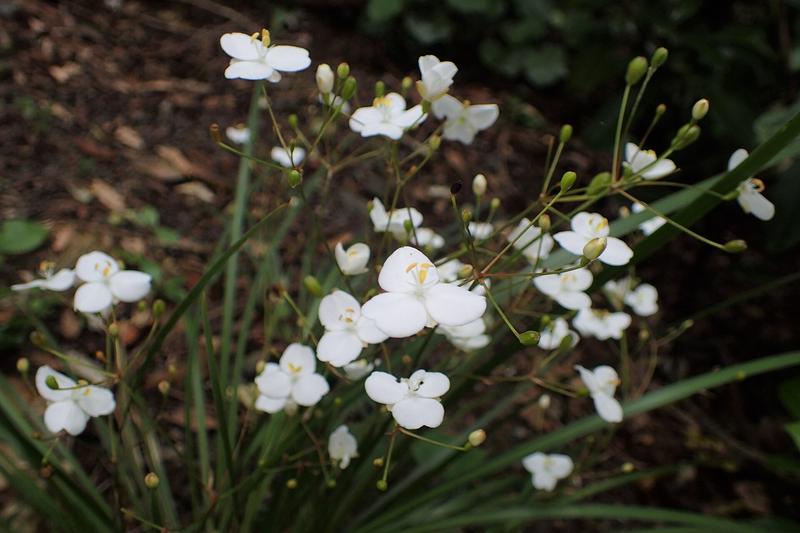
Quick facts
- Watering
- Weekly during establishment
- Sunlight
- Full sun to partial shade
- Soil
- Well-drained, moderately fertile
- Humans
- Unknown
- Cats
- Unknown
- Dogs
- Unknown
- Height
- 60–90 cm
- Spread
- 45–60 cm
- Spacing
- 45–60 cm apart
- RHS recognition
- Award of Garden Merit
About Libertia
Libertia grandiflora is an elegant evergreen perennial from New Zealand, forming clumps of narrow, iris-like foliage with striking white flowers in late spring and early summer. The blooms are followed by attractive orange seed capsules that persist into autumn, providing extended seasonal interest. UK gardeners value this plant for its architectural form, reliable flowering, and ability to thrive in coastal and mild regions. Its neat, upright habit makes it ideal for gravel gardens, mixed borders, and contemporary planting schemes.
UK fact: Libertia grandiflora holds the RHS Award of Garden Merit and performs particularly well in mild coastal areas of the UK, especially in Cornwall, Devon, and western Scotland, where the temperate maritime climate mirrors its native New Zealand habitat.
Watering Libertia
Water newly planted libertia regularly during the first growing season to establish a deep root system. Once established, plants are moderately drought-tolerant but perform best with consistent moisture during dry spells, particularly in summer. In typical UK conditions, rainfall is usually sufficient for established plants, though those in containers or free-draining soils benefit from weekly watering during prolonged dry periods. Avoid waterlogging, especially in winter, as this can lead to crown rot.
Sunlight requirements
Libertia performs best in full sun, which encourages prolific flowering and compact growth. In hotter, drier parts of the UK, some afternoon shade is beneficial to prevent leaf scorch. South or west-facing positions are ideal, though plants will tolerate light shade in northern gardens where they may produce slightly fewer flowers.
Soil and feeding
Libertia thrives in well-drained soil and will not tolerate heavy clay or waterlogged conditions, particularly in winter. A moderately fertile, sandy or loamy soil is ideal, with a neutral to slightly acidic pH (6.0-7.0). Improve drainage in heavier soils by incorporating grit or sharp sand, or plant on a slight slope or raised bed. In very poor soils, add some well-rotted compost at planting time, though libertia generally prefers leaner conditions to richer, moisture-retentive soils.
Libertia requires minimal feeding and can become lax if overfed. Apply a light dressing of general-purpose fertiliser in early spring if growth appears weak, but avoid high-nitrogen feeds which promote foliage at the expense of flowers. In most garden soils, no additional feeding is necessary.
Pruning Libertia
Remove spent flower stems in late summer once the ornamental seed capsules have finished their display. Tidy the foliage in early spring by removing any dead, damaged, or frost-browned leaves to maintain a neat appearance. Divide congested clumps every 3-4 years in spring to rejuvenate plants and maintain vigour. Avoid cutting back too hard, as libertia maintains its evergreen structure year-round.
Propagating Libertia
Libertia is easily propagated by division in spring, just as new growth begins. Lift established clumps carefully and separate into smaller sections, ensuring each division has healthy roots and several shoots. Replant divisions immediately at the same depth and water well. Seed propagation is also possible: collect ripe seed in autumn and sow fresh in pots of gritty compost, overwintering in a cold frame. Seedlings may take 2-3 years to reach flowering size.
Common problems
Libertia is generally trouble-free with few serious pest or disease issues in UK gardens. The main problem is crown rot in poorly drained soils, particularly during wet winters, so ensuring good drainage is essential. Slugs and snails may damage young foliage in spring but rarely cause significant harm to established plants. In very cold winters, frost can brown leaf tips, though plants usually recover with new growth in spring. Older clumps may become congested and flower less freely, requiring division.
Spot a problem with your plant? Photograph the affected area using the Loam app and it will suggest the most likely cause and treatment.
Safety
- Humans
-
Unknown
No confirmed toxicity data available. As with all plants, avoid ingestion and supervise children.
- Cats
-
Unknown
No confirmed toxicity data available for cats. Monitor pets and contact a vet if ingestion occurs.
- Dogs
-
Unknown
No confirmed toxicity data available for dogs. Monitor pets and contact a vet if ingestion occurs.
Toxicity information is for general guidance only. If a person or pet has been exposed to this plant and you are concerned, seek advice from a medical professional or vet.
Seasonal care calendar
Monthly care guide for Libertia in the UK, based on average conditions.
| Month | Care tasks |
|---|---|
| January | No action needed. Protect from severe frost in cold areas with fleece or mulch. |
| February | Check for frost damage and remove any badly damaged leaves. |
| March | Tidy foliage by removing dead or damaged leaves. Divide congested clumps. Apply light feed if needed. |
| April | Plant new specimens. Water during dry spells. Flower buds begin to form. |
| May | Flowering begins. Water regularly during dry weather. Mulch around plants to retain moisture. |
| June | Peak flowering period. Deadhead spent blooms if seed capsules are not desired. |
| July | Flowering finishes. Orange seed capsules develop. Water during dry spells. |
| August | Seed capsules provide ornamental interest. Collect seed if propagating. Remove flower stems once capsules fade. |
| September | Sow collected seed fresh. Continue watering if weather is dry. |
| October | Reduce watering as growth slows. Tidy any remaining spent stems. |
| November | No action needed. Ensure good drainage before winter. |
| December | No action needed. Monitor for waterlogging in wet weather. |
Frequently asked questions
- Why is my libertia not flowering?
- Libertia may fail to flower if planted in too much shade, overfed with nitrogen-rich fertiliser, or if the clump has become congested. Ensure plants receive at least 4-6 hours of sun daily, avoid excessive feeding, and divide overcrowded clumps every 3-4 years in spring to restore flowering vigour.
- When should I divide my libertia?
- Divide libertia in early spring, just as new growth begins, typically in March or early April. The Loam app can send you timely reminders for division and provide personalised care schedules based on your local conditions and planting dates.
- Is libertia suitable for coastal gardens?
- Yes, libertia is excellent for coastal gardens and tolerates salt-laden winds well. It thrives in the mild, maritime climate of UK coastal regions, particularly in the south-west, and its well-drained soil requirements suit sandy coastal conditions perfectly.
Got a question about growing Libertia that isn't covered here? Ask the Garden Advisor in the Loam app. It knows your saved plants and local conditions.
Related plants
This page was compiled with AI assistance and reviewed by our team. .