Lesser Celandine
Ficaria verna
Wildflowers and Natives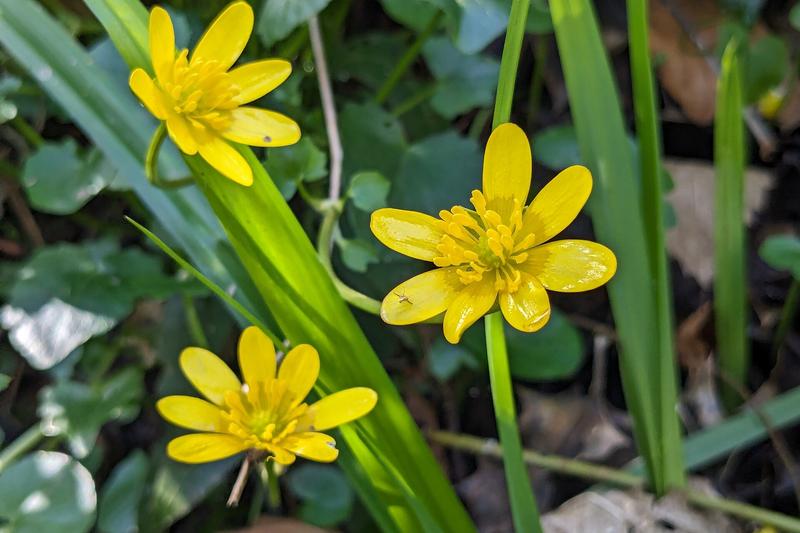
Quick facts
- Watering
- Minimal once established
- Sunlight
- Partial shade to full shade
- Soil
- Moist, humus-rich, slightly heavy
- Humans
- Toxic
- Cats
- Toxic
- Dogs
- Toxic
- Height
- 5–15 cm
- Spread
- 30–60 cm
- Spacing
- 15–30 cm apart
About Lesser Celandine
Lesser Celandine is a low-growing British native wildflower that carpets woodland floors and damp meadows with glossy, heart-shaped leaves and cheerful golden-yellow flowers from late winter to spring. This perennial member of the buttercup family is one of the earliest wildflowers to bloom, often appearing in February. While charming in naturalistic settings, it can become invasive in garden borders due to its vigorous tuberous roots and self-seeding habit, making it best suited to wild areas or carefully managed wildlife gardens.
UK fact: Lesser Celandine was one of William Wordsworth's favourite flowers, inspiring three poems including 'To the Small Celandine', and the plant is carved on his memorial at Grasmere church in the Lake District.
Watering Lesser Celandine
This wildflower prefers naturally moist conditions and rarely needs watering once established in suitable sites. In the UK, rainfall is typically sufficient, especially in shaded woodland settings where moisture is retained. Water only during prolonged spring droughts if plants show signs of stress. The plant dies back completely by early summer and requires no water during dormancy.
Sunlight requirements
Lesser Celandine thrives in dappled shade beneath deciduous trees, where it completes its flowering cycle before the canopy leafs out. It tolerates full shade but produces fewer flowers, and can grow in sunnier spots if the soil remains consistently moist. North-facing borders or woodland edges are ideal in UK gardens.
Soil and feeding
Lesser Celandine grows best in moisture-retentive soils with plenty of organic matter, thriving in the leaf-mould-rich conditions of woodland floors. It tolerates clay soils well and prefers neutral to slightly alkaline pH (6.5-7.5). Avoid dry, sandy soils where the plant struggles to establish. The species naturally favours damp meadows, stream banks, and shaded hedgerows throughout Britain.
Feeding is unnecessary for this native wildflower, which thrives in naturally fertile woodland soils. If growing in a managed wildlife area, a light mulch of leaf mould in autumn will provide sufficient nutrients. Avoid fertilisers, which encourage excessive spread and can upset the balance of native plant communities.
Pruning Lesser Celandine
No pruning is required as Lesser Celandine dies back naturally by June, disappearing completely until the following late winter. Allow the foliage to yellow and wither naturally to feed the tuberous roots for next year's growth. In areas where spread needs controlling, remove spent flowers before seed is set and dig out unwanted tubers in early summer when visible. Avoid disturbing the soil unnecessarily as broken tuber fragments readily regenerate.
Propagating Lesser Celandine
Lesser Celandine propagates readily from division of the tuberous root clusters in early summer after flowering, when foliage has died back. Simply lift clumps, separate the small tubers, and replant immediately in moist soil. It also self-seeds freely, with ants dispersing the seeds, though seedlings take several years to reach flowering size. Be aware that this plant can become invasive, so propagate only in wild areas or where spread can be controlled.
Common problems
Lesser Celandine is largely trouble-free but its vigorous spreading habit is the main concern for UK gardeners, as it can smother smaller plants and become difficult to eradicate once established. The tuberous roots break easily when pulled, with each fragment capable of regenerating. Rust fungi occasionally affect the foliage but rarely cause serious damage. In garden settings, it's best confined to wild areas away from cultivated borders, as it competes aggressively with spring bulbs and other early perennials.
Spot a problem with your plant? Photograph the affected area using the Loam app and it will suggest the most likely cause and treatment.
Safety
- Humans
-
Toxic
All parts contain protoanemonin, which is toxic if ingested and can cause skin irritation on contact. Symptoms include burning sensation in the mouth, nausea, and vomiting.
- Cats
-
Toxic
Contains protoanemonin which causes oral irritation, drooling, vomiting, and diarrhoea if ingested. Contact a vet if consumption is suspected.
- Dogs
-
Toxic
Contains protoanemonin which causes oral irritation, drooling, vomiting, and diarrhoea if ingested. Contact a vet if consumption is suspected.
Toxicity information is for general guidance only. If a person or pet has been exposed to this plant and you are concerned, seek advice from a medical professional or vet.
Seasonal care calendar
Monthly care guide for Lesser Celandine in the UK, based on average conditions.
| Month | Care tasks |
|---|---|
| January | No action needed; tubers dormant underground. |
| February | First shoots and flowers appear in mild spells; enjoy the early blooms. |
| March | Peak flowering period; plants form golden carpets in suitable locations. |
| April | Flowering continues; deadhead to prevent self-seeding if controlling spread. |
| May | Foliage begins to yellow and die back; allow natural senescence. |
| June | Plants completely dormant; lift and divide tubers now if propagating or controlling spread. |
| July | No action needed; plants dormant underground. |
| August | No action needed; plants dormant underground. |
| September | No action needed; plants dormant underground. |
| October | Apply leaf mould mulch to wild areas if desired. |
| November | No action needed; tubers dormant underground. |
| December | No action needed; tubers dormant underground. |
Frequently asked questions
- Is Lesser Celandine invasive in UK gardens?
- Yes, Lesser Celandine can be highly invasive in garden settings due to its tuberous roots that spread rapidly and break into fragments that each regenerate. It's best confined to wild areas, woodland gardens, or naturalistic settings where its vigorous habit is an asset rather than a problem. Avoid planting near cultivated borders or among delicate spring perennials.
- How do I control Lesser Celandine that's spreading into my borders?
- Controlling established Lesser Celandine requires persistence. The Loam app can help you track removal efforts and set reminders for the optimal June timing when tubers are visible after die-back, making systematic eradication more effective over multiple seasons.
- When does Lesser Celandine flower in the UK?
- Lesser Celandine typically flowers from late February through April in the UK, making it one of the earliest native wildflowers to bloom. The exact timing varies with regional climate and weather conditions, with milder southern areas often seeing flowers in February whilst northern gardens may not bloom until March.
Got a question about growing Lesser Celandine that isn't covered here? Ask the Garden Advisor in the Loam app. It knows your saved plants and local conditions.
Related plants
This page was compiled with AI assistance and reviewed by our team. .