Japanese Knotweed
Fallopia japonica
Weeds and Invasives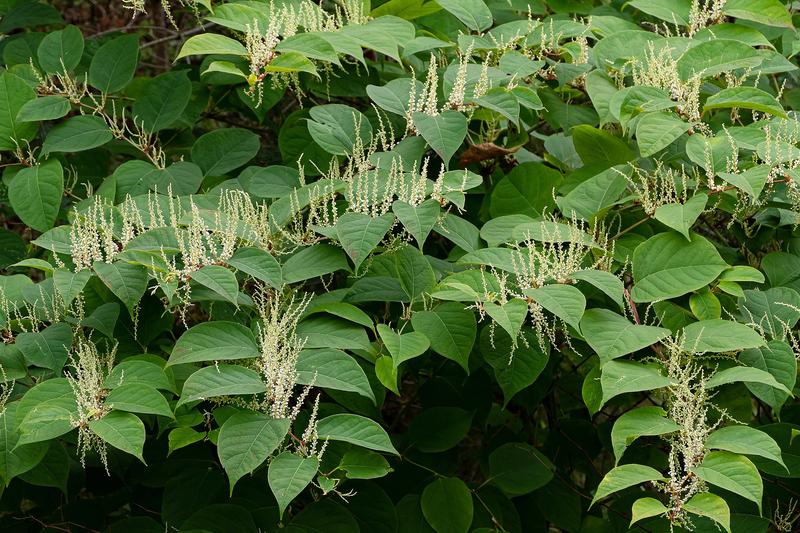
Quick facts
- Watering
- No watering required
- Sunlight
- Full sun to partial shade
- Soil
- Any soil type
- Humans
- Safe
- Cats
- Safe
- Dogs
- Safe
- Height
- 200–300 cm
- Spread
- 300–700 cm
- Spacing
- 0 cm apart
About Japanese Knotweed
Japanese Knotweed is a highly invasive perennial weed with distinctive bamboo-like hollow stems, heart-shaped leaves, and creamy-white flower clusters in late summer. Introduced to Britain in the 1840s as an ornamental plant from East Asia, it has become one of the UK's most problematic invasive species. UK gardeners do not intentionally grow this plant; instead, they focus on identification, containment, and legal eradication. Its aggressive rhizome system can damage building foundations, drainage systems, and tarmac, making it a serious concern for property owners across Britain.
UK fact: Japanese Knotweed is listed under Schedule 9 of the Wildlife and Countryside Act 1981, making it illegal to plant or cause it to grow in the wild in Britain, and improper disposal of any part of the plant is a criminal offence punishable by fines up to £5,000 or two years imprisonment.
Watering Japanese Knotweed
Japanese Knotweed requires no supplemental watering and thrives in typical UK rainfall conditions. The extensive rhizome network, which can extend 7 metres horizontally and 3 metres deep, efficiently captures moisture from the soil. In fact, the plant's ability to survive drought, waterlogging, and everything in between makes it exceptionally difficult to control through environmental manipulation. Never attempt to encourage growth through watering; all efforts should focus on eradication.
Sunlight requirements
Japanese Knotweed thrives in virtually any light conditions across the UK, from full sun to deep shade, though growth is most vigorous in sunny positions. This adaptability contributes to its invasive success in British gardens, woodlands, and urban wasteland. The plant's tolerance of shade allows it to colonise areas beneath tree canopies and along north-facing boundaries where other species struggle.
Soil and feeding
Japanese Knotweed grows vigorously in virtually any soil type found in the UK, from heavy clay to sandy loam, acidic to alkaline (pH 3.0-8.5). It tolerates poor, contaminated, and compacted soils where few other plants survive, making it particularly problematic on brownfield sites and along railway embankments. The plant's rhizomes can penetrate tarmac, concrete, and building foundations. This extreme adaptability means soil amendment offers no control strategy whatsoever.
Japanese Knotweed requires no feeding and thrives without any fertiliser input. In fact, the plant's ability to grow rapidly in nutrient-poor soils is one reason it outcompetes native British flora. Never apply fertiliser to areas where Japanese Knotweed is present, as this will only encourage more vigorous growth and spread.
Pruning Japanese Knotweed
Do not prune or cut Japanese Knotweed without professional advice, as improper cutting can spread the infestation. Any fragment of stem or rhizome as small as 0.7g can regenerate into a new plant, and cutting can scatter viable material. If you must manage growth before professional treatment, cut stems should be carefully bagged and disposed of through licensed waste carriers. Repeated cutting over several years may weaken stands but will not eradicate the plant without herbicide treatment or professional excavation.
Propagating Japanese Knotweed
Japanese Knotweed propagates with alarming ease from tiny fragments of rhizome or stem nodes, which is precisely why it spreads so rapidly across the UK. A piece of rhizome as small as a fingernail can establish a new colony, and stems can root at nodes when in contact with soil. It is illegal to intentionally propagate or plant Japanese Knotweed anywhere in Britain. Any propagation information is provided solely to help gardeners understand how easily the plant spreads and why extreme care must be taken during removal attempts.
Common problems
The primary problem with Japanese Knotweed is the plant itself—it is the problem, not the victim of pests or diseases. In the UK, it has no natural predators or diseases that provide meaningful control, unlike in its native Japan where natural enemies keep it in check. The plant causes structural damage to buildings, walls, and drainage systems, reduces property values (mortgage lenders often refuse loans on affected properties), and outcompetes native British wildlife. Attempting DIY removal often worsens infestations by fragmenting rhizomes; professional treatment using approved herbicides or specialist excavation is essential for successful eradication.
Spot a problem with your plant? Photograph the affected area using the Loam app and it will suggest the most likely cause and treatment.
Safety
- Humans
- Safe
- Cats
- Safe
- Dogs
- Safe
Toxicity information is for general guidance only.
Seasonal care calendar
Monthly care guide for Japanese Knotweed in the UK, based on average conditions.
| Month | Care tasks |
|---|---|
| January | Rhizomes dormant underground. Plan professional eradication strategy and obtain quotes from PCA-accredited specialists. |
| February | Rhizomes remain dormant. Review legal obligations and notify mortgage lender if selling property. Arrange site survey. |
| March | First red/purple shoots begin emerging from soil. Mark all visible growth areas for treatment mapping. Do not disturb. |
| April | Rapid shoot growth begins. Ideal time for professional herbicide treatment as sap flow carries chemicals to rhizomes. Monitor spread. |
| May | Vigorous growth with distinctive heart-shaped leaves fully developed. Continue professional herbicide programme if underway. |
| June | Plants reach full height. Second herbicide application often applied by professionals. Document growth extent with photographs. |
| July | Creamy-white flower clusters appear. Peak growth period. Monitor for any spread to new areas of garden. |
| August | Flowering continues. Late-season herbicide treatment may be applied by professionals as plants prepare for dormancy. |
| September | Optimal time for herbicide treatment as nutrients flow back to rhizomes. Professionals often apply final treatment now. |
| October | Foliage begins to die back and turn brown. Do not cut or compost dead material—bag and dispose via licensed carrier. |
| November | Stems die back completely. Dead canes remain standing through winter. Review treatment progress with specialist. |
| December | Plant fully dormant. Dead stems persist above ground. Plan next year's treatment schedule with professional contractor. |
Frequently asked questions
- Is it illegal to have Japanese Knotweed in my garden in the UK?
- It is not illegal to have Japanese Knotweed on your property, but it is illegal to cause it to grow in the wild or allow it to spread to neighbouring land. You have a legal duty to prevent its spread under the Wildlife and Countryside Act 1981 and the Anti-social Behaviour, Crime and Policing Act 2014. Neighbours can take legal action if your knotweed encroaches on their property, and you must disclose its presence when selling your home. Professional treatment is strongly recommended.
- How can I tell if I have Japanese Knotweed or just bamboo in my garden?
- Japanese Knotweed has distinctive heart-shaped leaves with a flat base, hollow bamboo-like stems with purple speckles, and zig-zag growth patterns, whilst true bamboo has narrow leaves and woody, round stems. The Loam app's plant identification feature can help you accurately identify Japanese Knotweed and distinguish it from similar species like Russian Vine or ornamental bamboos, then guide you to appropriate professional treatment options based on your location.
- How much does Japanese Knotweed treatment cost in the UK?
- Professional Japanese Knotweed treatment in the UK typically costs between £1,500 and £5,000 for residential properties, depending on the extent of infestation and treatment method chosen. Herbicide treatment programmes usually take 2-3 years and cost £1,500-£3,000, whilst excavation and removal can cost £5,000-£15,000 but achieves faster results. Always use PCA (Property Care Association) accredited specialists who provide insurance-backed guarantees, as these are often required by mortgage lenders.
Got a question about growing Japanese Knotweed that isn't covered here? Ask the Garden Advisor in the Loam app. It knows your saved plants and local conditions.
Related plants
This page was compiled with AI assistance and reviewed by our team. .