Himalayan Balsam
Impatiens glandulifera
Weeds and Invasives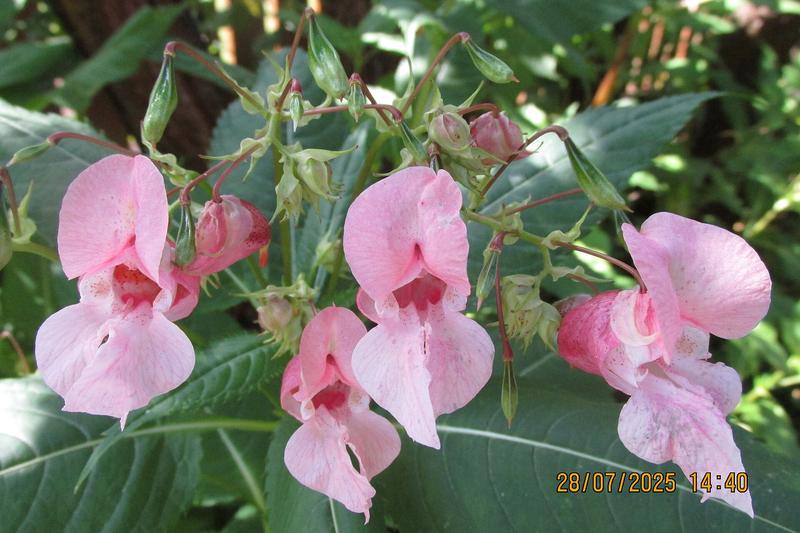
Quick facts
- Watering
- Thrives in damp conditions
- Sunlight
- Partial shade to full sun
- Soil
- Moist, rich, nutrient-laden soil
- Humans
- Unknown
- Cats
- Unknown
- Dogs
- Unknown
- Height
- 100–250 cm
- Spread
- 50–100 cm
- Spacing
- 0 cm apart
About Himalayan Balsam
Himalayan Balsam is a tall, fast-growing annual weed with hollow reddish stems, large lance-shaped leaves, and clusters of pink-purple hooded flowers from June to October. Introduced to the UK as an ornamental garden plant in 1839, it has become one of Britain's most invasive non-native species, spreading rapidly along riverbanks, canal towpaths, and damp woodland edges. UK gardeners do not intentionally grow this plant; instead, they actively work to eradicate it from gardens and wild spaces. Its explosive seed pods can scatter up to 7 metres, making control essential to prevent further spread.
UK fact: Himalayan Balsam is listed under Schedule 9 of the Wildlife and Countryside Act 1981, making it illegal to plant or allow it to grow in the wild in England and Wales, with potential fines for landowners who fail to control it.
Watering Himalayan Balsam
This invasive weed requires consistently moist to wet soil and naturally colonises areas with high water availability such as riverbanks, ditches, and poorly drained garden borders. It struggles in dry conditions, which can be exploited as a control method by improving drainage in affected areas. In typical UK summers, established plants receive adequate moisture from rainfall alone, contributing to their aggressive spread. Do not irrigate areas where Himalayan Balsam is present, as this encourages further growth.
Sunlight requirements
Himalayan Balsam thrives in partial shade along riverbanks and woodland edges but tolerates full sun in consistently moist conditions. In UK gardens, it often colonises shaded, damp areas beneath trees or along north-facing boundaries. The plant's vigorous growth means it can outcompete native species regardless of light levels, making early identification and removal crucial.
Soil and feeding
Himalayan Balsam prefers rich, moisture-retentive soils with high organic matter content, thriving in the fertile alluvial deposits along UK waterways. It tolerates a wide pH range from slightly acidic to neutral (pH 6.0-7.5) and grows vigorously in heavy clay soils that remain damp year-round. The plant's shallow root system means it establishes quickly in disturbed ground, making recently cleared or cultivated areas particularly vulnerable to colonisation. Improving soil drainage and reducing fertility can help discourage regrowth after removal.
Himalayan Balsam requires no feeding and actively thrives in nutrient-rich conditions, which is why it dominates fertile riverbanks and garden borders. Avoid adding compost, manure, or fertiliser to areas where this weed is present, as this will only encourage more vigorous growth and seed production.
Pruning Himalayan Balsam
Pruning is not applicable for this invasive weed; instead, complete removal is essential. Cut plants at ground level before flowering (ideally in May or early June) to prevent seed production, then remove all plant material from the site to prevent regrowth. For small infestations, hand-pulling is effective when soil is moist, ensuring the entire shallow root system is removed. Repeated cutting throughout the growing season will eventually exhaust the plant's energy reserves, but vigilance is required as seeds can remain viable in soil for up to two years.
Propagating Himalayan Balsam
Himalayan Balsam propagates exclusively by seed, with each plant producing up to 800 seeds in explosive capsules that scatter up to 7 metres when ripe. Seeds germinate readily in spring (March-April) in moist soil and can remain viable in the soil seed bank for approximately 18 months. The plant's prolific seed production and explosive dispersal mechanism make it one of the UK's most rapidly spreading invasive species. Never intentionally propagate this plant; instead, focus on preventing seed set by removing plants before flowering.
Common problems
The primary problem with Himalayan Balsam is its invasive nature and the legal obligation to control it on your property. It outcompetes native British wildflowers, reduces biodiversity, and its shallow roots provide poor soil stabilisation, leading to increased riverbank erosion after the plant dies back in autumn. The plant is relatively pest and disease-free, which contributes to its aggressive spread across the UK. After removal, bare soil is vulnerable to recolonisation, so replanting with native species such as willows, meadowsweet, or purple loosestrife is essential to prevent regrowth.
Spot a problem with your plant? Photograph the affected area using the Loam app and it will suggest the most likely cause and treatment.
Safety
- Humans
-
Unknown
Toxicity data is limited, but the plant is not known to be seriously harmful. However, some people may experience skin irritation from contact with the sap.
- Cats
-
Unknown
No specific toxicity data available for cats; ingestion is not commonly reported.
- Dogs
-
Unknown
No specific toxicity data available for dogs; ingestion is not commonly reported.
Toxicity information is for general guidance only. If a person or pet has been exposed to this plant and you are concerned, seek advice from a medical professional or vet.
Seasonal care calendar
Monthly care guide for Himalayan Balsam in the UK, based on average conditions.
| Month | Care tasks |
|---|---|
| January | No action needed; plant is dormant and dead from winter frost. |
| February | No action needed; seeds remain dormant in soil. |
| March | Monitor for seedling emergence in damp areas; hand-pull small seedlings when soil is moist. |
| April | Continue removing seedlings before they establish; this is the easiest time for control. |
| May | Cut or pull all plants before flowering begins; remove all material from site to prevent regrowth. |
| June | Priority month for removal before seed set; cut flowering stems at ground level and dispose of carefully. |
| July | Continue cutting any plants that have regrown; prevent seed pod formation at all costs. |
| August | Remove any remaining flowering plants; seed pods begin forming and will explode when ripe. |
| September | Final check for late-flowering plants; remove carefully to avoid triggering seed dispersal. |
| October | Plants begin dying back naturally; clear dead material and replant with native species. |
| November | Plant dies after first hard frost; plan control strategy for next spring. |
| December | No action needed; review affected areas and prepare for spring monitoring. |
Frequently asked questions
- Is it illegal to grow Himalayan Balsam in the UK?
- Yes, it is illegal to plant or cause Himalayan Balsam to grow in the wild under Schedule 9 of the Wildlife and Countryside Act 1981 in England and Wales. Landowners have a legal responsibility to control it on their property, and failure to do so can result in prosecution and fines. You must remove it before it flowers and sets seed, disposing of plant material carefully to prevent further spread.
- How can I tell if the pink flowers in my garden are Himalayan Balsam?
- Himalayan Balsam has distinctive pink-purple hooded flowers, hollow reddish stems that snap easily, and large lance-shaped leaves arranged in whorls. The Loam app's plant identification feature can help you confirm whether you have this invasive species, and provide a personalised removal schedule based on your garden's conditions and the plant's growth stage.
- What's the best way to get rid of Himalayan Balsam permanently?
- Hand-pull or cut plants at ground level before flowering (May-June), ensuring you remove all material from the site. Repeat monthly throughout the growing season to exhaust the plant's energy reserves. Seeds remain viable for up to two years, so monitor the area each spring and remove new seedlings promptly. After clearance, replant with native species to prevent recolonisation and improve biodiversity.
Got a question about growing Himalayan Balsam that isn't covered here? Ask the Garden Advisor in the Loam app. It knows your saved plants and local conditions.
Related plants
This page was compiled with AI assistance and reviewed by our team. .