Bindweed
Calystegia sepium
Weeds and Invasives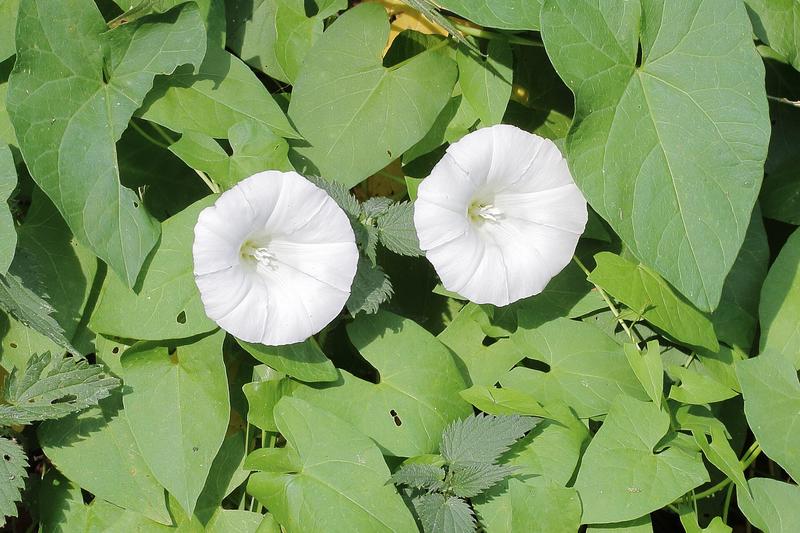
Quick facts
- Watering
- No watering required
- Sunlight
- Full sun to partial shade
- Soil
- Any soil type
- Humans
- Unknown
- Cats
- Unknown
- Dogs
- Unknown
- Height
- 100–300 cm
- Spread
- 100–500 cm
- Spacing
- 0 cm apart
About Bindweed
Bindweed is a vigorous, perennial climbing weed native to Europe and widespread throughout the UK. It produces attractive white trumpet-shaped flowers from June to September, but its twining stems can quickly smother garden plants and its deep, brittle roots make it notoriously difficult to eradicate. Despite its pretty blooms, this plant is considered one of the most problematic weeds in British gardens. UK gardeners do not intentionally grow bindweed; it appears uninvited and requires persistent control measures to prevent it taking over borders, vegetable patches, and hedgerows.
UK fact: Bindweed's deep root system can extend up to 5 metres underground and survive for more than 20 years, making it one of the RHS's top five most difficult weeds to control in British gardens, alongside Japanese knotweed and horsetail.
Watering Bindweed
As an invasive weed, bindweed requires no watering and thrives on natural UK rainfall alone. It is remarkably drought-tolerant once established, with deep roots accessing moisture far below the soil surface. In fact, its ability to survive dry spells better than many cultivated plants gives it a competitive advantage during British summers. Never water bindweed intentionally; focus efforts on removal rather than maintenance.
Sunlight requirements
Bindweed thrives in both full sun and partial shade, making it adaptable to most UK garden positions. It grows particularly vigorously in sunny, open borders but will also colonise shaded areas beneath hedges and shrubs. This adaptability is one reason it's so difficult to control in British gardens.
Soil and feeding
Bindweed is extremely adaptable and will grow in virtually any UK soil type, from heavy clay to light sand, and tolerates pH levels from acidic to alkaline (pH 4.5-8.0). It actually thrives in poor, neglected soils where other plants struggle, though it grows most vigorously in fertile, well-cultivated garden beds. This lack of fussiness about soil conditions makes it particularly problematic in British gardens, as it cannot be discouraged by adjusting soil type or quality.
Bindweed requires no feeding and will thrive without any fertiliser. In fact, feeding garden plants can inadvertently benefit nearby bindweed, making it grow even more vigorously and become harder to control.
Pruning Bindweed
Rather than pruning, bindweed requires persistent removal efforts. Cut back all visible growth regularly to weaken the root system, ideally every 7-10 days throughout the growing season. Remove flowering stems before they set seed to prevent further spread. For effective control, combine regular cutting with careful digging to remove as much root as possible, though even tiny root fragments can regenerate into new plants.
Propagating Bindweed
Bindweed propagates itself all too readily through both seed and vegetative means, which is why it's such a persistent problem in UK gardens. Seeds can remain viable in soil for up to 30 years and germinate when brought to the surface by cultivation. More problematically, any fragment of root left in the soil—even pieces as small as 5cm—can regenerate into a new plant. Bindweed also spreads via underground rhizomes that travel horizontally through borders, emerging metres away from the parent plant.
Common problems
The main problem with bindweed is bindweed itself—it is the problem rather than having problems. Its twining stems strangle garden plants, blocking light and pulling them over, whilst its roots compete aggressively for water and nutrients. Control is extremely difficult: digging often fragments roots and spreads the problem, whilst chemical control requires repeated applications of systemic weedkiller when the plant is in active growth. Bindweed is rarely affected by pests or diseases, which unfortunately means there are no natural controls to help manage it in UK gardens.
Spot a problem with your plant? Photograph the affected area using the Loam app and it will suggest the most likely cause and treatment.
Safety
- Humans
-
Unknown
Bindweed contains alkaloids and resins that may cause mild gastrointestinal upset if ingested. Historically used medicinally as a purgative, but not recommended for consumption due to unpredictable effects.
- Cats
-
Unknown
Limited toxicity data available for cats. May cause mild digestive upset if consumed. Contact a vet if significant quantities are eaten.
- Dogs
-
Unknown
Limited toxicity data available for dogs. May cause mild vomiting or diarrhoea if consumed. Contact a vet if your dog eats substantial amounts.
Toxicity information is for general guidance only. If a person or pet has been exposed to this plant and you are concerned, seek advice from a medical professional or vet.
Seasonal care calendar
Monthly care guide for Bindweed in the UK, based on average conditions.
| Month | Care tasks |
|---|---|
| January | Dormant period. Plan control strategy for the coming season and gather tools and materials. |
| February | Dormant period. Prepare beds and check for any early shoots emerging in mild spells. |
| March | New shoots begin emerging. Start regular removal, cutting back growth and carefully digging out roots where possible. |
| April | Active growth begins. Remove all visible shoots every 7-10 days to weaken root system. Apply systemic weedkiller if using chemical control. |
| May | Vigorous growth period. Continue regular removal every week. Monitor for new shoots emerging through mulch or between paving. |
| June | Flowering begins. Remove all flowering stems before seed set. Maintain weekly cutting regime to exhaust roots. |
| July | Peak flowering. Continue removing all growth and flowers. Apply second weedkiller treatment if needed, following product instructions. |
| August | Late flowering and seed production. Remove all stems to prevent seeding. Maintain weekly removal to weaken plant. |
| September | Growth slows but continues. Keep removing shoots as they appear. Good time for careful root excavation as soil is still workable. |
| October | Growth declining. Continue removal of any remaining shoots. Dig out roots where practical before winter dormancy. |
| November | Plant dying back. Remove last visible growth. Apply thick mulch to suppress spring emergence, though roots will survive. |
| December | Dormant period. Review year's control efforts and plan next season's strategy. Consider covering problem areas with landscape fabric. |
Frequently asked questions
- How do I get rid of bindweed permanently?
- Complete eradication requires persistent effort over 2-3 years. Dig out as much root as possible, then remove every shoot that appears every 7-10 days to exhaust the root system. Alternatively, apply systemic glyphosate-based weedkiller when bindweed is actively growing, repeating applications as new growth appears. Cover small areas with thick black plastic or landscape fabric for at least two growing seasons to starve roots of light. Never rotavate soil containing bindweed as this fragments roots and multiplies the problem.
- Why does bindweed keep coming back in my garden?
- Bindweed's extensive root system can penetrate 5 metres deep and survive for decades, with even tiny root fragments regenerating into new plants. The Loam app can help you track your removal efforts over time and set weekly reminders to cut back growth consistently—the key to eventually exhausting the roots and achieving control.
- Can I compost bindweed or will it spread?
- Never compost bindweed roots, rhizomes, or seed heads, as they will survive most home composting processes and spread the problem when you use the compost. You can compost young leafy growth if your compost heap reaches high temperatures (above 60°C), but it's safer to bin or burn bindweed material. Roots and seeds should go in council green waste where they'll be processed at higher temperatures, or disposed of as general waste.
Got a question about growing Bindweed that isn't covered here? Ask the Garden Advisor in the Loam app. It knows your saved plants and local conditions.
Related plants
This page was compiled with AI assistance and reviewed by our team. .