Honeysuckle
Lonicera periclymenum
Climbers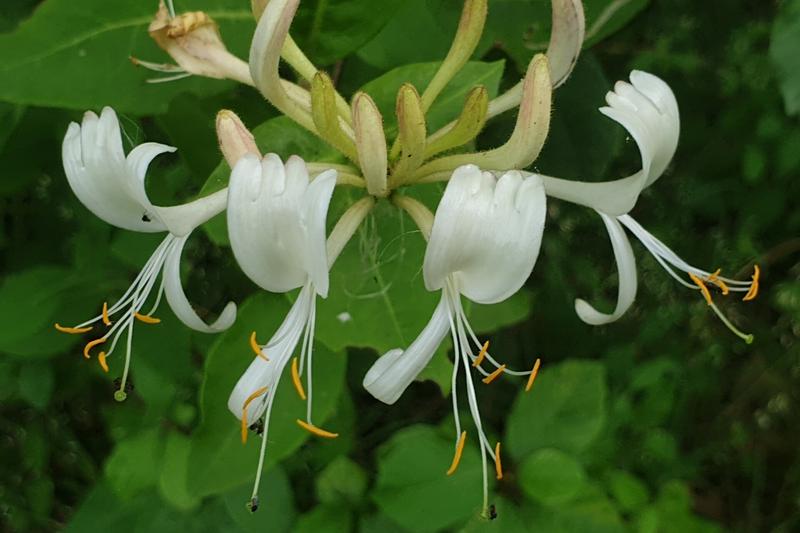
Quick facts
- Watering
- Weekly during establishment
- Sunlight
- Full sun to partial shade
- Soil
- Moist, well-drained, humus-rich
- Humans
- Toxic
- Cats
- Toxic
- Dogs
- Toxic
- Height
- 400–700 cm
- Spread
- 100–200 cm
- Spacing
- 150–200 cm apart
- RHS recognition
- Award of Garden Merit
About Honeysuckle
Honeysuckle is a vigorous, deciduous climbing shrub native to the UK and much of Europe, beloved for its intensely fragrant, tubular flowers that appear from late spring through summer. The creamy-white to yellow blooms, often flushed with pink or red, are followed by glossy red berries in autumn, providing food for birds. British gardeners prize this native climber for its heady evening scent, wildlife value, and ability to scramble over arches, pergolas, and through hedgerows with minimal fuss.
UK fact: Honeysuckle has been celebrated in British folklore and literature for centuries, with Shakespeare referencing its sweet scent in A Midsummer Night's Dream, and it remains one of the most iconic scents of the English countryside on warm summer evenings.
Watering Honeysuckle
Newly planted honeysuckle requires consistent moisture, so water weekly from spring through autumn if rainfall is scarce. Once established (typically after two years), honeysuckle is reasonably drought-tolerant but benefits from watering during extended dry periods in summer, particularly if grown in containers or against walls where soil dries quickly. Apply a 5-7cm mulch around the base to retain moisture and keep roots cool. In typical UK conditions, established plants rarely need supplementary watering except during heatwaves.
Sunlight requirements
Plant honeysuckle where its roots are in shade and its flowering stems can reach sunlight—ideally with a cool, north-facing root run and south or west-facing aspect for the upper growth. In the UK, it performs well on east-facing walls and fences, though flowering may be slightly reduced. Avoid deep shade, which results in leggy growth and few flowers.
Soil and feeding
This adaptable climber grows in a wide range of soils, from clay to sandy loam, provided drainage is adequate. Enrich planting holes with well-rotted compost or leaf mould to improve moisture retention and fertility. Honeysuckle prefers a neutral to slightly alkaline pH (6.5-7.5) but tolerates mildly acidic conditions. Avoid planting in heavy, waterlogged clay without improving drainage, as this can lead to root rot. Container-grown specimens perform well in a loam-based compost such as John Innes No. 3.
Feed established honeysuckle each March with a general-purpose granular fertiliser such as Growmore or blood, fish and bone, scattering a handful around the root zone. Follow with a 5cm layer of well-rotted manure or garden compost to suppress weeds and provide slow-release nutrients. Container-grown plants benefit from fortnightly liquid feeds with a high-potash fertiliser during the flowering season to encourage abundant blooms.
Pruning Honeysuckle
Honeysuckle requires minimal pruning but benefits from thinning to prevent a tangled mass of stems. Immediately after flowering (typically August), cut back flowered shoots to a strong pair of buds and remove up to one-third of the oldest, woodiest stems at the base to encourage fresh growth. If the plant becomes overgrown or bare at the base, renovate by cutting all stems back to 60cm in early spring; it will regrow vigorously. Tie in new growth to supports throughout the growing season to direct coverage and maintain an attractive framework.
Propagating Honeysuckle
The easiest method is layering: in spring, select a flexible, low-growing stem, wound the underside slightly, peg it into the soil or a pot of compost, and it will root within 12 months. Alternatively, take 10-15cm semi-ripe cuttings in July or August, remove lower leaves, dip in hormone rooting powder, and insert into gritty compost in a cold frame. Hardwood cuttings taken in late autumn also succeed if planted in a sheltered spot outdoors. Rooted layers or cuttings can be transplanted the following spring.
Common problems
Honeysuckle is generally trouble-free but can suffer from aphid infestations in spring, which cause distorted growth and sticky honeydew; treat with insecticidal soap or encourage natural predators. Powdery mildew often appears as white patches on leaves during dry summers, particularly on plants in poor air circulation or dry soil—improve watering and mulching to reduce stress. Honeysuckle leaf blight, caused by the fungus Insolibasidium deformans, produces small brown spots and can defoliate plants; remove and destroy affected leaves and improve air flow. Occasionally, plants become congested and flower poorly, which is resolved by thinning out old wood.
Spot a problem with your plant? Photograph the affected area using the Loam app and it will suggest the most likely cause and treatment.
Safety
- Humans
-
Toxic
The berries are mildly toxic if ingested, causing nausea, vomiting, and diarrhoea. Keep berries away from young children.
- Cats
-
Toxic
Berries and leaves can cause vomiting, diarrhoea, and drooling if consumed. Most cats avoid the plant.
- Dogs
-
Toxic
Ingestion of berries may cause vomiting, diarrhoea, and stomach upset. Monitor dogs around fruiting plants.
Toxicity information is for general guidance only. If a person or pet has been exposed to this plant and you are concerned, seek advice from a medical professional or vet.
Seasonal care calendar
Monthly care guide for Honeysuckle in the UK, based on average conditions.
| Month | Care tasks |
|---|---|
| January | No action needed. Plant is dormant. |
| February | Check supports and ties are secure before spring growth begins. |
| March | Apply balanced fertiliser around the base and mulch with well-rotted compost. Renovate overgrown plants if necessary. |
| April | Tie in new growth to supports. Watch for aphids on young shoots and treat if necessary. |
| May | Water during dry spells. Early varieties begin flowering. Deadhead spent blooms to prolong display. |
| June | Peak flowering period. Enjoy the fragrance and watch for pollinating moths in the evening. Continue watering if dry. |
| July | Flowering continues. Take semi-ripe cuttings mid to late month. Water container plants regularly. |
| August | Prune after flowering finishes, removing flowered shoots and thinning congested growth. Take final semi-ripe cuttings early in the month. |
| September | Red berries ripen, attracting birds. Reduce watering as growth slows. |
| October | Plant new honeysuckle while soil is still warm. Leaves begin to fall. |
| November | Continue planting bare-root specimens. Tidy fallen leaves from around the base. |
| December | No action needed. Plant is dormant. |
Frequently asked questions
- When should I prune honeysuckle?
- Prune honeysuckle in late summer, immediately after flowering has finished (typically July to August). This timing allows the plant to produce new growth that will carry next year's flowers. Remove about one-third of the oldest stems at ground level and trim back flowered shoots. Avoid pruning in spring or you'll cut off the flower buds.
- Why are my honeysuckle leaves turning yellow?
- Yellowing leaves can indicate several issues including overwatering, poor drainage, nutrient deficiency, or root problems. Check soil moisture levels and ensure the plant isn't waterlogged. If the problem persists or you're unsure of the cause, the Loam app can help diagnose the specific issue through photo analysis and provide personalised care recommendations based on your growing conditions.
- Can I grow honeysuckle from cuttings?
- Yes, honeysuckle propagates easily from semi-ripe cuttings taken in July or August. Cut 10-15cm lengths of current season's growth, remove lower leaves, and insert into pots of gritty compost. Keep in a sheltered spot and they should root within 6-8 weeks. Alternatively, layer low-growing stems by pegging them to the soil in spring—they'll root whilst still attached to the parent plant.
Got a question about growing Honeysuckle that isn't covered here? Ask the Garden Advisor in the Loam app. It knows your saved plants and local conditions.
Related plants
This page was compiled with AI assistance and reviewed by our team. .