Star Jasmine
Trachelospermum jasminoides
Climbers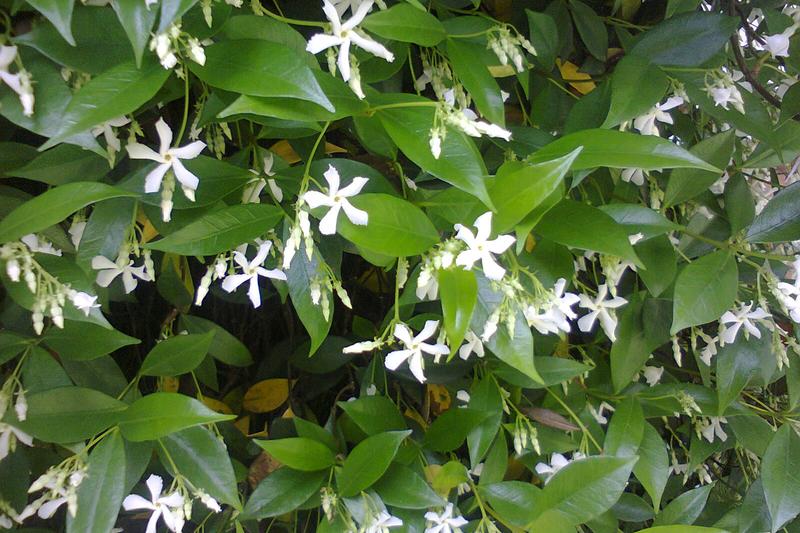
Quick facts
- Watering
- Weekly during establishment, then occasional
- Sunlight
- Full sun to partial shade
- Soil
- Well-drained, fertile, slightly acidic
- Humans
- Toxic
- Cats
- Toxic
- Dogs
- Toxic
- Height
- 600–900 cm
- Spread
- 150–300 cm
- Spacing
- 150–200 cm apart
- RHS recognition
- Award of Garden Merit
About Star Jasmine
Star Jasmine is an evergreen climbing plant prized for its glossy dark green foliage and intensely fragrant white star-shaped flowers that appear from late spring through summer. Native to China and Japan, this vigorous twiner has become a favourite in British gardens for covering walls, fences, and pergolas, particularly in sheltered urban and coastal locations. Its sweet, heady perfume on warm evenings makes it especially popular for planting near patios and seating areas. Though not a true jasmine, it offers similar fragrance with greater cold tolerance for UK conditions.
UK fact: Star Jasmine holds the RHS Award of Garden Merit and performs particularly well in London and southern England, where it thrives on warm south-facing walls, often remaining fully evergreen through mild winters and occasionally surviving temperatures down to -10°C when established.
Watering Star Jasmine
Water newly planted Star Jasmine regularly during the first two growing seasons to establish a deep root system, particularly during dry spells from April to September. Once established, plants are reasonably drought-tolerant but benefit from watering during prolonged dry periods in summer to maintain healthy foliage and encourage flowering. Container-grown specimens require more frequent watering, typically twice weekly in summer, as they cannot access ground moisture. Reduce watering significantly in winter when growth slows, allowing the top few centimetres of soil to dry between waterings.
Sunlight requirements
Star Jasmine flowers most prolifically in full sun but tolerates partial shade, making it versatile for various garden aspects. In the UK, a south or west-facing wall provides ideal conditions, offering warmth and protection from cold easterly winds. In northern regions or exposed sites, choose the sunniest, most sheltered position available to encourage flowering and protect evergreen foliage through winter.
Soil and feeding
Star Jasmine thrives in moist but well-drained soil enriched with organic matter, preferring a slightly acidic to neutral pH of 5.5 to 7.0. Heavy clay soils should be improved with grit and compost to enhance drainage, as waterlogged roots can lead to root rot, particularly in winter. Sandy soils benefit from the addition of well-rotted manure or garden compost to improve moisture retention and fertility. For container cultivation, use a loam-based compost such as John Innes No. 3 mixed with additional grit for drainage.
Apply a balanced slow-release fertiliser in early spring as new growth begins, or feed monthly from April to August with a liquid fertiliser diluted to half strength. A top-dressing of well-rotted compost or manure around the base in March provides additional nutrients and helps retain moisture. Avoid high-nitrogen feeds after August, as soft late growth is vulnerable to frost damage.
Pruning Star Jasmine
Prune Star Jasmine after flowering in late summer or early autumn to maintain shape and control vigour, removing wayward shoots and thinning congested growth to improve air circulation. Tie in new growth to supports throughout the growing season to direct coverage and create the desired framework. Established plants tolerate hard pruning if they become overgrown, though this may sacrifice the following year's flowers. Remove any frost-damaged growth in spring once the risk of severe cold has passed.
Propagating Star Jasmine
Star Jasmine propagates readily from semi-ripe cuttings taken in late summer (July to August). Take 10-15cm cuttings from the current season's growth, remove lower leaves, and insert into pots of gritty compost, keeping them in a sheltered spot or cold frame. Rooting typically takes 6-8 weeks, with young plants ready to pot on the following spring. Layering is also effective: peg a low-growing stem into the soil in spring, and it should root within a year, allowing you to sever and transplant the new plant.
Common problems
Star Jasmine is generally pest and disease-free in the UK, though aphids may occasionally colonise soft new growth in spring and early summer, causing distorted leaves and sticky honeydew. Scale insects can appear on stems and leaf undersides, particularly on plants grown under glass or in sheltered positions. In poorly drained soil or during wet winters, root rot may occur, causing yellowing foliage and dieback. Cold damage is the most common cultural problem, with leaves turning bronze or purple in harsh winters, though plants usually recover with new growth in spring.
Spot a problem with your plant? Photograph the affected area using the Loam app and it will suggest the most likely cause and treatment.
Safety
- Humans
-
Toxic
All parts contain toxic compounds that can cause skin irritation and gastrointestinal upset if ingested. Wear gloves when pruning to avoid sap contact.
- Cats
-
Toxic
Contains compounds toxic to cats if ingested, causing vomiting, drooling, and gastrointestinal distress. Keep cats away from prunings.
- Dogs
-
Toxic
Toxic to dogs if ingested, causing vomiting, diarrhoea, and excessive drooling. Prevent access to fallen leaves and prunings.
Toxicity information is for general guidance only. If a person or pet has been exposed to this plant and you are concerned, seek advice from a medical professional or vet.
Seasonal care calendar
Monthly care guide for Star Jasmine in the UK, based on average conditions.
| Month | Care tasks |
|---|---|
| January | No action needed. Protect from severe frost with fleece if temperatures below -5°C are forecast. |
| February | Check ties and supports are secure before spring growth begins. Remove any frost-damaged foliage. |
| March | Apply slow-release fertiliser and mulch with compost. Begin tying in new growth as it emerges. |
| April | Water regularly if dry. Continue training new shoots onto supports. Watch for aphids on young growth. |
| May | Flower buds forming. Maintain regular watering and tie in vigorous new growth weekly. |
| June | Peak flowering period. Deadhead spent blooms if accessible. Water during dry spells. |
| July | Flowering continues. Take semi-ripe cuttings mid to late month. Water containers twice weekly. |
| August | Continue taking cuttings early in month. Prune after flowering to shape and control size. |
| September | Complete any pruning. Reduce watering as growth slows. Pot on rooted cuttings. |
| October | Tie in any loose growth before autumn winds. Check plant is secure on supports. |
| November | Reduce watering significantly. Apply winter mulch around the base in cold regions. |
| December | No action needed. Monitor for frost damage and provide fleece protection if needed. |
Frequently asked questions
- Why is my Star Jasmine not flowering?
- Insufficient sunlight is the most common cause, as Star Jasmine needs at least 4-6 hours of direct sun to flower well. Other factors include excessive nitrogen feeding (which promotes foliage over flowers), pruning at the wrong time (remove spent flowers only after blooming), or the plant being too young (it may take 2-3 years to establish before flowering freely). Cold damage from harsh winters can also reduce flowering the following season.
- Is my Star Jasmine getting enough water and the right nutrients?
- Star Jasmine shows stress through leaf yellowing (underwatering or nutrient deficiency) or leaf drop (overwatering). The Loam app can help you set personalised watering reminders based on your local weather and send alerts when it's time to feed, taking the guesswork out of care and helping you diagnose problems through its plant health checker.
- Can Star Jasmine survive a British winter outdoors?
- Yes, established Star Jasmine is hardy to around -10°C (RHS H4) and survives most UK winters, particularly in southern and coastal regions. In colder areas or during severe winters, foliage may turn bronze or purple and some dieback can occur, but plants typically recover in spring. Provide protection with fleece during prolonged freezing spells, and plant against a warm south or west-facing wall for best winter survival.
Got a question about growing Star Jasmine that isn't covered here? Ask the Garden Advisor in the Loam app. It knows your saved plants and local conditions.
Related plants
This page was compiled with AI assistance and reviewed by our team. .