Russian Vine
Fallopia baldschuanica
Climbers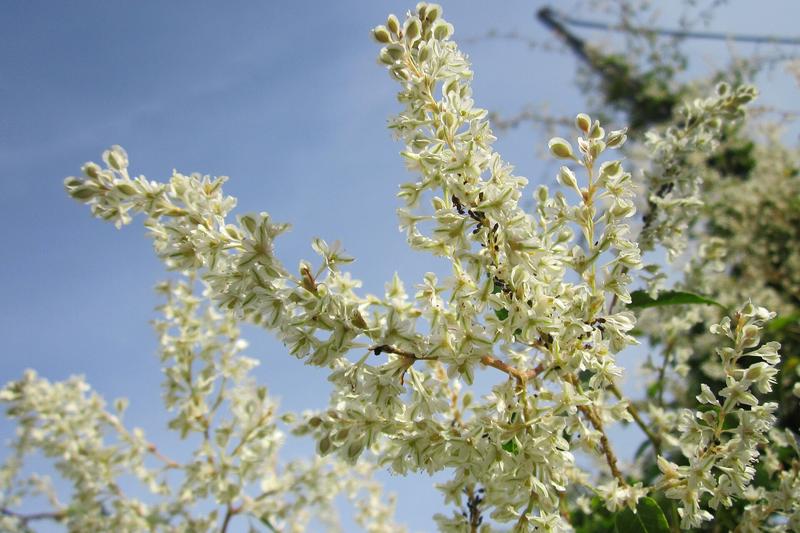
Quick facts
- Watering
- Weekly when establishing
- Sunlight
- Full sun to partial shade
- Soil
- Any well-drained soil
- Humans
- Unknown
- Cats
- Unknown
- Dogs
- Unknown
- Height
- 1000–1500 cm
- Spread
- 400–600 cm
- Spacing
- 500–600 cm apart
About Russian Vine
Russian Vine is an exceptionally vigorous deciduous climber native to Central Asia, renowned for its rapid growth that can reach 12 metres or more in a single season. It produces masses of frothy white or pale pink flowers from late summer through autumn, creating a spectacular display that covers unsightly structures. UK gardeners typically grow it to quickly screen eyesores such as sheds, garages, or boundary fences, though its vigour requires careful consideration. Once established, it can become invasive if not rigorously controlled through regular pruning.
UK fact: Russian Vine earned the nickname 'mile-a-minute' in British gardens during the post-war period when it was widely planted to rapidly cover bomb-damaged buildings and unsightly ruins across UK cities.
Watering Russian Vine
Water newly planted Russian Vine weekly during the first growing season to establish a strong root system, particularly during dry spells. Once established, it is remarkably drought-tolerant and rarely requires supplementary watering in the UK climate, even during summer. In exceptionally dry periods lasting more than three weeks, a deep watering will maintain vigour and flowering. Avoid waterlogging, as this can lead to root rot in heavy soils.
Sunlight requirements
Russian Vine thrives in full sun but tolerates partial shade, though flowering may be reduced in shadier positions. In the UK, a south or west-facing aspect produces the most prolific flowering, whilst north-facing positions still support vigorous growth but with fewer blooms. Avoid planting near trees or shrubs you wish to preserve, as it will rapidly smother them.
Soil and feeding
Russian Vine is exceptionally unfussy about soil type and will grow in almost any well-drained soil, from poor sandy ground to heavy clay. It tolerates a wide pH range from slightly acidic to alkaline (pH 5.5-8.0), making it suitable for most UK gardens. Whilst it performs best in moderately fertile soil, it will grow vigorously even in poor conditions, which can actually help limit its otherwise rampant growth. Improve drainage in heavy clay by incorporating grit or sharp sand at planting time.
Russian Vine requires minimal feeding and often performs better with less fertility, as rich soil encourages even more vigorous growth. If desired, apply a balanced general-purpose fertiliser in early spring, but this is rarely necessary in most UK garden soils. Avoid high-nitrogen feeds, which promote excessive leafy growth at the expense of flowers.
Pruning Russian Vine
Hard pruning is essential to control Russian Vine's vigorous growth and prevent it overwhelming neighbouring plants or structures. Prune back all growth to within 30-60 cm of the main framework in late winter or early spring (February-March) before new growth begins. Throughout the growing season, trim back wayward shoots as needed to maintain boundaries, as growth can exceed 6 metres in a single season. Wear gloves when pruning, as some gardeners experience skin irritation from the sap.
Propagating Russian Vine
Russian Vine propagates readily from semi-ripe cuttings taken in mid to late summer (July-August). Take 10-15 cm cuttings from the current season's growth, remove lower leaves, and insert into pots of gritty compost, keeping moist in a sheltered position. Layering is equally successful: peg down a low-growing stem in spring, cover with soil, and it will root within a few months. Division of established plants in early spring is also possible, though the vigorous root system can be challenging to manage.
Common problems
Russian Vine is remarkably pest and disease-free in UK gardens, with few significant problems. The main issue is its invasive nature: without rigorous pruning, it will smother neighbouring plants, damage guttering, and lift roof tiles if allowed to climb buildings. Japanese knotweed beetle occasionally feeds on foliage but rarely causes serious damage. In very wet conditions, root rot can occur in poorly drained soils, whilst prolonged drought may cause leaf drop, though plants usually recover quickly.
Spot a problem with your plant? Photograph the affected area using the Loam app and it will suggest the most likely cause and treatment.
Safety
- Humans
-
Unknown
No confirmed toxicity data available, though sap may cause skin irritation in sensitive individuals. Avoid ingestion.
- Cats
-
Unknown
No specific toxicity data available for cats. Monitor pets and discourage chewing.
- Dogs
-
Unknown
No specific toxicity data available for dogs. Monitor pets and discourage chewing.
Toxicity information is for general guidance only. If a person or pet has been exposed to this plant and you are concerned, seek advice from a medical professional or vet.
Seasonal care calendar
Monthly care guide for Russian Vine in the UK, based on average conditions.
| Month | Care tasks |
|---|---|
| January | No action needed; plant is fully dormant. |
| February | Carry out hard pruning before new growth begins, cutting back to main framework. |
| March | Complete any remaining pruning. Apply balanced fertiliser if desired. Plant new specimens. |
| April | New growth emerges rapidly. Water newly planted specimens weekly. Begin monitoring growth. |
| May | Growth accelerates significantly. Trim back wayward shoots. Continue watering new plants. |
| June | Vigorous growth continues. Prune regularly to maintain boundaries and prevent smothering. |
| July | Take semi-ripe cuttings for propagation. Continue trimming to control spread. |
| August | Flowers begin to appear. Continue taking cuttings. Trim back excessive growth. |
| September | Peak flowering period with masses of white blooms. Deadhead if desired to tidy appearance. |
| October | Flowering continues into early autumn. Reduce watering as growth slows. |
| November | Foliage begins to die back. Light tidying if desired, but main pruning in late winter. |
| December | Plant fully dormant. Plan pruning strategy for late winter. |
Frequently asked questions
- How do I stop Russian Vine taking over my garden?
- Hard prune back to the main framework every February-March, cutting all growth to within 30-60 cm of the base. Throughout the growing season, trim wayward shoots monthly to maintain strict boundaries. Consider installing a root barrier at planting to prevent underground spread, and never plant near structures or trees you wish to preserve.
- Why isn't my Russian Vine flowering well?
- Russian Vine flowers best in full sun positions and may produce fewer blooms in shade. Over-feeding with nitrogen-rich fertilisers promotes leafy growth at the expense of flowers. The Loam app can help you track sunlight levels in your garden and set reminders for appropriate feeding schedules to maximise flowering.
- Can I grow Russian Vine in a container?
- Whilst technically possible, Russian Vine is unsuitable for long-term container growing due to its extremely vigorous root system and rapid growth rate. It will quickly become pot-bound and require constant root pruning. Consider less vigorous climbers such as clematis or honeysuckle for container cultivation instead.
Got a question about growing Russian Vine that isn't covered here? Ask the Garden Advisor in the Loam app. It knows your saved plants and local conditions.
Related plants
This page was compiled with AI assistance and reviewed by our team. .