Akebia
Akebia quinata
Climbers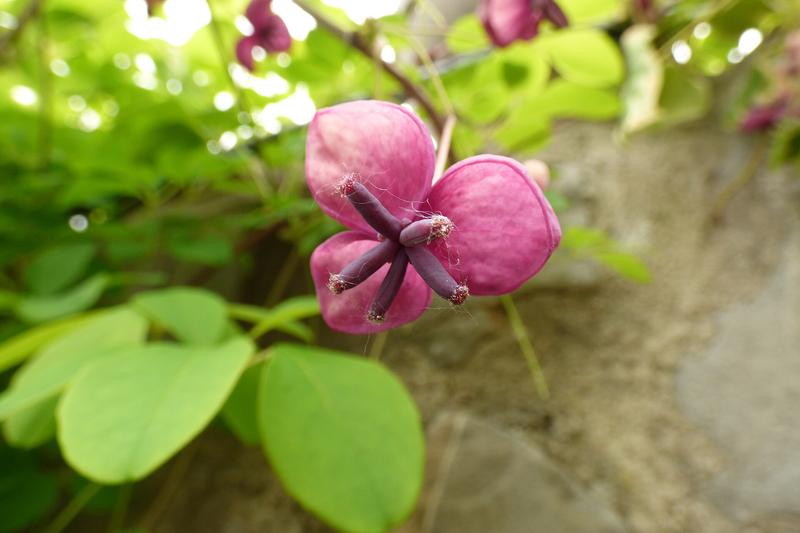
Quick facts
- Watering
- Weekly during establishment, then occasional
- Sunlight
- Full sun to partial shade
- Soil
- Well-drained, moderately fertile, humus-rich
- Humans
- Safe
- Cats
- Safe
- Dogs
- Safe
- Height
- 600–1200 cm
- Spread
- 300–600 cm
- Spacing
- 300–400 cm apart
- RHS recognition
- Award of Garden Merit
About Akebia
Akebia quinata is a vigorous, semi-evergreen climber native to Japan, China and Korea, prized for its unusual chocolate-scented purple flowers in spring and attractive five-lobed foliage. In the UK, it performs reliably as a fast-growing screening plant, capable of covering walls, fences and pergolas with minimal fuss. The curious vanilla-scented blooms appear in April and May, occasionally followed by sausage-shaped purple fruits in warm summers. British gardeners value it for its rapid growth, tolerance of shade, and ability to thrive in cooler climates where many exotic climbers struggle.
UK fact: Akebia quinata holds the RHS Award of Garden Merit and has been grown in British gardens since its introduction by Robert Fortune in 1845, becoming particularly popular in Victorian walled gardens where its vigour and exotic appearance were highly prized.
Watering Akebia
During the first year after planting, water weekly during dry spells to encourage deep root development. In the second season, reduce to fortnightly watering during prolonged dry periods. Established plants are highly drought-tolerant and typically require watering only during exceptional summer droughts lasting more than three weeks. Container-grown specimens need watering two to three times weekly during summer, reducing to weekly in cooler months.
Sunlight requirements
Plant in full sun for the best flowering and potential fruit production, though akebia tolerates partial shade remarkably well, making it ideal for north-facing walls. In southern England, some afternoon shade prevents leaf scorch during hot summers. East or west-facing aspects are perfect, providing morning or evening sun whilst protecting the plant from the harshest midday rays.
Soil and feeding
Plant in any reasonably fertile, well-drained soil with a pH between 6.0 and 7.5, though akebia tolerates slightly alkaline conditions. Heavy clay soils benefit from the addition of grit and compost to improve drainage, whilst sandy soils should be enriched with well-rotted manure or garden compost to retain moisture. Avoid waterlogged ground, particularly in winter, as this can lead to root rot. A 5-8cm mulch of organic matter applied annually helps maintain soil structure and moisture levels.
Feed established plants in March with a general-purpose fertiliser such as blood, fish and bone at 70g per square metre, or apply a slow-release granular feed. A second light feed in June encourages continued growth and supports fruit development in warm years. Annual mulching with well-rotted compost or manure in late winter provides additional nutrients and improves soil condition.
Pruning Akebia
Prune immediately after flowering in May or early June, cutting back flowered shoots to maintain shape and prevent the plant becoming too dense. Remove dead, damaged or crossing stems, and thin out congested growth to improve air circulation. Akebia tolerates hard pruning if it outgrows its space; cut back to within 30cm of the base in late winter, though this sacrifices the current season's flowers. Tie in new growth regularly throughout the growing season to train the plant in the desired direction.
Propagating Akebia
Semi-ripe cuttings taken in July or August root readily in a free-draining compost mix. Layering is even more reliable: peg down a low-growing stem in autumn, and it will root by the following spring. Division of established plants is possible but challenging due to the woody root system. Seed propagation is slow and unreliable in the UK climate, and seedlings may not come true to type.
Common problems
Akebia is remarkably pest and disease-free in UK gardens, with few serious problems. Aphids occasionally colonise young shoot tips in spring but rarely cause significant damage and can be controlled by squashing or spraying with insecticidal soap. In very dry conditions, the foliage may become sparse or drop, though this is easily remedied with watering. The main issue is vigour: akebia can become invasive if not pruned regularly, swamping neighbouring plants and requiring annual control to keep it within bounds.
Spot a problem with your plant? Photograph the affected area using the Loam app and it will suggest the most likely cause and treatment.
Safety
- Humans
- Safe
- Cats
- Safe
- Dogs
- Safe
Toxicity information is for general guidance only.
Seasonal care calendar
Monthly care guide for Akebia in the UK, based on average conditions.
| Month | Care tasks |
|---|---|
| January | No action needed; plant is dormant. Check ties and supports after winter storms. |
| February | Apply well-rotted compost or manure as a mulch around the base. Hard prune if necessary to control size. |
| March | Apply balanced fertiliser. New growth begins to emerge; tie in young shoots to supports. |
| April | Enjoy the chocolate-scented flowers. Continue tying in new growth. Water if conditions are dry. |
| May | Flowering continues. Prune after flowering to shape and control growth. Monitor for aphids on new shoots. |
| June | Apply a light feed to support continued growth. Tie in vigorous new shoots regularly. Water during dry spells. |
| July | Take semi-ripe cuttings for propagation. Continue tying in growth. Water container plants regularly. |
| August | Continue taking cuttings if needed. Watch for developing fruits in warm years. Water during prolonged dry periods. |
| September | Fruits may ripen to purple (edible but bland). Layer stems for propagation. Reduce watering as growth slows. |
| October | Foliage begins to thin in colder areas. Tidy any wayward growth. Plant new specimens. |
| November | Plant bare-root or container-grown specimens. Check supports and ties are secure before winter. |
| December | Plant remains semi-evergreen in mild areas. No action needed; allow plant to rest. |
Frequently asked questions
- When should I prune akebia?
- Prune akebia annually after flowering in late spring, typically May or June. This timing is crucial because akebia flowers on the previous year's wood, so pruning earlier would remove flower buds. Cut back vigorous growth and remove unwanted stems to maintain shape. If the plant has become overgrown, you can hard prune in late winter to within 30cm of the base, though you'll sacrifice that year's flowers. Regular pruning keeps growth manageable and encourages healthy flowering.
- Why are my akebia leaves turning yellow?
- Yellowing akebia leaves can indicate several issues including waterlogging, nutrient deficiency, or natural seasonal change. Container-grown plants are particularly prone to nutrient depletion and may need feeding from March to August. Overwatering or poor drainage can cause root problems leading to yellow foliage. In autumn, some leaf yellowing is normal as the semi-evergreen plant prepares for winter. The Loam app can help diagnose the specific cause by analysing photos of your plant and tracking watering patterns to provide personalised care advice.
- What soil does akebia need?
- Akebia quinata is unfussy about soil and tolerates most well-drained soil types, including clay, loam, and sandy soils. It performs best in moist but well-drained conditions and adapts to both acid and alkaline pH levels. Avoid waterlogged sites as these can cause root rot. When planting, improve heavy clay by incorporating organic matter, and add compost to sandy soils to improve moisture retention. For container growing, use a soil-based compost such as John Innes No. 3, which provides good structure and nutrients for this vigorous climber.
Got a question about growing Akebia that isn't covered here? Ask the Garden Advisor in the Loam app. It knows your saved plants and local conditions.
Related plants
This page was compiled with AI assistance and reviewed by our team. .