Passion Flower
Passiflora caerulea
Climbers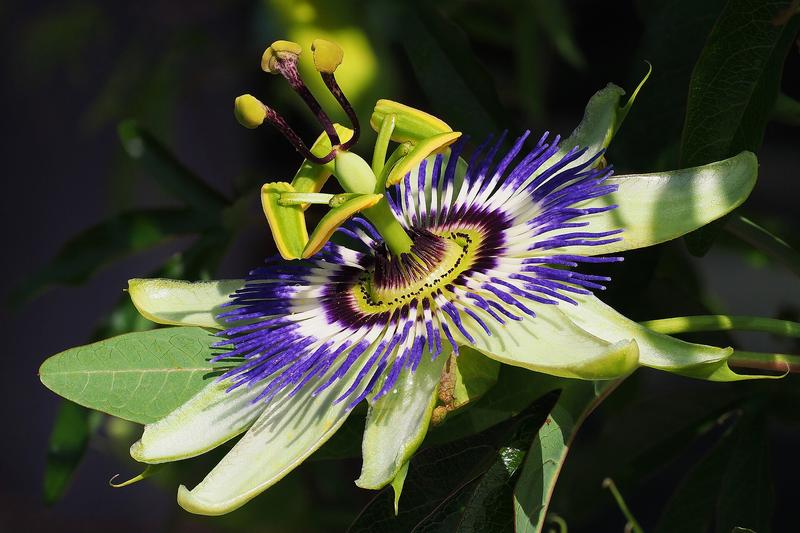
Quick facts
- Watering
- Weekly during growing season
- Sunlight
- Full sun to partial shade
- Soil
- Well-drained, moderately fertile loam
- Humans
- Toxic
- Cats
- Toxic
- Dogs
- Toxic
- Height
- 600–1000 cm
- Spread
- 150–300 cm
- Spacing
- 200–300 cm apart
- RHS recognition
- Award of Garden Merit
About Passion Flower
Passion Flower is a vigorous evergreen or semi-evergreen climber renowned for its extraordinary exotic blooms featuring intricate purple and white corona filaments surrounding prominent stamens. Native to South America, this species has naturalised in sheltered coastal areas of southern England and thrives in warm, protected gardens throughout the UK. British gardeners prize it for its ability to transform walls and fences with rapid growth and a succession of stunning flowers from June through September, occasionally followed by orange egg-shaped fruits.
UK fact: Passiflora caerulea holds the RHS Award of Garden Merit and is the hardiest passion flower species reliably grown outdoors in Britain, having survived in sheltered London gardens since Victorian times when it became fashionable in conservatories and walled gardens.
Watering Passion Flower
Established plants require weekly watering during active growth from April to September, increasing to twice weekly during hot, dry spells. Reduce watering significantly in autumn as growth slows, and water sparingly through winter, keeping the soil just barely moist to prevent root rot. Container-grown specimens need more frequent watering than those in open ground. Young plants establishing in their first year benefit from consistent moisture but must never sit in waterlogged soil.
Sunlight requirements
Position against a south or west-facing wall for maximum flowering and winter protection in the UK climate. In cooler northern gardens, full sun is essential for flower production and ripening growth before winter. Plants in partial shade will grow vigorously but produce fewer flowers and may be more susceptible to frost damage due to softer growth.
Soil and feeding
Passion Flower performs best in neutral to slightly alkaline soil with a pH of 6.5–7.5, though it tolerates a range from slightly acidic to alkaline. Good drainage is essential, particularly through winter when waterlogging can prove fatal in the UK climate. Incorporate grit or horticultural sand into heavy clay soils before planting. Avoid overly rich, nitrogen-heavy soils which promote excessive leafy growth at the expense of flowers and reduce winter hardiness.
Apply a tomato feed or similar high-potassium liquid fertiliser every two weeks from late April through August to promote flower production. Avoid high-nitrogen feeds which encourage soft, frost-susceptible growth. Cease feeding by early September to allow growth to harden before winter.
Pruning Passion Flower
Cut back frost-damaged stems to healthy growth in April once new shoots emerge and frost risk has passed. Thin overcrowded growth to maintain an open framework and tie in new shoots to supports throughout the growing season. In mild areas, light pruning to shape and control size can be done in late summer after flowering. Avoid autumn pruning as this stimulates soft new growth vulnerable to winter damage.
Propagating Passion Flower
Semi-ripe cuttings taken in July or August root readily and provide the quickest method of propagation. Layering is virtually foolproof and ideal for gardeners wanting just one or two new plants. Seed-raised plants are variable and take several years to flower, though fresh seed from ripe autumn fruits germinates reliably if sown immediately.
Common problems
Passion Flower is relatively trouble-free in the UK but can suffer from red spider mite and whitefly under glass or in hot, dry conditions. Cucumber mosaic virus occasionally causes mottled, distorted leaves and should be controlled by removing affected plants. The main cultural problem is winter damage in cold areas; top growth may be killed by hard frosts but plants usually regenerate from the base if roots are protected with a thick mulch.
Spot a problem with your plant? Photograph the affected area using the Loam app and it will suggest the most likely cause and treatment.
Safety
- Humans
-
Toxic
All parts contain cyanogenic glycosides and may cause stomach upset if ingested. The unripe fruits are particularly toxic and should not be eaten.
- Cats
-
Toxic
Contains compounds that can cause vomiting and gastrointestinal upset in cats if ingested.
- Dogs
-
Toxic
Contains cyanogenic glycosides that may cause vomiting, diarrhoea, and depression if ingested by dogs.
Toxicity information is for general guidance only. If a person or pet has been exposed to this plant and you are concerned, seek advice from a medical professional or vet.
Seasonal care calendar
Monthly care guide for Passion Flower in the UK, based on average conditions.
| Month | Care tasks |
|---|---|
| January | No action needed. Protect roots of borderline-hardy plants with a thick mulch of bark or straw. |
| February | Check ties and supports are secure before spring growth begins. Avoid pruning until frost risk passes. |
| March | Begin watering container plants as temperatures rise. Prepare planting sites by improving drainage if needed. |
| April | Prune out frost-damaged growth once new shoots emerge. Plant out new specimens after the last frost. Begin fortnightly feeding. |
| May | Tie in new growth regularly to supports. Water weekly and continue feeding. Mulch around the base to retain moisture. |
| June | Enjoy the first flowers. Increase watering during dry spells. Continue fortnightly high-potassium feeding. |
| July | Peak flowering period. Take semi-ripe cuttings for propagation. Water twice weekly in hot weather. Deadhead spent blooms. |
| August | Continue taking cuttings early in the month. Maintain regular watering and feeding. Tie in vigorous new growth. |
| September | Reduce feeding and watering as growth slows. Harvest ripe orange fruits if produced. Light tidying of wayward stems acceptable in mild areas. |
| October | Stop feeding. Reduce watering significantly. Check supports are secure before autumn gales arrive. |
| November | Apply protective mulch around the base in cold regions. Water sparingly, keeping soil just barely moist. |
| December | No action needed. Ensure winter protection remains in place. Keep compost of container plants barely moist. |
Frequently asked questions
- When should I prune my Passion Flower?
- Prune Passion Flower in early spring (March–April) before new growth begins. Remove dead, damaged, or frost-killed stems, and cut back vigorous growth to keep the plant within bounds. Light pruning can also be done after flowering in autumn. Avoid heavy pruning in winter when plants are dormant and vulnerable to frost damage through cut stems. Established plants tolerate hard pruning if they become overgrown.
- Why are my Passion Flower leaves turning yellow?
- Yellowing leaves can indicate several issues: overwatering or waterlogged soil, nutrient deficiency (particularly iron or magnesium), or natural leaf drop in autumn. Container plants may need repotting if root-bound. Check soil moisture and drainage first. The Loam app can help diagnose the specific cause by analysing photos of affected leaves and tracking your watering schedule to provide personalised care recommendations.
- How do I propagate Passion Flower from cuttings?
- Take semi-ripe cuttings in summer (July–August) from healthy side shoots about 10–15 cm long. Remove lower leaves, dip the cut end in rooting hormone, and insert into pots of gritty compost. Cover with a plastic bag to maintain humidity and place in a warm spot out of direct sun. Cuttings typically root within 4–6 weeks. You can also layer stems in spring by pegging them to the soil whilst still attached to the parent plant.
Got a question about growing Passion Flower that isn't covered here? Ask the Garden Advisor in the Loam app. It knows your saved plants and local conditions.
Related plants
This page was compiled with AI assistance and reviewed by our team. .