Actinidia
Actinidia kolomikta
Climbers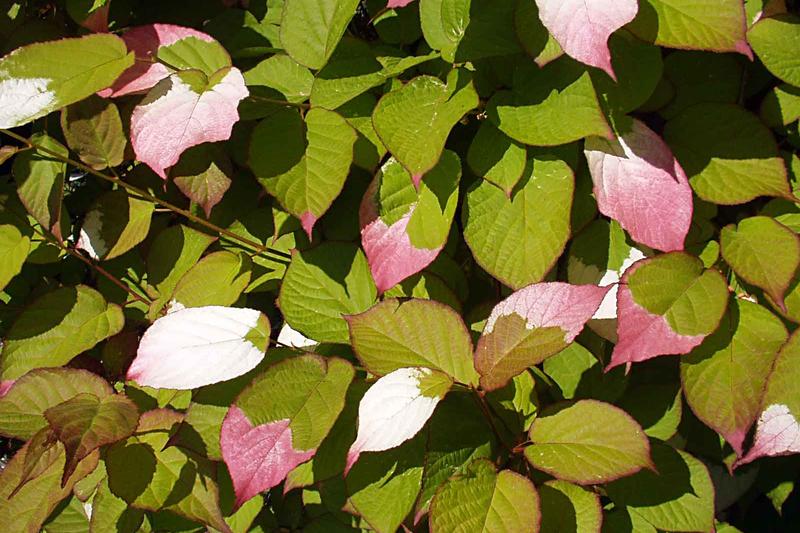
Quick facts
- Watering
- Weekly during growing season
- Sunlight
- Full sun to partial shade
- Soil
- Moist, well-drained, fertile
- Humans
- Safe
- Cats
- Safe
- Dogs
- Safe
- Height
- 400–600 cm
- Spread
- 200–300 cm
- Spacing
- 250–300 cm apart
- RHS recognition
- Award of Garden Merit
About Actinidia
Actinidia kolomikta is a deciduous climbing vine prized for its spectacular variegated foliage, with heart-shaped leaves splashed in pink and white, particularly on male plants. Native to temperate regions of eastern Asia, this hardy climber brings exotic colour to British gardens without the tenderness issues of many ornamental vines. UK gardeners value it for covering walls, fences, and pergolas with its striking foliage display from late spring through summer. Though it can produce small, edible kiwi-like fruits, it is grown primarily as an ornamental climber in the UK.
UK fact: Actinidia kolomikta holds the RHS Award of Garden Merit and performs particularly well on north or east-facing walls in British gardens, where the variegation develops most intensely without scorching from hot afternoon sun.
Watering Actinidia
Water regularly during the growing season, particularly in the first two years after planting whilst the root system establishes. Aim for weekly watering during dry spells, ensuring the soil remains consistently moist but never waterlogged. Once established, actinidia is reasonably drought-tolerant but will perform best with regular moisture during summer. In typical British summers, rainfall is often sufficient for established plants, though container-grown specimens require more frequent watering.
Sunlight requirements
Actinidia kolomikta performs best in full sun to partial shade, with the most vibrant leaf variegation developing in good light. In the UK, an east-facing or north-facing wall is ideal, as the morning sun encourages colour development whilst protecting the foliage from scorching during hot afternoons. Avoid deep shade, which will result in predominantly green leaves with minimal variegation.
Soil and feeding
Actinidia kolomikta thrives in moist, well-drained, fertile soil enriched with organic matter. It tolerates a range of soil types including clay, loam, and sandy soils, provided drainage is adequate. The ideal pH is slightly acidic to neutral (pH 5.5-7.0), though it will tolerate mildly alkaline conditions. Improve heavy clay soils with grit and compost before planting, and mulch annually with well-rotted manure or garden compost to maintain fertility and moisture retention.
Apply a balanced general-purpose fertiliser in early spring as growth begins, and mulch with well-rotted manure or garden compost to provide slow-release nutrients throughout the growing season. A second feed with a potassium-rich fertiliser in early summer can encourage better variegation and overall vigour, though avoid overfeeding which promotes excessive leafy growth at the expense of colour.
Pruning Actinidia
Prune actinidia kolomikta in late winter or early spring before growth begins, removing dead, damaged, or crossing stems to maintain a tidy framework. Shorten the previous year's growth by about one-third to encourage branching and bushier growth. During the growing season, trim back wayward shoots to keep the plant within bounds and train new growth onto supports. Avoid heavy pruning, which can reduce the following season's display, and never prune in autumn as this can lead to bleeding sap.
Propagating Actinidia
Actinidia kolomikta is most easily propagated from semi-ripe cuttings taken in mid to late summer. Take 10-15cm cuttings from the current season's growth, remove the lower leaves, and insert into pots of gritty compost in a cold frame or propagator. Layering is also successful: peg down a low-growing stem in spring, wound the underside slightly, and cover with soil; roots should form by the following spring when the new plant can be severed and transplanted. Seed propagation is possible but slow, and seedlings may not display the same variegation as the parent plant.
Common problems
Actinidia kolomikta is generally trouble-free in UK gardens, though young plants may suffer from cat damage as felines are attracted to the scent and will rub against or chew the stems. Protect young plants with wire netting until well established. Aphids can occasionally colonise new growth in spring, causing leaf distortion; treat with insecticidal soap or encourage natural predators. In poorly drained soils, root rot can occur, so ensure adequate drainage at planting. Frost damage to new growth is possible in late spring, though established plants recover quickly.
Spot a problem with your plant? Photograph the affected area using the Loam app and it will suggest the most likely cause and treatment.
Safety
- Humans
- Safe
- Cats
- Safe
- Dogs
- Safe
Toxicity information is for general guidance only.
Seasonal care calendar
Monthly care guide for Actinidia in the UK, based on average conditions.
| Month | Care tasks |
|---|---|
| January | No action needed; plant is fully dormant. |
| February | Prune to shape and remove dead or damaged growth before buds break. |
| March | Apply balanced fertiliser and mulch with well-rotted compost. Plant new specimens. |
| April | Protect young growth from late frosts. Begin regular watering as growth accelerates. |
| May | Train new shoots onto supports. Watch for aphids on young growth. |
| June | Enjoy the developing variegated foliage. Water regularly during dry spells. |
| July | Take semi-ripe cuttings for propagation. Continue watering in dry weather. |
| August | Trim back wayward growth to keep plant tidy. Maintain watering regime. |
| September | Reduce watering as growth slows. Harvest any small fruits if present. |
| October | Foliage begins to fade and drop. Tidy fallen leaves from around the base. |
| November | Plant bare-root specimens. No other action required. |
| December | No action needed; plant is dormant. |
Frequently asked questions
- Why are the leaves on my actinidia kolomikta not variegated?
- Variegation develops best on male plants in good light; female plants and those in shade show less colour. Young plants may take 2-3 years to develop strong variegation. Ensure your plant receives adequate sunlight and avoid overfeeding with nitrogen-rich fertilisers, which promote green growth at the expense of pink and white colouration.
- When should I prune my actinidia kolomikta for the best display?
- Prune in late winter (February) before new growth begins, removing dead wood and shortening the previous year's growth by one-third. The Loam app can send you timely pruning reminders based on your local conditions and track your plant's growth patterns to help you achieve the best variegated display each season.
- How do I protect young actinidia plants from cats?
- Cats are strongly attracted to actinidia and will rub against or chew young plants, potentially causing severe damage. Protect plants with wire netting or chicken wire cages for the first 2-3 years until stems become woody and less appealing. The attraction diminishes as plants mature and establish.
Got a question about growing Actinidia that isn't covered here? Ask the Garden Advisor in the Loam app. It knows your saved plants and local conditions.
Related plants
This page was compiled with AI assistance and reviewed by our team. .