Virginia Creeper
Parthenocissus quinquefolia
Climbers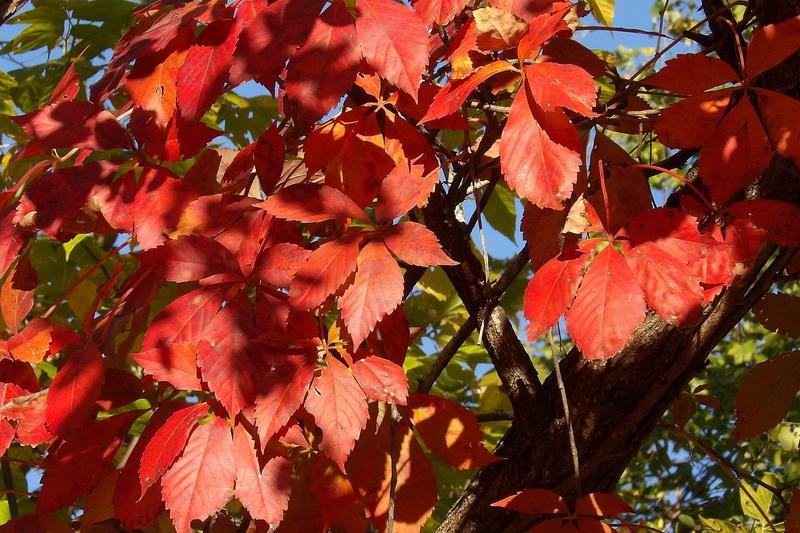
Quick facts
- Watering
- Weekly when young, minimal once established
- Sunlight
- Full sun to partial shade
- Soil
- Any well-drained soil
- Humans
- Toxic
- Cats
- Toxic
- Dogs
- Toxic
- Height
- 1000–1500 cm
- Spread
- 500–1000 cm
- Spacing
- 200–300 cm apart
- RHS recognition
- Award of Garden Merit
About Virginia Creeper
Virginia Creeper is a vigorous deciduous climber native to eastern North America, prized in British gardens for its spectacular autumn colour. The five-lobed leaves turn brilliant shades of crimson and scarlet in September and October, creating a stunning display against walls and fences. It climbs using adhesive tendrils, making it ideal for covering large expanses of brickwork, and is far less invasive than its close relative, Boston Ivy. UK gardeners value it for rapid coverage, low maintenance requirements, and its ability to thrive in most aspects.
UK fact: Virginia Creeper has been grown in British gardens since the 17th century and was particularly fashionable during the Victorian era for covering the walls of country houses and estate buildings, where its autumn colour complemented the golden tones of Cotswold stone.
Watering Virginia Creeper
Young plants require consistent moisture, particularly during their first summer, with weekly watering during dry periods. Once established after two years, Virginia Creeper is remarkably drought-tolerant and rarely needs supplementary watering in the UK climate. During exceptionally dry summers, water deeply every fortnight rather than little and often, encouraging roots to grow deeper. Plants grown against walls may need occasional watering even when mature, as the wall creates a rain shadow.
Sunlight requirements
Virginia Creeper is remarkably adaptable to different light levels and will grow on north-facing walls, though autumn colour will be less intense. For the most spectacular crimson display, plant in full sun or on south or west-facing walls. East-facing aspects work well in the UK, providing morning sun without scorching, whilst shaded positions still produce healthy growth with more subdued autumn tones.
Soil and feeding
Virginia Creeper is one of the least fussy climbers regarding soil, growing successfully in almost any garden soil from heavy clay to light sand. It tolerates a wide pH range from acidic to alkaline (pH 4.5-8.0), making it suitable for chalk downlands and acidic moorland gardens alike. The only requirement is reasonable drainage; whilst it tolerates clay soils well, avoid waterlogged conditions. Enrich poor soils with garden compost or well-rotted manure at planting time to encourage vigorous establishment.
Feed established plants with a balanced slow-release fertiliser such as blood, fish and bone in March, scattering a handful around the base. Avoid feeding after June, as this encourages soft growth vulnerable to early frosts and reduces autumn colour intensity. Plants in poor soils benefit from an annual mulch of garden compost in spring, which provides nutrients gradually throughout the growing season.
Pruning Virginia Creeper
The main pruning session should take place between November and February when the plant is fully dormant and the leaf display has finished. Cut back all growth to keep it within bounds, removing stems that are encroaching on windows, gutters, or roof tiles. Virginia Creeper responds well to hard pruning and can be cut back to the main framework if it has become unruly. Trim wayward shoots during summer if necessary, but avoid heavy pruning during the growing season as this wastes the plant's energy and removes developing foliage.
Propagating Virginia Creeper
Take semi-ripe cuttings in July or August, selecting healthy side shoots that are beginning to firm up at the base. Hardwood cuttings taken in November or December also root readily and are the easiest method for beginners. Layering is virtually foolproof: simply peg a low-growing stem to the ground in spring, and it will root within a year. Virginia Creeper self-layers naturally where stems touch the soil, and these rooted sections can be severed and transplanted.
Common problems
Virginia Creeper is remarkably trouble-free in the UK, with few serious pest or disease problems. Scale insects occasionally colonise stems, appearing as brown bumps, but rarely cause significant damage and can be controlled by scraping off or using a winter wash. Japanese beetles can be problematic in warmer regions, though they are not yet established in the UK. The main issue is vigorous growth getting under roof tiles, into gutters, or blocking windows, which is easily prevented by regular pruning and keeping growth away from vulnerable areas.
Spot a problem with your plant? Photograph the affected area using the Loam app and it will suggest the most likely cause and treatment.
Safety
- Humans
-
Toxic
The berries contain oxalic acid and can cause stomach upset, nausea, and vomiting if ingested. The sap may cause skin irritation in sensitive individuals.
- Cats
-
Toxic
All parts of the plant, particularly the berries, contain oxalic acid which can cause vomiting, diarrhoea, and oral irritation in cats.
- Dogs
-
Toxic
Berries and foliage contain oxalic acid and can cause vomiting, diarrhoea, drooling, and abdominal pain if ingested by dogs.
Toxicity information is for general guidance only. If a person or pet has been exposed to this plant and you are concerned, seek advice from a medical professional or vet.
Seasonal care calendar
Monthly care guide for Virginia Creeper in the UK, based on average conditions.
| Month | Care tasks |
|---|---|
| January | Prune to control size and shape whilst fully dormant. Check supports and ties are secure before spring growth begins. |
| February | Complete any remaining winter pruning before the end of the month. Apply blood, fish and bone fertiliser around the base in mild spells. |
| March | Apply a balanced fertiliser and mulch with garden compost. New growth begins to emerge towards the end of the month. |
| April | Fresh green foliage unfurls rapidly. Water young plants weekly if conditions are dry. Good time to plant container-grown specimens. |
| May | Growth accelerates; train new shoots onto supports and tie in as needed. Continue watering young plants during dry spells. |
| June | Inconspicuous greenish flowers appear. Trim wayward shoots if encroaching on gutters or windows. Stop feeding to encourage autumn colour. |
| July | Take semi-ripe cuttings for propagation. Continue light pruning to keep growth in check. Water during prolonged dry periods. |
| August | Small blue-black berries develop, attractive to birds. Continue taking semi-ripe cuttings until mid-month. Reduce watering. |
| September | Foliage begins turning red and crimson, especially in sunny positions. Enjoy the developing autumn colour display. |
| October | Peak autumn colour; leaves are brilliant scarlet and crimson. Foliage begins to fall towards the end of the month. Plant new specimens. |
| November | Leaves fall to reveal bare stems. Begin winter pruning once fully dormant. Take hardwood cuttings for propagation. Plant bare-root specimens. |
| December | Continue winter pruning to control size. Take hardwood cuttings until mid-month. Check wall fixings and remove any stems damaging structures. |
Frequently asked questions
- When should I prune Virginia Creeper?
- Prune Virginia Creeper in late autumn or winter (November to February) when the plant is dormant and the leaves have fallen, making it easier to see the framework. You can also do light trimming in July to control wayward growth during the growing season. Avoid pruning in early spring when sap is rising, as this can cause bleeding. Remove any growth encroaching on gutters, windows, or roofs, and cut back to maintain the shape you want. Hard pruning is well tolerated if the plant has become overgrown.
- Why are my Virginia Creeper leaves turning brown and crispy?
- Brown, crispy leaves on Virginia Creeper usually indicate drought stress, particularly during hot, dry spells or on plants in containers. Virginia Creeper needs consistent moisture, especially when grown against walls where rainfall doesn't reach the roots easily. Other causes include wind scorch on exposed sites or root damage. Check soil moisture regularly and water deeply during dry periods. If you're struggling to identify the exact cause or want personalised watering reminders based on your local weather, the Loam app can help diagnose leaf problems and provide tailored care schedules for your specific growing conditions.
- Is Virginia Creeper poisonous to dogs and children?
- Yes, all parts of Virginia Creeper are mildly toxic if ingested, containing oxalate crystals that can cause mouth irritation, stomach upset, and difficulty swallowing in both humans and pets. The berries are particularly attractive to children but should not be eaten. Skin contact with the sap can occasionally cause dermatitis in sensitive individuals. Whilst serious poisoning is rare, it's wise to position the plant away from areas where young children play and to teach them not to eat the berries. If you have concerns about pet-safe planting, consider alternative climbers like star jasmine or honeysuckle.
Got a question about growing Virginia Creeper that isn't covered here? Ask the Garden Advisor in the Loam app. It knows your saved plants and local conditions.
Related plants
This page was compiled with AI assistance and reviewed by our team. .