Climbing Hydrangea
Hydrangea anomala subsp. petiolaris
Climbers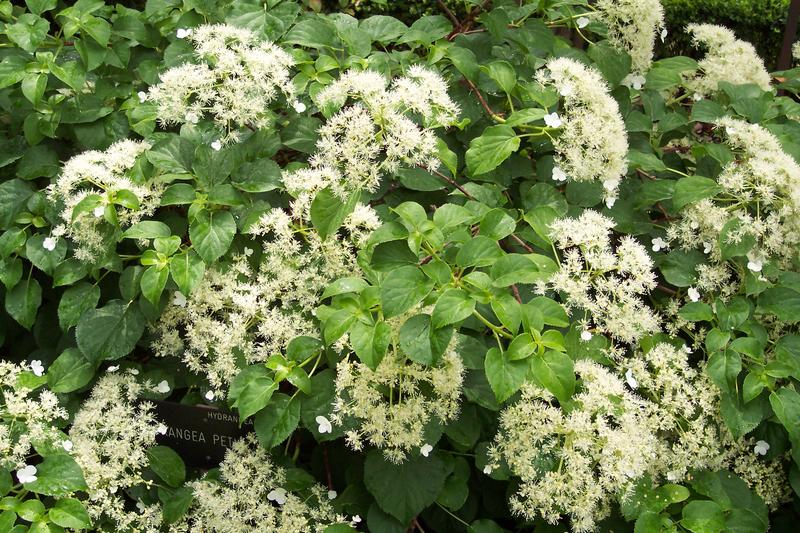
Quick facts
- Watering
- Weekly when establishing, then occasional
- Sunlight
- Partial shade to full shade
- Soil
- Moist, well-drained, humus-rich
- Humans
- Toxic
- Cats
- Toxic
- Dogs
- Toxic
- Height
- 800–1500 cm
- Spread
- 300–500 cm
- Spacing
- 300–400 cm apart
- RHS recognition
- Award of Garden Merit
About Climbing Hydrangea
Climbing Hydrangea is a vigorous, deciduous climber native to the woodlands of Japan, Korea and Taiwan, prized for its spectacular lacecap flowers and ability to thrive on north-facing walls. In June and July, it produces large, flat clusters of creamy-white flowers surrounded by showy sterile florets, creating a stunning display against glossy, heart-shaped leaves. UK gardeners value this self-clinging climber for transforming shaded walls, fences and even mature trees into vertical features, with the added bonus of attractive peeling bark that provides winter interest. Though slow to establish, once settled it becomes a reliable, low-maintenance climber that can grace British gardens for decades.
UK fact: Climbing Hydrangea holds the RHS Award of Garden Merit and is particularly valued in British gardens for its exceptional tolerance of north-facing walls, where few other flowering climbers will perform well, making it a staple recommendation at RHS gardens including Wisley.
Watering Climbing Hydrangea
Young plants require consistent watering throughout their first two growing seasons, particularly during dry periods between April and September. Once established, Climbing Hydrangea is reasonably drought-tolerant but will benefit from watering during extended dry spells, especially if grown on walls where rainfall may not reach the root zone. Apply a 5-8cm mulch around the base each spring to help retain moisture and reduce watering needs. In typical UK conditions, established plants rarely need supplementary watering except during unusually dry summers.
Sunlight requirements
Climbing Hydrangea performs best in partial to full shade, making it perfect for north-facing walls and fences that receive little direct sun. In the UK, it will tolerate sunnier positions if the soil remains consistently moist, though flowering may be more prolific in shadier spots. Avoid hot, south-facing walls in southern England where the plant may suffer from drought stress during summer.
Soil and feeding
Climbing Hydrangea thrives in moist, humus-rich soil that drains well but retains moisture during dry periods. Incorporate plenty of well-rotted compost or leaf mould into the planting hole to improve soil structure and moisture retention. The plant tolerates a pH range from slightly acidic to neutral (pH 5.5-7.0) and will grow in most UK garden soils, including clay, provided drainage is adequate. Avoid very dry, sandy soils unless you can commit to regular watering and mulching.
Feed established plants in March with a general-purpose balanced fertiliser such as blood, fish and bone or Growmore, scattering a handful around the base. Apply a 5-8cm layer of well-rotted compost or manure as a mulch in spring to provide slow-release nutrients and improve soil structure. Avoid high-nitrogen feeds which may promote leafy growth at the expense of flowers.
Pruning Climbing Hydrangea
Climbing Hydrangea requires minimal pruning and flowers on the previous year's growth, so avoid heavy cutting back. After flowering in late July or August, remove any dead, damaged or wayward stems to keep the plant tidy and within bounds. If the climber becomes too large, prune back side shoots to two or three buds from the main framework in late summer. Avoid pruning in spring as this will remove flower buds and reduce the summer display.
Propagating Climbing Hydrangea
The most reliable propagation method is layering, where a low-growing stem is pegged down into the soil in spring and allowed to root over the growing season before severing from the parent plant. Semi-ripe cuttings taken in July or August also root well with bottom heat and mist. Climbing Hydrangea can be slow to root and establish, so patience is required. Hardwood cuttings taken in winter are possible but less reliable in UK conditions.
Common problems
Climbing Hydrangea is generally pest and disease-free in UK gardens, though young growth may occasionally be affected by aphids in spring, which can be controlled with organic sprays or by encouraging natural predators. Leaf spot fungi can appear during wet summers but rarely cause serious harm and usually clear up without intervention. The most common problem is slow establishment, with plants often taking two to three years to begin climbing vigorously, leading gardeners to worry unnecessarily; patience and consistent watering during this period are key. Failure to flower is usually due to pruning at the wrong time or excessive shade, though young plants may not flower for several years after planting.
Spot a problem with your plant? Photograph the affected area using the Loam app and it will suggest the most likely cause and treatment.
Safety
- Humans
-
Toxic
All parts contain cyanogenic glycosides which can cause stomach upset if ingested. Keep away from children.
- Cats
-
Toxic
Contains compounds toxic to cats causing vomiting, diarrhoea and depression if ingested.
- Dogs
-
Toxic
Toxic to dogs, causing vomiting, diarrhoea and lethargy if plant material is consumed.
Toxicity information is for general guidance only. If a person or pet has been exposed to this plant and you are concerned, seek advice from a medical professional or vet.
Seasonal care calendar
Monthly care guide for Climbing Hydrangea in the UK, based on average conditions.
| Month | Care tasks |
|---|---|
| January | No action needed. Admire the attractive peeling bark on mature stems during the dormant period. |
| February | Check ties and supports are secure after winter winds. Avoid pruning as buds are forming. |
| March | Apply balanced fertiliser around the base and mulch with well-rotted compost or manure. Water if conditions are dry. |
| April | New growth emerges. Water young plants regularly and watch for aphids on soft new shoots. |
| May | Continue watering establishing plants. Flower buds become visible on mature specimens. Layer stems for propagation. |
| June | Flowering begins, typically mid to late month. Ensure adequate moisture during dry spells to support blooms. |
| July | Peak flowering period. Take semi-ripe cuttings mid to late month. Deadhead spent flowers if desired, though not essential. |
| August | Flowering finishes. Prune lightly after flowering to control size and remove wayward growth. Continue taking cuttings early in the month. |
| September | Foliage begins to turn yellow before leaf fall. Reduce watering as growth slows. Check layered stems for roots. |
| October | Leaves fall to reveal attractive bark structure. Sever and pot up successfully layered stems. Plant new specimens. |
| November | Planting can continue in mild weather. Clear fallen leaves from around the base to prevent fungal issues. |
| December | Plant is fully dormant. No action needed. Plan where to plant new specimens in the new year. |
Frequently asked questions
- When should I prune Climbing Hydrangea?
- Prune lightly in late summer (late July or August) after flowering has finished. Avoid spring pruning as this removes flower buds. Climbing Hydrangea needs minimal pruning; only cut back to control size or remove dead wood. Heavy pruning will reduce flowering the following year.
- Why are the leaves on my Climbing Hydrangea turning yellow?
- Yellowing leaves can indicate several issues: overwatering or poor drainage, underwatering during dry spells, nutrient deficiency (particularly iron in alkaline soils), or natural leaf drop in autumn. Check soil moisture levels and drainage first. The Loam app can help diagnose the specific cause by analysing photos of your plant and tracking watering patterns to identify whether it's a care issue or seasonal change.
- How do I propagate Climbing Hydrangea?
- Take semi-ripe cuttings in late summer (July-August), choosing healthy stems that are firm but not fully woody. Cut 10-15cm lengths just below a leaf node, remove lower leaves, and insert into gritty compost. Keep moist in a sheltered spot. Alternatively, layer low-growing stems by pegging them to the ground in spring; they'll root within a year. Propagation requires patience, as with all aspects of growing this rewarding climber.
Got a question about growing Climbing Hydrangea that isn't covered here? Ask the Garden Advisor in the Loam app. It knows your saved plants and local conditions.
Related plants
This page was compiled with AI assistance and reviewed by our team. .