Bramble
Rubus fruticosus
Weeds and Invasives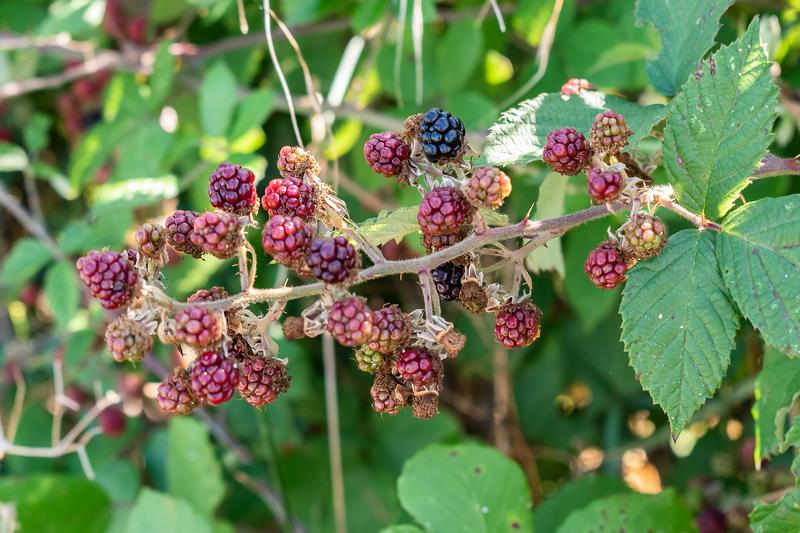
Quick facts
- Watering
- Minimal once established
- Sunlight
- Full sun to partial shade
- Soil
- Any well-drained soil
- Humans
- Safe
- Cats
- Safe
- Dogs
- Safe
- Height
- 150–300 cm
- Spread
- 200–500 cm
- Spacing
- 200–300 cm apart
About Bramble
Bramble is a vigorous, thorny perennial shrub native to the UK, forming dense, arching canes that root at the tips. Whilst often considered a troublesome weed in gardens, it produces delicious blackberries in late summer and autumn. Many UK gardeners tolerate or even cultivate brambles in wilder areas for their fruit, wildlife value, and nostalgic connection to hedgerow foraging. The plant can become highly invasive if left unchecked, spreading rapidly through suckering and tip-layering.
UK fact: Brambles have been part of British folklore for centuries, with blackberry picking a cherished late-summer tradition; folklore warns against picking after Michaelmas (29th September) when the devil is said to spit on the berries.
Watering Bramble
Established brambles are exceptionally drought-tolerant and rarely need watering in the UK climate, relying on natural rainfall. Newly planted canes benefit from watering during dry spells in their first summer to establish strong root systems. During prolonged droughts, watering every 10–14 days will improve fruit size and prevent berry shrivelling. Avoid overhead watering during fruiting to reduce fungal disease risk.
Sunlight requirements
Brambles thrive in full sun, which promotes the best fruit production and ripening, but tolerate partial shade remarkably well. In UK gardens, they will grow almost anywhere but fruit quality diminishes in deep shade. South- or west-facing positions yield the sweetest berries, though brambles are notoriously unfussy about aspect.
Soil and feeding
Brambles are remarkably unfussy, thriving in almost any soil type from sandy to heavy clay, provided it is not waterlogged. They prefer slightly acidic to neutral conditions (pH 5.5–7.0) but tolerate a wide range. Enriching soil with organic matter improves fruit quality, though brambles will grow vigorously even in poor, neglected ground. Good drainage is the only critical requirement, as waterlogged roots can lead to root rot.
Brambles require minimal feeding and often thrive without any fertiliser, particularly in reasonably fertile soil. If growing for fruit, apply a general-purpose fertiliser or well-rotted compost in early spring to boost yields. Avoid excessive nitrogen, which promotes leafy growth at the expense of fruit and can make plants even more invasive.
Pruning Bramble
Prune fruited canes to ground level immediately after harvest in late summer or autumn, as they will not fruit again. Tie in new green canes to supports and thin to 6–8 strong canes per plant to maintain manageable growth. For wild brambles being controlled as weeds, cut all growth to ground level repeatedly throughout the growing season and dig out roots. Wear thick gloves and long sleeves, as thorns are vicious.
Propagating Bramble
Brambles propagate with extraordinary ease, often too readily for gardeners' liking. Tip-layering occurs naturally when arching canes touch the ground and root at the tips, forming new plants by autumn. Alternatively, dig up rooted suckers in late autumn or winter and transplant them. Root cuttings taken in winter also establish readily, though this method is rarely necessary given how vigorously brambles self-propagate.
Common problems
Brambles are generally pest- and disease-free, though raspberry beetle can damage fruit, causing dried, shrivelled berries. Grey mould (Botrytis) may affect fruit in wet summers, particularly in shaded or overcrowded conditions. The main problem for UK gardeners is controlling brambles' aggressive spread: they sucker freely, root at the tips, and regenerate from tiny root fragments left in soil. Thorns pose a significant hazard during maintenance and removal.
Spot a problem with your plant? Photograph the affected area using the Loam app and it will suggest the most likely cause and treatment.
Safety
- Humans
- Safe
- Cats
- Safe
- Dogs
- Safe
Toxicity information is for general guidance only.
Seasonal care calendar
Monthly care guide for Bramble in the UK, based on average conditions.
| Month | Care tasks |
|---|---|
| January | Prune out any remaining old canes if not done in autumn. Check supports and ties on cultivated plants. |
| February | Apply mulch and compost around cultivated brambles. Continue winter pruning if needed. |
| March | New growth begins. Apply general fertiliser if growing for fruit. Cut back unwanted brambles before growth accelerates. |
| April | Vigorous new cane growth appears. Thin overcrowded shoots and tie in new canes to supports. |
| May | White or pale pink flowers appear. Monitor for raspberry beetle. Continue controlling unwanted spread. |
| June | Flowering continues. Tie in new canes as they grow. Water during dry spells if growing for fruit. |
| July | Green berries form. Keep plants well-watered in dry weather. Net fruit against birds if necessary. |
| August | Harvest ripe blackberries regularly. Begin cutting out fruited canes after picking. Control spreading growth. |
| September | Continue harvesting late-ripening fruit. Remove all fruited canes to ground level. Tie in new canes. |
| October | Finish removing old canes. Thin new canes to 6–8 per plant. Dig out unwanted suckers and rooted tips. |
| November | Plants enter dormancy. Good time to transplant or remove brambles. Dig out roots of unwanted plants. |
| December | Dormant period. Plan control strategies for invasive brambles. Check ties and supports on cultivated plants. |
Frequently asked questions
- How do I get rid of brambles permanently?
- Cut all growth to ground level repeatedly throughout the growing season to exhaust the roots, then dig out the entire root system, removing every fragment as even small pieces regenerate. For large infestations, cover cut areas with thick cardboard or landscape fabric for 12–18 months to starve roots of light. Persistent regrowth may require careful spot-treatment with a glyphosate-based weedkiller applied to fresh foliage, though mechanical removal is preferable near desirable plants.
- When should I prune brambles for the best fruit crop?
- The Loam app can send you personalised reminders for pruning brambles at exactly the right time based on your local climate and when your plants fruited. Generally, cut fruited canes to ground level immediately after harvest in late summer, then thin new canes in autumn, but timing varies with variety and regional weather patterns.
- Are wild brambles the same as cultivated blackberries?
- Wild brambles (Rubus fruticosus aggregate) are actually a complex group of over 300 microspecies native to the UK, whilst cultivated blackberries are selected varieties bred for larger fruit, thornless canes, and more compact growth. Wild brambles produce smaller but often more flavourful berries and are far more vigorous and invasive than garden varieties. Both are edible and equally hardy throughout Britain.
Got a question about growing Bramble that isn't covered here? Ask the Garden Advisor in the Loam app. It knows your saved plants and local conditions.
Related plants
This page was compiled with AI assistance and reviewed by our team. .