Hibiscus
Hibiscus syriacus
Shrubs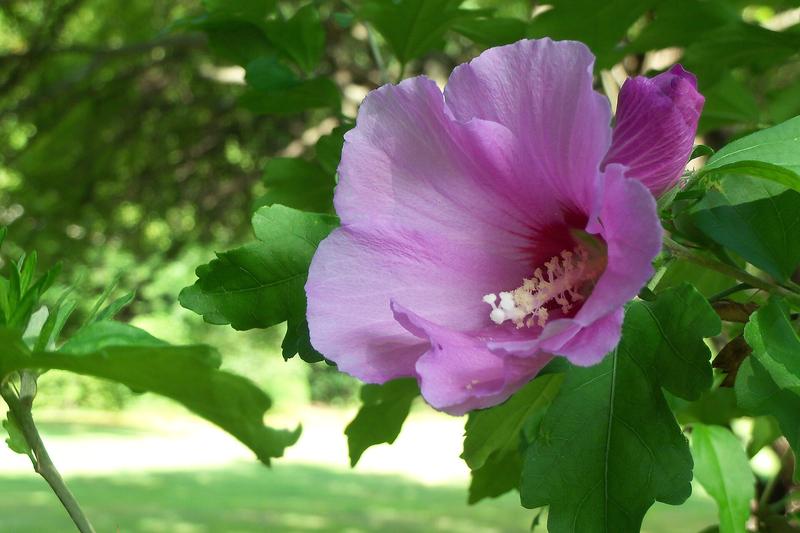
Quick facts
- Watering
- Weekly during growing season
- Sunlight
- Full sun to partial shade
- Soil
- Well-drained, fertile, moisture-retentive
- Humans
- Safe
- Cats
- Safe
- Dogs
- Safe
- Height
- 200–300 cm
- Spread
- 150–200 cm
- Spacing
- 150–200 cm apart
- RHS recognition
- Award of Garden Merit
About Hibiscus
Hibiscus syriacus is a deciduous flowering shrub native to East Asia, prized for its large, showy blooms that appear from late summer into autumn. The trumpet-shaped flowers, ranging from white and pink to blue and purple, can reach 7–10 cm across and provide valuable late-season colour when many other shrubs have finished flowering. In the UK, this hardy hibiscus thrives in sheltered gardens and makes an excellent specimen plant or informal hedge. British gardeners value it particularly for its ability to flower reliably even in cooler summers, bringing an exotic touch to temperate borders.
UK fact: Several Hibiscus syriacus cultivars hold the RHS Award of Garden Merit, including 'Oiseau Bleu' with its striking blue flowers and 'Diana' with pure white blooms, both proven to perform exceptionally well in British gardens.
Watering Hibiscus
Young plants require consistent moisture, particularly from April through September, with weekly watering during dry periods. Once established after two to three years, hibiscus becomes reasonably drought-tolerant but still benefits from deep watering during prolonged dry spells, especially when buds are forming in July and August. Apply 10–15 litres per plant weekly during hot weather, watering at the base rather than overhead to reduce disease risk. In typical British summers with regular rainfall, established plants may need little supplementary watering except during extended dry periods.
Sunlight requirements
Position in a sunny, sheltered spot for the best flowering performance, ideally receiving at least six hours of direct sunlight daily. South or west-facing aspects work well in most of the UK, though in cooler northern regions, a south-facing wall provides beneficial warmth and protection. Plants in partial shade will still flower but may produce fewer blooms and exhibit slightly more open growth habits.
Soil and feeding
Plant in fertile, humus-rich soil with good drainage, as waterlogged conditions can lead to root rot, particularly during wet British winters. The ideal pH range is 6.5–7.5, though hibiscus tolerates slightly alkaline soils common in many UK regions. Improve heavy clay by incorporating generous amounts of organic matter and horticultural grit to enhance drainage, whilst sandy soils benefit from well-rotted compost or manure to improve moisture retention. A 5–7 cm mulch of organic matter applied in spring helps maintain soil structure and provides slow-release nutrients.
Apply a general-purpose balanced fertiliser such as blood, fish and bone in early April at 70 g per square metre around the root zone. From late June onwards, switch to a high-potassium liquid feed (such as tomato fertiliser) applied fortnightly until September to encourage prolific flowering. Avoid high-nitrogen feeds after June as these promote leafy growth at the expense of blooms.
Pruning Hibiscus
Hibiscus flowers on the current season's growth, so prune in late winter or early spring (March to early April) just as buds begin to swell. Remove any dead, damaged or crossing branches, then cut back the previous year's growth by one-third to one-half to encourage bushy growth and abundant flowering. Young plants benefit from light pruning to establish a good shape, whilst mature specimens may need harder pruning every few years to rejuvenate growth. Avoid autumn pruning as this can stimulate soft growth vulnerable to frost damage.
Propagating Hibiscus
Semi-ripe cuttings taken in mid to late summer offer the highest success rate for home propagation. Select healthy, non-flowering shoots of the current season's growth, cutting 10–15 cm lengths just below a leaf node. Hardwood cuttings taken in November or December provide an alternative method, though they take longer to root. Both types root well in a mixture of equal parts peat-free compost and perlite or sharp sand, kept in a sheltered cold frame or unheated greenhouse over winter.
Common problems
Aphids can colonise soft new growth in spring and summer, causing distorted leaves and sticky honeydew; treat with insecticidal soap or encourage natural predators. Hibiscus is relatively resistant to diseases in the UK, though poor drainage can lead to root rot, particularly on heavy soils during wet winters. Bud drop, where flower buds form but fall before opening, is usually caused by environmental stress such as drought, waterlogging, or sudden temperature fluctuations during the British summer. Late frosts in May can damage emerging shoots, so avoid exposed positions in frost-prone areas.
Spot a problem with your plant? Photograph the affected area using the Loam app and it will suggest the most likely cause and treatment.
Safety
- Humans
- Safe
- Cats
- Safe
- Dogs
- Safe
Toxicity information is for general guidance only.
Seasonal care calendar
Monthly care guide for Hibiscus in the UK, based on average conditions.
| Month | Care tasks |
|---|---|
| January | No action needed; plant is fully dormant. Avoid disturbing root zone during wet weather. |
| February | Check for storm damage and remove any broken branches. Prepare planting sites for bare-root specimens. |
| March | Prune in late March as buds begin to swell, removing dead wood and shaping. Apply balanced fertiliser and refresh mulch. |
| April | New growth emerges; water young plants regularly. Watch for aphids on soft new shoots and treat promptly if needed. |
| May | Continue watering during dry spells. Protect from late frosts with fleece if cold nights are forecast. |
| June | Switch to high-potassium liquid feed applied fortnightly. Water deeply during dry weather to support bud development. |
| July | Flowering begins; continue feeding and watering. Take semi-ripe cuttings mid-month for propagation. |
| August | Peak flowering period; deadhead spent blooms to encourage more flowers. Maintain regular watering and feeding schedule. |
| September | Flowering continues into early autumn. Stop feeding by mid-month to allow wood to ripen before winter. |
| October | Flowering finishes; reduce watering as growth slows. Leave seed heads for winter interest if desired. |
| November | Leaves fall; take hardwood cuttings if propagating. Clear fallen leaves from around base to reduce disease risk. |
| December | Plant is dormant; no action needed. Avoid working soil around roots during wet, cold weather. |
Frequently asked questions
- When should I prune hibiscus in the UK?
- Prune in late March or early April just as buds begin to swell but before leaves fully emerge. This timing allows you to see the framework clearly whilst ensuring you don't remove the current season's flowering wood. Avoid autumn or winter pruning as this can stimulate frost-tender growth.
- Why do the flower buds drop off before opening?
- Bud drop is typically caused by environmental stress, particularly inconsistent watering during bud formation in July and August. Ensure the soil remains evenly moist during dry spells, avoid waterlogging, and protect plants from cold draughts. Sudden temperature fluctuations during unsettled British summers can also trigger bud drop. The Loam app can help you track watering schedules and receive alerts during critical periods, whilst its diagnostic tool can identify other potential stress factors affecting your plant.
- What type of soil does hibiscus need?
- Hibiscus syriacus thrives in moist but well-drained soil with a neutral to slightly alkaline pH (6.5-7.5). It tolerates most soil types including clay, provided drainage is adequate. Improve heavy soils by incorporating organic matter and grit before planting. Avoid very acidic conditions, which can cause nutrient deficiencies and yellowing leaves. In containers, use peat-free, soil-based compost such as John Innes No. 3 for best results.
Got a question about growing Hibiscus that isn't covered here? Ask the Garden Advisor in the Loam app. It knows your saved plants and local conditions.
Related plants
This page was compiled with AI assistance and reviewed by our team. .