Hesperantha
Hesperantha coccinea
Perennials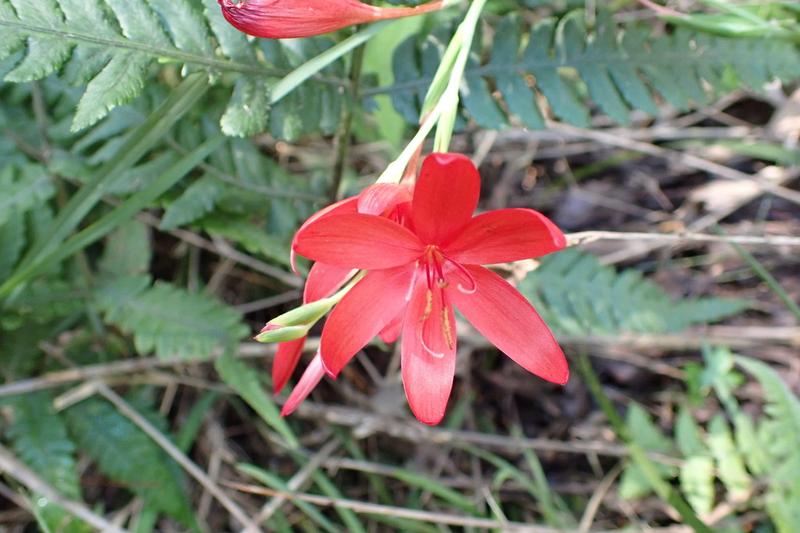
Quick facts
- Watering
- Weekly during growing season
- Sunlight
- Full sun to partial shade
- Soil
- Moist, well-drained, fertile
- Humans
- Unknown
- Cats
- Unknown
- Dogs
- Unknown
- Height
- 40–60 cm
- Spread
- 20–30 cm
- Spacing
- 20–25 cm apart
- RHS recognition
- Award of Garden Merit
About Hesperantha
Hesperantha coccinea is a graceful South African perennial producing slender stems topped with star-shaped flowers in shades of pink, red, or white from late summer into autumn. Its grass-like foliage and delicate blooms make it a valuable addition to UK borders, providing colour when many other perennials are fading. British gardeners prize it for its reliability in mild regions and its ability to naturalise in favourable conditions. The flowers open in the afternoon, giving rise to its alternative name, the evening flower.
UK fact: Hesperantha coccinea has been awarded the RHS Award of Garden Merit, recognising its excellent performance in UK gardens, particularly in milder southern and western regions where it can overwinter reliably.
Watering Hesperantha
Water regularly during the growing season from spring through autumn, keeping the soil consistently moist but not waterlogged. Hesperantha appreciates moisture, particularly during dry spells in summer when flower buds are forming. In winter, reduce watering significantly as the plant becomes dormant, but don't allow the soil to dry out completely in milder regions where foliage may persist. Established clumps in moisture-retentive soil may need less frequent watering.
Sunlight requirements
Hesperantha performs best in full sun, which encourages abundant flowering, but tolerates partial shade in warmer gardens. In the UK, a south or west-facing position is ideal, providing maximum light during the late summer and autumn flowering period. Avoid deep shade, which will result in weak growth and reduced blooms.
Soil and feeding
Hesperantha thrives in fertile, moisture-retentive soil that drains well, ideally enriched with organic matter such as well-rotted compost or leaf mould. It prefers a neutral to slightly acidic pH (6.0-7.0) and will struggle in heavy clay unless drainage is improved with grit and organic amendments. In drier soils, incorporate plenty of compost to help retain moisture during the growing season. Avoid waterlogged conditions in winter, which can cause corm rot.
Apply a balanced liquid fertiliser monthly from late spring through to the end of flowering in autumn to support vigorous growth and abundant blooms. A spring mulch of well-rotted compost or manure will provide slow-release nutrients throughout the season.
Pruning Hesperantha
Deadhead spent flowers regularly to encourage further blooms and maintain a tidy appearance, though this is not essential for plant health. Allow foliage to die back naturally after flowering, as it feeds the corms for the following year's growth. Cut back dead leaves to ground level in late autumn or early spring before new growth emerges. In milder areas, some evergreen foliage may persist through winter and can be left in place.
Propagating Hesperantha
Hesperantha is easily propagated by division of established clumps in spring, just as new growth begins. Lift the clump carefully with a fork, tease apart the corms, and replant immediately at the same depth, spacing them 20-25 cm apart. Division every three to four years helps maintain vigour and flowering performance. Seed can also be sown in spring under glass, though plants may take two to three years to reach flowering size.
Common problems
Hesperantha is generally trouble-free in UK gardens, with few serious pest or disease issues. Slugs and snails may damage emerging shoots in spring, so use organic controls or barriers around young plants. In poorly drained soils or during wet winters, corms can rot, so ensure good drainage and avoid waterlogging. Aphids occasionally colonise flower stems but are easily controlled with insecticidal soap or by encouraging natural predators.
Spot a problem with your plant? Photograph the affected area using the Loam app and it will suggest the most likely cause and treatment.
Safety
- Humans
-
Unknown
No specific toxicity data available for Hesperantha coccinea. As with all plants, avoid ingestion and handle with care.
- Cats
-
Unknown
No specific toxicity data available. Monitor pets and contact a vet if ingestion occurs.
- Dogs
-
Unknown
No specific toxicity data available. Monitor pets and contact a vet if ingestion occurs.
Toxicity information is for general guidance only. If a person or pet has been exposed to this plant and you are concerned, seek advice from a medical professional or vet.
Seasonal care calendar
Monthly care guide for Hesperantha in the UK, based on average conditions.
| Month | Care tasks |
|---|---|
| January | No action needed; plants are dormant. |
| February | No action needed; plants are dormant. |
| March | Clear away any remaining dead foliage. Apply a mulch of well-rotted compost around emerging shoots. |
| April | Divide established clumps if needed. Begin regular watering as growth accelerates. Watch for slug damage on new shoots. |
| May | Water regularly and begin monthly liquid feeding. Ensure soil remains moist as foliage develops. |
| June | Continue watering and feeding. Mulch to retain moisture during dry spells. |
| July | Maintain consistent moisture as flower buds form. Continue monthly feeding. |
| August | Flowering begins. Deadhead spent blooms to encourage more flowers. Continue watering and feeding. |
| September | Peak flowering period. Deadhead regularly and maintain watering. Continue feeding until flowering ends. |
| October | Flowering continues into early autumn. Reduce watering as flowering finishes. Allow foliage to die back naturally. |
| November | Cut back dead foliage to ground level. Apply a protective mulch in colder regions. |
| December | No action needed; plants are dormant. Ensure winter protection is in place in cold areas. |
Frequently asked questions
- When does Hesperantha flower in the UK?
- Hesperantha flowers from late August through September and into October, providing valuable late-season colour when many other perennials have finished. The star-shaped blooms open in the afternoon and are particularly attractive in evening light.
- Why isn't my Hesperantha flowering well?
- Poor flowering is usually due to insufficient sunlight, lack of moisture during summer, or overcrowded clumps that need dividing. The Loam app can help you track watering schedules and set reminders for division every three to four years to maintain vigorous blooms.
- Is Hesperantha hardy enough to survive UK winters?
- Hesperantha is hardy in most of the UK (RHS H4), particularly in milder southern and western regions. In colder areas or during harsh winters, apply a protective mulch of bark or straw over the corms, and ensure excellent drainage to prevent winter rot.
Got a question about growing Hesperantha that isn't covered here? Ask the Garden Advisor in the Loam app. It knows your saved plants and local conditions.
Related plants
This page was compiled with AI assistance and reviewed by our team. .