Ground Elder
Aegopodium podagraria
Weeds and Invasives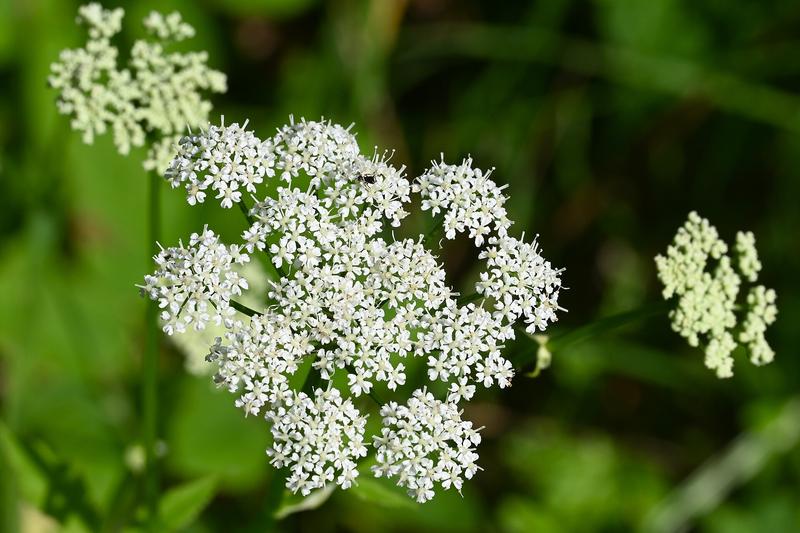
Quick facts
- Watering
- No watering required
- Sunlight
- Full sun to full shade
- Soil
- Any soil type
- Humans
- Safe
- Cats
- Safe
- Dogs
- Safe
- Height
- 30–100 cm
- Spread
- 100–300 cm
- Spacing
- 0 cm apart
About Ground Elder
Ground elder is a vigorous perennial weed with bright green, divided leaves and white umbels of flowers in early summer. Originally introduced to Britain by the Romans as a pot herb and medicinal plant, it has naturalised widely and is now considered one of the most persistent garden weeds. The variegated form 'Variegatum' is occasionally grown as ornamental ground cover, though it retains the species' invasive tendencies. Its extensive network of brittle white rhizomes makes it extremely difficult to eradicate once established.
UK fact: Ground elder was deliberately planted in monastery gardens throughout medieval Britain, where monks used the young leaves as a vegetable and treatment for gout—hence its alternative name 'goutweed'—but it has long since escaped to become a gardener's nemesis.
Watering Ground Elder
Ground elder requires no supplementary watering and thrives in typical UK rainfall conditions. It is remarkably drought-tolerant once established, with deep rhizomes accessing moisture even during dry summers. In fact, the plant's ability to flourish without any care whatsoever is precisely what makes it such a persistent weed. Avoid creating moist, fertile conditions if you're trying to suppress it, as this only encourages more vigorous growth.
Sunlight requirements
Ground elder thrives in almost any light conditions, from deep shade beneath trees to full sun, making it particularly problematic in UK gardens. It performs most vigorously in partial shade with moist soil, typical of many British garden borders. The variegated form shows better leaf colour in brighter positions but will tolerate shade equally well.
Soil and feeding
Ground elder is completely unfussy about soil and will grow in virtually any conditions, from heavy clay to light sand, and from acidic to alkaline pH. It actually prefers rich, moist, slightly alkaline soils typical of many UK gardens, where it spreads most aggressively. The plant tolerates compacted soil, poor drainage, and nutrient-poor conditions that would defeat most ornamentals. If you're attempting control rather than cultivation, improving drainage and reducing soil fertility may help slow its spread slightly.
Ground elder requires no feeding whatsoever and actively benefits from nutrient-poor conditions if you're trying to control it. Applying fertiliser to borders infested with ground elder will only encourage more vigorous growth and make the problem worse.
Pruning Ground Elder
Regular removal of top growth is essential for control, though it rarely eradicates ground elder completely. Cut or pull foliage repeatedly throughout the growing season to exhaust the rhizomes, though this may take several years of persistent effort. Remove flower heads before they set seed to prevent spread by seed as well as rhizomes. For the variegated ornamental form, cut back tatty foliage in late summer to encourage fresh growth.
Propagating Ground Elder
Ground elder propagates itself all too readily through its extensive network of brittle white rhizomes, with even tiny fragments capable of regenerating into new plants. It also spreads by seed, though rhizome spread is the primary concern in UK gardens. If deliberately propagating the variegated form, simply dig up sections of rhizome in spring or autumn and replant, though containment in sunken barriers is strongly advised. Most gardeners are concerned with preventing rather than encouraging propagation.
Common problems
The main problem with ground elder is ground elder itself—its aggressive spread and difficulty of eradication make it one of the most troublesome weeds in UK gardens. The brittle rhizomes break easily during removal, with each fragment capable of regrowing, and they intertwine with the roots of desirable plants, making selective removal nearly impossible. Persistent digging, covering with light-excluding mulch or landscape fabric for at least two growing seasons, or careful application of systemic weedkiller are the main control options. The variegated form is less vigorous but still invasive and should be contained.
Spot a problem with your plant? Photograph the affected area using the Loam app and it will suggest the most likely cause and treatment.
Safety
- Humans
- Safe
- Cats
- Safe
- Dogs
- Safe
Toxicity information is for general guidance only.
Seasonal care calendar
Monthly care guide for Ground Elder in the UK, based on average conditions.
| Month | Care tasks |
|---|---|
| January | Rhizomes dormant underground; plan control strategy for the coming season. |
| February | First shoots may emerge in mild spells; remove any visible growth promptly. |
| March | Active growth begins; start regular removal of emerging foliage to weaken rhizomes. |
| April | Vigorous growth; continue removing all visible foliage weekly if attempting control. |
| May | Rapid expansion; remove foliage repeatedly and apply mulch or weed-suppressing fabric to cleared areas. |
| June | Flowers appear; remove flower heads immediately to prevent seed set and continue foliage removal. |
| July | Peak growth; maintain relentless removal of top growth to exhaust underground reserves. |
| August | Continue regular removal; variegated forms may be cut back hard for fresh autumn growth. |
| September | Growth slows but continues; remove any remaining foliage and flower heads before autumn. |
| October | Foliage begins to die back; clear away dead material and mulch heavily to suppress spring regrowth. |
| November | Most foliage has died back; apply thick mulch or light-excluding covers to cleared areas. |
| December | Plant dormant; check mulches and covers remain in place over infested areas. |
Frequently asked questions
- How do I get rid of ground elder permanently?
- Complete eradication requires persistent effort over 2-3 years. Repeatedly remove all visible growth to exhaust the rhizomes, or cover infested areas with thick black plastic or landscape fabric for at least two full growing seasons. Alternatively, carefully apply systemic glyphosate-based weedkiller to actively growing foliage, repeating as regrowth appears. Digging alone rarely works as tiny rhizome fragments regenerate, but combining methods—initial digging followed by covering or repeated herbicide treatment—offers the best chance of success.
- Why does ground elder keep coming back in my borders?
- Ground elder's brittle white rhizomes break into fragments during removal, and each piece can regenerate into a new plant, making it extraordinarily persistent. The Loam app can help you track your control efforts over multiple seasons, set reminders for regular removal sessions, and identify whether regrowth is from missed rhizomes or new seedlings, helping you develop a more effective long-term eradication strategy.
- Is variegated ground elder safe to plant in my garden?
- Variegated ground elder (Aegopodium podagraria 'Variegatum') is less vigorous than the plain green species but still highly invasive and extremely difficult to remove once established. Only plant it in areas where it can be contained by hard barriers such as paving or sunken root barriers extending at least 45cm deep, and be prepared for constant vigilance to prevent escape. Most gardeners regret planting it, even the ornamental form.
Got a question about growing Ground Elder that isn't covered here? Ask the Garden Advisor in the Loam app. It knows your saved plants and local conditions.
Related plants
This page was compiled with AI assistance and reviewed by our team. .