Giant Hogweed
Heracleum mantegazzianum
Weeds and Invasives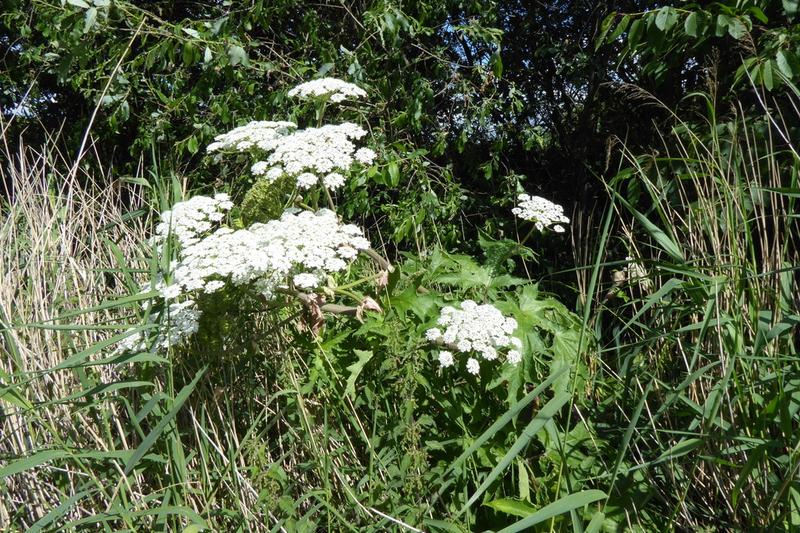
Quick facts
- Watering
- Not applicable (invasive weed)
- Sunlight
- Full sun to partial shade
- Soil
- Moist, nutrient-rich, any pH
- Humans
- Toxic
- Cats
- Toxic
- Dogs
- Toxic
- Height
- 200–550 cm
- Spread
- 100–200 cm
- Spacing
- 0 cm apart
About Giant Hogweed
Giant Hogweed is a highly invasive perennial that can reach over 5 metres tall, with enormous white flower umbels up to 80cm across and deeply divided leaves. Native to the Caucasus Mountains, it was introduced to Britain as an ornamental in the 19th century but has since escaped cultivation and spread aggressively along riverbanks, wasteland, and roadside verges. UK gardeners should never deliberately grow this plant; it is listed under Schedule 9 of the Wildlife and Countryside Act 1981, making it illegal to plant or allow it to spread in the wild. Its sap contains toxic chemicals that cause severe photodermatitis, resulting in painful blistering when skin is exposed to sunlight.
UK fact: Giant Hogweed was first recorded growing wild in Britain in 1828 and has since become one of the UK's most dangerous invasive species, with local authorities spending millions annually on control programmes along waterways and public spaces.
Watering Giant Hogweed
Giant Hogweed requires no watering and thrives in moist conditions naturally found along British waterways, ditches, and damp wasteland. It has deep taproots that access groundwater, allowing it to survive dry spells that would kill less robust plants. The species' preference for riparian habitats means it spreads rapidly during wet British winters and springs. Never deliberately water or encourage this plant in any way.
Sunlight requirements
Giant Hogweed thrives in full sun but tolerates partial shade, often colonising riverbanks and woodland edges where dappled light prevails. In the UK, it grows vigorously in open positions with good light, producing larger flower heads and more seed. Shaded plants may grow slightly less tall but remain equally invasive and dangerous.
Soil and feeding
This invasive weed tolerates a wide range of soil types but shows a strong preference for deep, fertile, moisture-retentive soils rich in nitrogen. It thrives in pH ranges from 5.0 to 8.0, making it adaptable to most British soil conditions from acidic peats to alkaline clays. Giant Hogweed is particularly aggressive on disturbed ground, riverbanks, and areas with high nutrient levels. Its ability to grow in varied soil types contributes to its success as an invasive species across the UK.
Giant Hogweed requires no feeding and actively benefits from nutrient-rich conditions, which accelerate its growth and seed production. Never apply fertiliser or compost near areas where this plant may be present, as this will encourage its spread. Control efforts should focus on removal, not cultivation.
Pruning Giant Hogweed
Do not prune Giant Hogweed without professional guidance and full protective equipment including face shield, gloves, and coveralls. If you must remove flower heads to prevent seeding, do so before they mature in June or July, wearing full protection and working on overcast days to reduce sap toxicity risk. All cut material must be bagged and disposed of as controlled waste, never composted. For established infestations, contact your local council or the Environment Agency for professional removal advice.
Propagating Giant Hogweed
Giant Hogweed propagates prolifically by seed, with a single plant producing up to 50,000 seeds that remain viable in soil for several years. Seeds disperse via water, wind, animals, and contaminated soil or machinery, allowing rapid colonisation of new areas along British waterways. It is illegal under the Wildlife and Countryside Act 1981 to cause Giant Hogweed to grow in the wild, and deliberate propagation is a criminal offence. Any propagation information is provided solely to understand how this invasive species spreads and to inform control strategies.
Common problems
The primary problem with Giant Hogweed is its extreme toxicity to humans and animals; the sap contains furanocoumarins that cause severe phytophotodermatitis, resulting in painful blistering, scarring, and long-term photosensitivity. In the UK, hundreds of cases of Giant Hogweed burns are reported annually, particularly affecting children who use the hollow stems as toys. The plant outcompetes native vegetation, forming dense stands that reduce biodiversity and increase riverbank erosion when winter die-back leaves soil exposed. Control is difficult due to the persistent seed bank and the plant's ability to regenerate from root fragments; professional removal is strongly recommended.
Spot a problem with your plant? Photograph the affected area using the Loam app and it will suggest the most likely cause and treatment.
Safety
- Humans
-
Toxic
Extremely toxic. Sap contains furanocoumarins that cause severe phytophotodermatitis, resulting in painful blistering, scarring, and long-term photosensitivity when skin is exposed to sunlight. Burns can appear within 48 hours and may require hospital treatment. Seek immediate medical attention if contact occurs.
- Cats
-
Toxic
Toxic to cats. Contact with sap causes severe skin burns and blistering, particularly dangerous as cats may brush against plants. Ingestion can cause oral irritation and gastrointestinal upset. Keep cats away from all areas where Giant Hogweed grows.
- Dogs
-
Toxic
Toxic to dogs. Sap causes severe photodermatitis, with burns particularly affecting areas with thin fur or exposed skin such as the nose and belly. Dogs may also suffer oral burns if they chew the plant. Keep dogs on leads near infested areas and seek veterinary care immediately if contact occurs.
Toxicity information is for general guidance only. If a person or pet has been exposed to this plant and you are concerned, seek advice from a medical professional or vet.
Seasonal care calendar
Monthly care guide for Giant Hogweed in the UK, based on average conditions.
| Month | Care tasks |
|---|---|
| January | Monitor known infestation sites for any winter rosettes; report sightings to local council or Environment Agency. |
| February | Check for emerging rosettes of large, divided leaves; early identification aids control efforts before growth accelerates. |
| March | Rosettes expand rapidly; professional removal of taproots should begin now, before plants reach full height. |
| April | Plants grow vigorously, reaching 1-2 metres; continue monitoring and report new infestations immediately to authorities. |
| May | Flowering stems emerge and plants reach maximum height; professional removal becomes more difficult but remains essential. |
| June | White flower umbels appear; prevent seeding by professional removal of flower heads with full protective equipment before seeds mature. |
| July | Seeds ripen and begin to disperse; immediate professional intervention required to prevent thousands of seeds spreading. |
| August | Seed dispersal continues; monitor downstream areas for new seedlings and report to authorities for coordinated control. |
| September | Plants begin to die back but remain toxic; continue monitoring and never touch dead or dying plant material without protection. |
| October | Above-ground growth dies back completely; mark infestation sites for spring monitoring and professional removal planning. |
| November | Dead stems remain standing and toxic; avoid contact and plan professional control strategy for next growing season. |
| December | Dormant period; review infestation maps and coordinate with local authorities for spring control programmes. |
Frequently asked questions
- How do I safely remove Giant Hogweed from my garden?
- Never attempt removal without full protective equipment including face shield, waterproof gloves, and coveralls. Contact your local council or the Environment Agency for professional removal advice, as improper handling can cause severe burns and it is illegal to allow the plant to spread. Professional contractors use herbicide injection or careful excavation of the entire taproot, with all material disposed of as controlled waste.
- What should I do if I find Giant Hogweed on my property?
- Photograph the plant from a safe distance, note the exact location, and report it immediately to your local council or use the Loam app to log the sighting and receive guidance on professional removal services. Do not touch or attempt to remove it yourself without proper training and equipment.
- How can I tell the difference between Giant Hogweed and common hogweed?
- Giant Hogweed grows 2-5 metres tall (common hogweed reaches only 2 metres maximum), has purple blotches and white hairs on stems up to 10cm thick, and flower heads up to 80cm across. Common hogweed is much smaller with green, ridged stems and flower heads typically 20cm across. When in doubt, treat any large hogweed-like plant as Giant Hogweed and report it to authorities.
Got a question about growing Giant Hogweed that isn't covered here? Ask the Garden Advisor in the Loam app. It knows your saved plants and local conditions.
Related plants
This page was compiled with AI assistance and reviewed by our team. .