Gaura
Oenothera lindheimeri
Perennials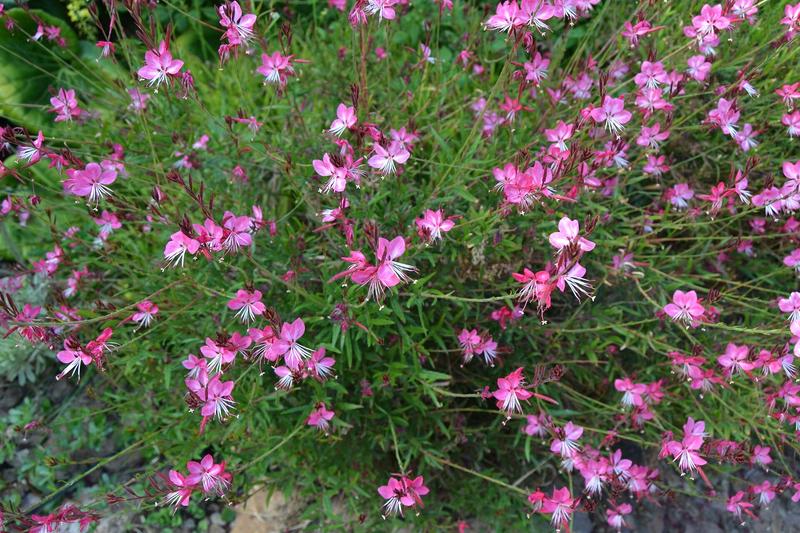
Quick facts
- Watering
- Weekly when establishing, then drought-tolerant
- Sunlight
- Full sun
- Soil
- Well-drained, light, moderately fertile
- Humans
- Safe
- Cats
- Safe
- Dogs
- Safe
- Height
- 60–120 cm
- Spread
- 45–90 cm
- Spacing
- 45–60 cm apart
- RHS recognition
- Award of Garden Merit
About Gaura
Gaura is a graceful perennial native to Texas and Louisiana, prized for its airy sprays of delicate pink or white flowers that dance on slender stems from early summer through to autumn. The plant forms bushy clumps of lance-shaped leaves and produces masses of butterfly-like blooms that seem to float above the foliage. UK gardeners value gaura for its long flowering season, drought tolerance once established, and ability to bring movement and lightness to sunny borders and gravel gardens.
UK fact: Several gaura cultivars, including 'Whirling Butterflies' and 'Rosyjane', have received the RHS Award of Garden Merit for their reliable performance in British gardens, though the species can be short-lived in heavy clay soils typical of many UK regions.
Watering Gaura
Water newly planted gaura regularly during the first growing season to establish a deep root system, providing approximately 2.5 cm of water weekly during dry spells. Once established after the first year, gaura is remarkably drought-tolerant and typically requires watering only during prolonged dry periods in summer. Overwatering, particularly in heavy soils, can lead to root rot and is more problematic than underwatering. In containers, water when the top 5 cm of compost feels dry, ensuring excellent drainage to prevent waterlogging.
Sunlight requirements
Gaura requires full sun to perform at its best, needing at least six hours of direct sunlight daily to produce abundant flowers. In the UK, position plants in south or west-facing borders where they'll receive maximum light throughout the growing season. Whilst they can tolerate very light shade, flowering will be significantly reduced and plants may become leggy in anything less than full sun.
Soil and feeding
Gaura thrives in well-drained soil and is particularly suited to sandy or gravelly soils that don't retain excessive moisture. The plant tolerates a wide pH range from slightly acidic to slightly alkaline (pH 6.0-8.0) but performs best in neutral conditions. In heavy clay soils common across much of the UK, improve drainage by incorporating horticultural grit and organic matter, or consider growing gaura in raised beds. Avoid overly rich soils, as these can promote lush foliage at the expense of flowers and reduce winter hardiness.
Gaura requires minimal feeding and performs best in moderately fertile rather than rich soil. Apply a light dressing of general-purpose fertiliser or well-rotted compost in early spring as new growth emerges. Avoid high-nitrogen feeds which encourage soft, leafy growth that's more susceptible to winter damage and produces fewer flowers.
Pruning Gaura
Cut back the entire plant to within 10-15 cm of ground level in late February or early March, just as new basal growth begins to appear. Deadheading spent flower spikes throughout the summer encourages continuous blooming and prevents self-seeding, though this can be time-consuming given the profusion of flowers. In mild areas, you may choose to leave the attractive seed heads for winter interest and cut back in spring instead. Pinch out the growing tips of young plants in late spring to encourage bushier growth and more flowering stems.
Propagating Gaura
Gaura can be propagated from softwood cuttings taken in late spring or early summer, selecting non-flowering shoots approximately 8-10 cm long and rooting them in a free-draining compost mix. Division is possible but often unsuccessful as gaura develops a deep taproot that resents disturbance; if attempting division, do so in spring and ensure each section has both roots and shoots. The plant self-seeds readily in favourable conditions, and seedlings can be transplanted when small, though named cultivars won't come true from seed. Seed can also be sown in spring under glass, though germination can be erratic.
Common problems
Gaura is generally trouble-free but can suffer from root rot in poorly drained or waterlogged soils, particularly during wet UK winters. Aphids may occasionally colonise young shoots and flower buds in spring and early summer, though they rarely cause serious damage. Powdery mildew can affect foliage during humid periods, particularly on plants grown in shade or with poor air circulation. The main cultural problem in the UK is short-lived performance in heavy clay soils; plants may survive only 2-3 years in such conditions compared to 5 or more years in well-drained sites.
Spot a problem with your plant? Photograph the affected area using the Loam app and it will suggest the most likely cause and treatment.
Safety
- Humans
- Safe
- Cats
- Safe
- Dogs
- Safe
Toxicity information is for general guidance only.
Seasonal care calendar
Monthly care guide for Gaura in the UK, based on average conditions.
| Month | Care tasks |
|---|---|
| January | No action needed; plant is dormant with dead top growth providing some frost protection. |
| February | Cut back dead stems to 10-15 cm from ground level towards month end as new growth emerges. |
| March | Apply light general-purpose fertiliser around the base. Take root cuttings if propagating. |
| April | New growth appears rapidly; water if conditions are dry. Transplant self-sown seedlings. |
| May | Pinch out growing tips to encourage bushiness. Take softwood cuttings. First flowers may appear late in month. |
| June | Flowering begins in earnest. Water during dry spells. Deadhead regularly to prolong display. |
| July | Peak flowering period. Continue deadheading and water established plants only during prolonged drought. |
| August | Maintain deadheading regime. Flowers continue abundantly with minimal care required. |
| September | Flowering continues into early autumn. Reduce watering as temperatures cool and rainfall increases. |
| October | Late flowers fade. Allow seed heads to develop for winter interest if desired, or continue deadheading. |
| November | Foliage begins to die back. Leave stems standing to protect crown through winter. |
| December | No action needed; dormant period. Stems provide structure and some frost protection to crown. |
Frequently asked questions
- Why is my gaura not flowering?
- Insufficient sunlight is the most common cause of poor flowering in gaura. Ensure your plant receives at least six hours of direct sun daily. Overly rich soil or excessive nitrogen feeding can also promote leafy growth at the expense of flowers, whilst plants in shade or heavy clay may flower sparsely or not at all.
- How do I know when my gaura needs watering?
- Established gaura is drought-tolerant and rarely needs watering except during prolonged dry spells. The Loam app can send you personalised watering reminders based on your local weather conditions and soil type, helping you avoid both under and overwatering which can damage this plant.
- Is gaura an annual or perennial in the UK?
- Gaura is a herbaceous perennial that's hardy in most of the UK (RHS H5), dying back to ground level in winter and regrowing each spring. However, it can be short-lived in heavy, poorly drained soils, sometimes persisting for only 2-3 years, whilst in well-drained conditions it may thrive for five years or more.
Got a question about growing Gaura that isn't covered here? Ask the Garden Advisor in the Loam app. It knows your saved plants and local conditions.
Related plants
This page was compiled with AI assistance and reviewed by our team. .