Garrya
Garrya elliptica
Shrubs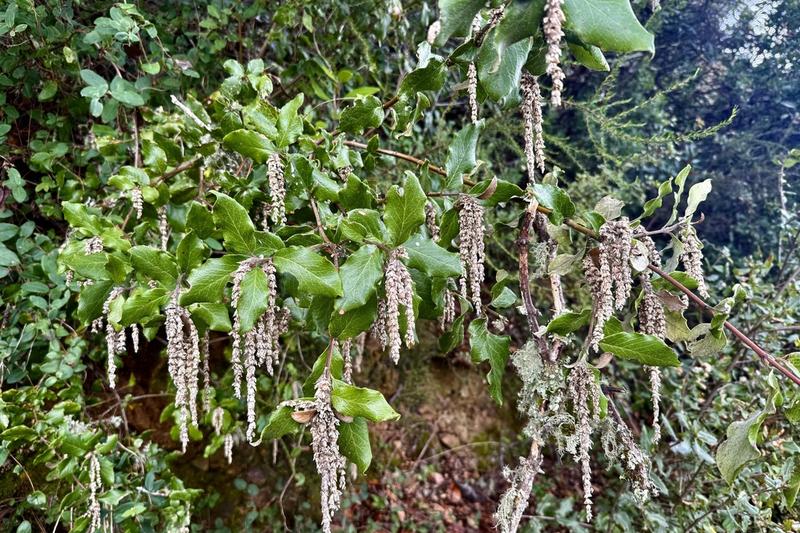
Quick facts
- Watering
- Weekly when young, minimal once established
- Sunlight
- Full sun to partial shade
- Soil
- Well-drained, moderately fertile
- Humans
- Unknown
- Cats
- Unknown
- Dogs
- Unknown
- Height
- 300–400 cm
- Spread
- 300–400 cm
- Spacing
- 300–350 cm apart
- RHS recognition
- Award of Garden Merit
About Garrya
Garrya elliptica is an evergreen shrub native to California and Oregon, prized in UK gardens for its spectacular winter display of long, silvery-grey catkins. The male cultivar 'James Roof' produces particularly impressive tassels that can reach up to 30cm in length, draping elegantly from dark green, leathery foliage. This architectural shrub thrives in British gardens, offering valuable winter interest when little else is in flower. Its tolerance of coastal conditions and ability to grow against north-facing walls make it especially popular with UK gardeners seeking year-round structure.
UK fact: Garrya elliptica 'James Roof' holds the RHS Award of Garden Merit and has become a staple of British winter gardens since its introduction, particularly valued for thriving on challenging north-facing walls where few other evergreens will flower.
Watering Garrya
Water newly planted garrya regularly during the first growing season to establish a deep root system. Once established, this shrub is remarkably drought-tolerant and requires watering only during prolonged dry spells in summer. In typical UK conditions, established plants rarely need supplementary watering except in exceptionally dry years. Avoid waterlogging, particularly in winter, as garrya dislikes sitting in wet soil.
Sunlight requirements
Garrya performs well in full sun but is particularly valued for its tolerance of partial shade and north-facing aspects. In the UK, it's an excellent choice for shaded walls where it will still produce abundant catkins. Avoid very exposed sites in cold regions, as harsh winds can damage the evergreen foliage.
Soil and feeding
Garrya thrives in well-drained soil and is tolerant of a wide pH range from slightly acidic to alkaline (pH 6.0-8.0). It performs best in moderately fertile soil but will grow in poorer conditions, making it suitable for many UK gardens. Good drainage is essential, particularly in winter, as garrya is susceptible to root rot in waterlogged conditions. Add grit or sharp sand to heavy clay soils to improve drainage before planting.
Apply a balanced slow-release fertiliser in early spring around the base of the plant. Avoid high-nitrogen feeds which promote soft growth at the expense of catkin production. Established plants in reasonably fertile soil require minimal feeding.
Pruning Garrya
Prune immediately after flowering in late winter or early spring, removing any frost-damaged shoots and thinning congested growth. Garrya flowers on the previous year's wood, so avoid pruning in summer or autumn which will remove next winter's catkins. Wall-trained specimens can be lightly shaped after flowering to maintain their framework. Garrya dislikes hard pruning into old wood, so maintain regular light pruning rather than drastic renovation.
Propagating Garrya
Garrya can be propagated from semi-ripe cuttings taken in late summer (July to September). Take 10-15cm cuttings from the current season's growth, remove lower leaves, and insert into gritty compost in a cold frame. Rooting can be slow, often taking several months. Layering is an alternative method: peg down a low-growing shoot in spring, wound the underside, and it should root by the following spring. Note that male plants (which produce the showiest catkins) must be propagated vegetatively to maintain their characteristics.
Common problems
Garrya is generally trouble-free but can suffer from leaf spot diseases in wet conditions, causing brown or black spots on foliage. Ensure good air circulation and avoid overhead watering to minimise fungal issues. Frost damage can occur in severe winters, particularly to young growth, causing browning of leaf tips and edges; affected shoots should be pruned out in spring. Aphids occasionally colonise new growth in spring but rarely cause serious harm. In poorly drained soils, root rot (Phytophthora) can be fatal, so ensuring excellent drainage at planting is crucial.
Spot a problem with your plant? Photograph the affected area using the Loam app and it will suggest the most likely cause and treatment.
Safety
- Humans
-
Unknown
No confirmed toxicity data available for Garrya elliptica. As with all plants, avoid ingestion and handle with care.
- Cats
-
Unknown
No specific toxicity data available for cats. Monitor pets and consult a vet if ingestion occurs.
- Dogs
-
Unknown
No specific toxicity data available for dogs. Monitor pets and consult a vet if ingestion occurs.
Toxicity information is for general guidance only. If a person or pet has been exposed to this plant and you are concerned, seek advice from a medical professional or vet.
Seasonal care calendar
Monthly care guide for Garrya in the UK, based on average conditions.
| Month | Care tasks |
|---|---|
| January | Enjoy the developing catkins as they elongate and become more prominent. Protect from severe frost if necessary. |
| February | Peak catkin display period. Monitor for frost damage on exposed plants. |
| March | Prune after flowering finishes, removing frost-damaged growth and shaping as needed. Apply slow-release fertiliser. |
| April | New growth emerges. Water young plants regularly. Mulch around the base to retain moisture. |
| May | Continue watering newly planted specimens. Monitor for aphids on soft new growth. |
| June | Water during dry spells, particularly young plants. Check wall-trained specimens are securely tied. |
| July | Take semi-ripe cuttings for propagation. Water during prolonged dry periods. |
| August | Continue taking semi-ripe cuttings. Maintain watering in dry weather. |
| September | Good time for planting. Final opportunity for taking semi-ripe cuttings. |
| October | Plant container-grown specimens. Reduce watering as temperatures drop. |
| November | Catkin buds begin to form and become visible. Clear fallen leaves from around the base. |
| December | Catkins start to elongate, providing early winter interest. No action needed. |
Frequently asked questions
- Why is my garrya not producing catkins?
- Female garrya produce much shorter, less showy catkins than males, so ensure you have a male cultivar like 'James Roof'. Pruning at the wrong time (summer or autumn) removes flower buds, and young plants may take 2-3 years to flower well. Excessive nitrogen fertiliser can also promote leafy growth at the expense of catkins.
- When should I prune my garrya to avoid losing next year's catkins?
- Prune immediately after flowering in late winter or early spring (March), as garrya flowers on the previous year's wood. The Loam app can send you timely pruning reminders based on your local conditions and track your plant's flowering pattern to optimise timing.
- Can garrya grow on a north-facing wall?
- Yes, garrya is one of the best evergreen shrubs for north-facing walls in the UK, tolerating shade well whilst still producing good catkin displays. Ensure the soil is well-drained and provide shelter from cold winds in exposed gardens.
Got a question about growing Garrya that isn't covered here? Ask the Garden Advisor in the Loam app. It knows your saved plants and local conditions.
Related plants
This page was compiled with AI assistance and reviewed by our team. .