Elaeagnus
Elaeagnus x ebbingei
Shrubs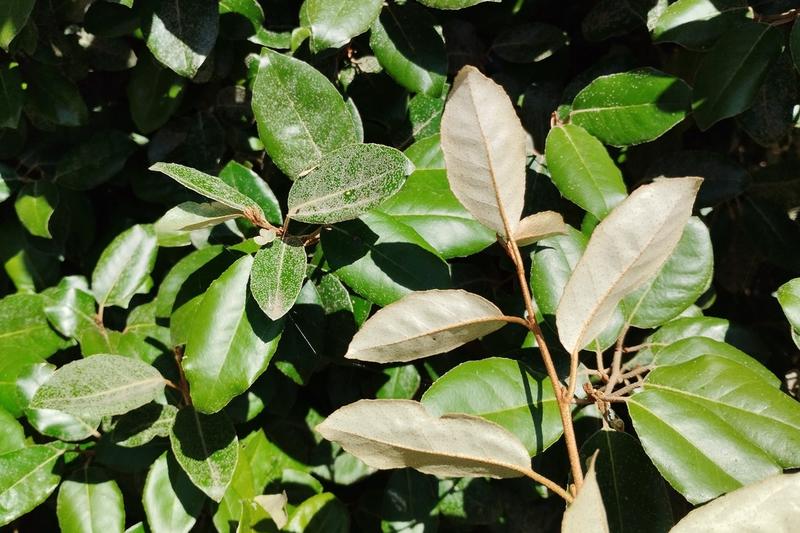
Quick facts
- Watering
- Weekly when young, minimal once established
- Sunlight
- Full sun to partial shade
- Soil
- Well-drained, tolerates most soil types
- Humans
- Safe
- Cats
- Safe
- Dogs
- Safe
- Height
- 300–400 cm
- Spread
- 300–400 cm
- Spacing
- 150–200 cm apart
- RHS recognition
- Award of Garden Merit
About Elaeagnus
Elaeagnus is a vigorous evergreen shrub prized for its glossy, silvery-green foliage and sweetly scented autumn flowers. This hybrid, bred in the Netherlands, has become a mainstay of British gardens for its fast-growing habit and tolerance of coastal conditions, pollution, and poor soils. UK gardeners value it particularly for hedging, screening, and windbreaks, where its dense growth and year-round interest provide structure and shelter. The small, creamy-white flowers appear in October and November, filling the autumn garden with an unexpected honey-like fragrance.
UK fact: Elaeagnus 'Gilt Edge' holds the RHS Award of Garden Merit and is one of the most popular variegated cultivars in British gardens, particularly valued for brightening shady corners in urban and coastal locations.
Watering Elaeagnus
Water newly planted elaeagnus weekly during the first growing season to establish a deep root system. Once established, typically after 12–18 months, the plant is remarkably drought-tolerant and requires watering only during prolonged dry spells in summer. In heavy clay soils common across much of the UK, avoid overwatering as this can lead to root rot. Container-grown specimens need regular watering throughout the growing season, particularly during hot, dry periods.
Sunlight requirements
Elaeagnus thrives in full sun but tolerates partial shade remarkably well, making it ideal for north-facing gardens or beneath tree canopies. Variegated cultivars such as 'Gilt Edge' produce the best leaf colour in good light but will still perform in shadier spots. In exposed coastal or northern UK gardens, a sunny, sheltered position encourages the most vigorous growth and prolific autumn flowering.
Soil and feeding
Elaeagnus is exceptionally unfussy about soil, thriving in sand, loam, chalk, or clay provided drainage is reasonable. It tolerates a wide pH range from acidic to alkaline (pH 5.5–8.0), making it suitable for most UK gardens. Improve heavy clay by incorporating grit or organic matter at planting time to prevent waterlogging. Coastal gardens benefit from its salt tolerance, whilst urban gardeners appreciate its ability to cope with compacted, nutrient-poor soils.
Apply a balanced slow-release fertiliser such as blood, fish and bone in early spring around the base of the plant. Elaeagnus is not a heavy feeder and excessive nitrogen can promote soft, leggy growth at the expense of the characteristic dense habit. Container-grown plants benefit from a liquid feed every 4–6 weeks during the growing season.
Pruning Elaeagnus
Prune in late winter or early spring before new growth begins, removing any frost-damaged, dead, or crossing branches to maintain an open structure. Elaeagnus responds well to hard pruning and can be cut back severely to rejuvenate overgrown specimens. For hedges, trim lightly in late spring and again in late summer to maintain shape, avoiding autumn pruning which removes the fragrant flower buds. Always cut back any plain green shoots on variegated cultivars as soon as they appear to prevent reversion.
Propagating Elaeagnus
Elaeagnus is most easily propagated from semi-ripe cuttings taken in late summer (July to September). Select healthy, non-flowering shoots 10–15 cm long, remove the lower leaves, and dip the cut end in hormone rooting powder before inserting into a mix of equal parts peat-free compost and sharp sand. Place in a cold frame or unheated greenhouse and keep moist; rooting typically takes 8–12 weeks. Layering is also successful: peg a low-growing branch to the ground in autumn, and it should root by the following spring, ready to sever and transplant.
Common problems
Elaeagnus is generally trouble-free but can occasionally suffer from leaf spot fungi, particularly in wet, humid conditions, causing brown or black spots on foliage. Coral spot may affect dead or damaged wood, appearing as pink or orange pustules; prune out affected branches promptly. Variegated cultivars are prone to reversion, producing vigorous all-green shoots that must be removed immediately to prevent them dominating the plant. In very dry conditions, spider mites may appear on the undersides of leaves, causing fine webbing and yellowing foliage.
Spot a problem with your plant? Photograph the affected area using the Loam app and it will suggest the most likely cause and treatment.
Safety
- Humans
- Safe
- Cats
- Safe
- Dogs
- Safe
Toxicity information is for general guidance only.
Seasonal care calendar
Monthly care guide for Elaeagnus in the UK, based on average conditions.
| Month | Care tasks |
|---|---|
| January | No action needed; plant is dormant. |
| February | Check for frost damage and plan pruning for late in the month if weather permits. |
| March | Prune to shape and remove any frost-damaged growth. Apply slow-release fertiliser around the base. |
| April | Water newly planted specimens weekly. Mulch around the base to retain moisture. |
| May | Trim hedges lightly to encourage dense growth. Watch for reverted green shoots on variegated forms. |
| June | Water during dry spells. Remove any all-green shoots on variegated cultivars immediately. |
| July | Take semi-ripe cuttings for propagation. Continue watering young plants regularly. |
| August | Trim hedges for the second time if needed. Continue taking semi-ripe cuttings. |
| September | Reduce watering as growth slows. Final opportunity for taking semi-ripe cuttings. |
| October | Enjoy the fragrant autumn flowers. Plant new specimens while soil is still warm. |
| November | Flowers continue into early November. Avoid pruning to preserve flower buds. |
| December | No action needed; plant is entering dormancy. |
Frequently asked questions
- Why is my variegated elaeagnus turning green?
- Variegated elaeagnus commonly produces vigorous all-green shoots (reversion) that grow faster than variegated growth. These must be pruned out immediately at their point of origin, as they will eventually dominate and shade out the desirable variegated foliage. Reversion is a natural occurrence and requires ongoing vigilance throughout the growing season.
- When should I prune my elaeagnus hedge?
- Prune elaeagnus hedges lightly in late spring (May) and again in late summer (August) to maintain shape, but avoid autumn pruning which removes the fragrant flower buds. The Loam app can send you timely reminders for both pruning sessions and help you track your hedge's growth pattern throughout the year.
- Can elaeagnus grow in coastal gardens?
- Yes, elaeagnus is exceptionally salt-tolerant and thrives in coastal conditions, making it ideal for seaside gardens throughout the UK. Its tough, leathery leaves resist wind damage and salt spray, and it's often used as a windbreak or shelter belt in exposed coastal locations.
Got a question about growing Elaeagnus that isn't covered here? Ask the Garden Advisor in the Loam app. It knows your saved plants and local conditions.
Related plants
This page was compiled with AI assistance and reviewed by our team. .