Pearl Bush
Exochorda x macrantha
Shrubs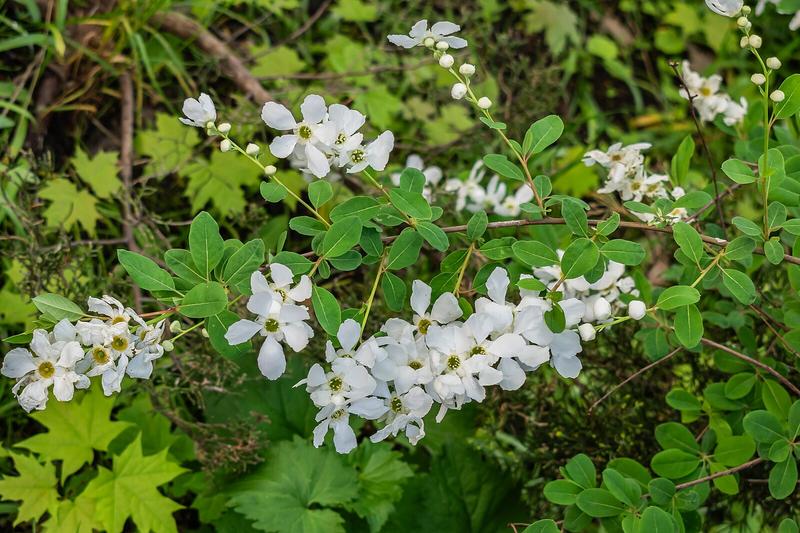
Quick facts
- Watering
- Weekly when young, minimal once established
- Sunlight
- Full sun to partial shade
- Soil
- Well-drained, fertile, slightly acidic
- Humans
- Safe
- Cats
- Safe
- Dogs
- Safe
- Height
- 150–200 cm
- Spread
- 150–250 cm
- Spacing
- 150–200 cm apart
- RHS recognition
- Award of Garden Merit
About Pearl Bush
Pearl Bush is a deciduous flowering shrub celebrated for its profusion of pure white, five-petalled flowers that appear in late spring, resembling strings of pearls before opening. This hybrid, derived from Chinese species, forms an elegant arching shrub that brings a spectacular display to British gardens during April and May. UK gardeners prize it for its reliable flowering, graceful habit, and ability to thrive in most garden conditions. The fresh green foliage provides a pleasant backdrop through summer, making it an excellent specimen or border shrub.
UK fact: Exochorda x macrantha 'The Bride' received the RHS Award of Garden Merit and remains one of the most popular cultivars in British gardens, particularly valued for its compact size suited to smaller suburban plots.
Watering Pearl Bush
Water newly planted Pearl Bush weekly during the first growing season to establish a deep root system. Once established, the shrub is remarkably drought-tolerant and requires watering only during prolonged dry spells in summer. In typical UK conditions with regular rainfall, mature specimens rarely need supplementary watering. During extended dry periods in late spring, water deeply to support flower bud development for the following year.
Sunlight requirements
Pearl Bush flowers most prolifically in full sun but tolerates partial shade, particularly in southern England where some afternoon shade prevents scorching. In northern and western regions, choose the sunniest position available to maximise flowering. Avoid deep shade under trees, which results in sparse blooms and leggy growth.
Soil and feeding
Pearl Bush thrives in fertile, well-drained soil with a slightly acidic to neutral pH (6.0-7.0), though it tolerates mildly alkaline conditions. Improve heavy clay soils with organic matter and grit to enhance drainage, as waterlogged roots can lead to poor growth. Sandy soils benefit from the addition of compost to improve moisture retention and fertility. Avoid extremely chalky soils, which may cause chlorosis and reduced vigour.
Apply a balanced slow-release fertiliser such as blood, fish and bone in early spring around the base of the shrub. A mulch of well-rotted compost or leaf mould in late winter provides additional nutrients and helps retain soil moisture. Avoid high-nitrogen feeds after June, as these promote soft growth at the expense of flower bud formation.
Pruning Pearl Bush
Prune Pearl Bush immediately after flowering in late May or early June, as it blooms on the previous year's wood. Remove up to one-third of the oldest stems at ground level to encourage vigorous new growth and maintain an open framework. Lightly trim flowered shoots back to strong buds or side branches to shape the shrub. Avoid autumn or winter pruning, which removes the flower buds and results in a poor display the following spring.
Propagating Pearl Bush
Pearl Bush can be propagated from semi-ripe cuttings taken in July or August, using healthy non-flowering shoots with a heel. Dip cuttings in rooting hormone and insert into a mix of equal parts peat-free compost and sharp sand, then keep in a cold frame. Layering is also successful: peg down a low-growing stem in autumn, wound the underside, and sever from the parent plant the following autumn once rooted. Seed propagation is possible but hybrids may not come true to type.
Common problems
Pearl Bush is generally trouble-free in UK gardens, with few serious pest or disease issues. Aphids may occasionally colonise young shoots in spring but rarely cause lasting damage and can be controlled with a strong water spray or organic insecticide. Poor flowering is usually due to incorrect pruning timing or insufficient sunlight rather than pests. In waterlogged soils, root rot can occur, manifesting as yellowing leaves and dieback; improve drainage to prevent this. Frost damage to emerging buds is rare but can occur in exposed sites during late spring frosts.
Spot a problem with your plant? Photograph the affected area using the Loam app and it will suggest the most likely cause and treatment.
Safety
- Humans
- Safe
- Cats
- Safe
- Dogs
- Safe
Toxicity information is for general guidance only.
Seasonal care calendar
Monthly care guide for Pearl Bush in the UK, based on average conditions.
| Month | Care tasks |
|---|---|
| January | No action needed; shrub is fully dormant. |
| February | Apply mulch of well-rotted compost around the base. |
| March | Feed with blood, fish and bone as growth begins. |
| April | Enjoy the emerging flower buds and early blooms. |
| May | Peak flowering period; deadhead spent blooms if desired. |
| June | Prune immediately after flowering finishes to shape and thin. |
| July | Take semi-ripe cuttings for propagation; water if very dry. |
| August | Continue taking cuttings; water during prolonged drought. |
| September | Good time to plant new specimens; water in well. |
| October | Foliage begins to fade; prepare planting sites for bare-root stock. |
| November | Plant bare-root specimens; leaves fall naturally. |
| December | No action needed; shrub is dormant. |
Frequently asked questions
- Why is my Pearl Bush not flowering?
- The most common cause is pruning at the wrong time, as Pearl Bush flowers on the previous year's wood. Prune only immediately after flowering in late May or June. Other causes include insufficient sunlight (needs at least half-day sun), immaturity (young plants may take 2-3 years to flower well), or late spring frosts damaging buds in exposed positions.
- When should I prune my Pearl Bush for the best display?
- Prune Pearl Bush straight after flowering finishes in late May or early June, removing up to one-third of old stems and lightly shaping flowered shoots. The Loam app can send you a timely reminder when your Pearl Bush has finished flowering, ensuring you never miss the optimal pruning window and enjoy maximum blooms each spring.
- How long does Pearl Bush take to reach full size?
- Pearl Bush is a moderately fast-growing shrub that typically reaches its mature height of 1.5-2 metres within 5-7 years under good growing conditions. Growth rate depends on soil quality, sunlight, and watering during establishment. You can expect a good flowering display from the third or fourth year onwards, with the shrub becoming more spectacular as it matures.
Got a question about growing Pearl Bush that isn't covered here? Ask the Garden Advisor in the Loam app. It knows your saved plants and local conditions.
Related plants
This page was compiled with AI assistance and reviewed by our team. .