Dog Rose
Rosa canina
Wildflowers and Natives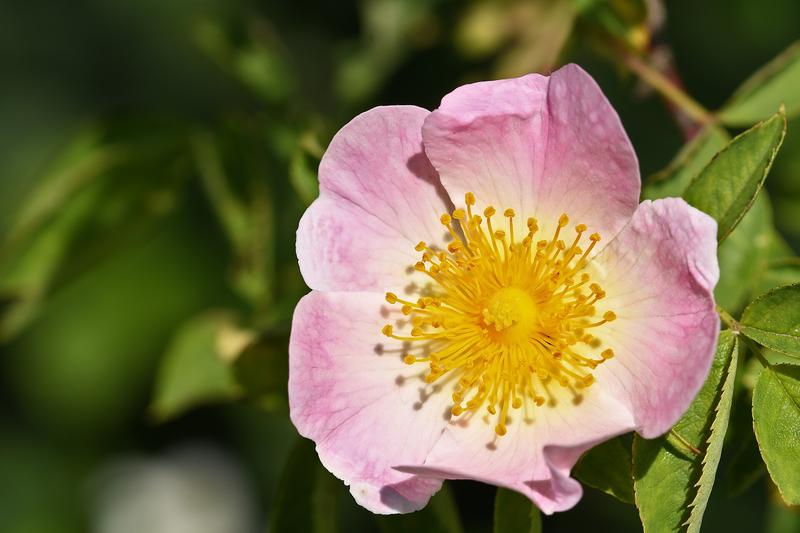
Quick facts
- Watering
- Minimal once established
- Sunlight
- Full sun to partial shade
- Soil
- Well-drained, any pH
- Humans
- Safe
- Cats
- Safe
- Dogs
- Safe
- Height
- 200–300 cm
- Spread
- 150–250 cm
- Spacing
- 150–200 cm apart
About Dog Rose
Dog Rose is a vigorous, deciduous climbing shrub native to the UK, producing delicate pale pink flowers in early summer followed by bright red hips in autumn. This hardy wildflower is a cornerstone of British hedgerows and woodland edges, thriving in diverse conditions across the country. UK gardeners value it for wildlife-friendly hedging, naturalising in wild gardens, and its vitamin C-rich hips used in syrups and teas. The arching stems bear hooked thorns and pinnate leaves that turn golden before dropping in winter.
UK fact: Dog Rose hips were collected by schoolchildren during World War II as part of a national campaign to produce rose hip syrup, providing a vital source of vitamin C when citrus imports were scarce.
Watering Dog Rose
Water newly planted Dog Roses weekly during their first growing season to establish deep roots. Once established, typically after 12-18 months, this drought-tolerant native requires watering only during prolonged dry spells in summer. In most UK regions, natural rainfall is sufficient for mature plants. Container-grown specimens need regular watering during dry periods, checking the soil weekly from May to September.
Sunlight requirements
Dog Rose performs best in full sun, producing the most abundant flowers and hips, but tolerates partial shade particularly well in southern UK gardens. In shadier positions, expect slightly fewer blooms but still healthy growth. Plant on south or west-facing hedgerows for optimal performance, though it will succeed on north-facing aspects in all but the deepest shade.
Soil and feeding
Dog Rose is remarkably adaptable, thriving in almost any well-drained soil from chalk to clay, sand to loam. It tolerates a wide pH range from acidic to alkaline (pH 5.5-8.0), making it suitable for diverse UK soil types. Avoid waterlogged ground, though it handles heavy clay better than many roses. Enrich very poor soils with garden compost at planting, but this vigorous native rarely needs pampering.
Dog Rose requires minimal feeding as a native wildflower adapted to British soils. Apply a light mulch of garden compost or well-rotted manure around the base in late winter to suppress weeds and provide gentle nutrition. Avoid high-nitrogen fertilisers which promote soft growth at the expense of flowers and hips.
Pruning Dog Rose
Prune Dog Rose lightly in late winter (January to February) to maintain shape and remove dead, diseased, or crossing stems. For hedgerow specimens, trim after flowering in late summer if necessary to control spread, though heavy pruning reduces hip production. Remove one or two of the oldest stems at the base every few years to encourage vigorous new growth. Wear thick gloves as thorns are sharp and plentiful.
Propagating Dog Rose
Dog Rose propagates readily from semi-ripe cuttings taken in late summer (August to September), rooted in a cold frame over winter. Hardwood cuttings taken in November also succeed well, inserted directly into prepared ground outdoors. Seed propagation requires stratification: collect ripe hips in autumn, extract seeds, and cold-stratify in damp sand for 3-4 months before spring sowing. Layering long stems in autumn by pegging them to the ground produces rooted plants by the following autumn.
Common problems
Dog Rose is generally robust but can suffer from blackspot, rust, and powdery mildew, particularly in humid conditions or crowded plantings with poor air circulation. Aphids may colonise young shoots in spring, though these rarely cause lasting damage and attract beneficial insects. Rose sawfly larvae can defoliate stems in summer; remove by hand or tolerate as part of the ecosystem. Avoid planting in waterlogged soil which causes root rot and dieback.
Spot a problem with your plant? Photograph the affected area using the Loam app and it will suggest the most likely cause and treatment.
Safety
- Humans
- Safe
- Cats
- Safe
- Dogs
- Safe
Toxicity information is for general guidance only.
Seasonal care calendar
Monthly care guide for Dog Rose in the UK, based on average conditions.
| Month | Care tasks |
|---|---|
| January | Prune to shape and remove dead or diseased wood during dormancy. |
| February | Complete pruning before buds break. Apply mulch around the base. |
| March | New growth emerges. Plant bare-root specimens before mid-month. |
| April | Foliage develops rapidly. Water newly planted specimens weekly. |
| May | Flower buds form. Monitor for aphids on soft new growth. |
| June | Peak flowering period with pale pink blooms attracting pollinators. |
| July | Flowers fade and hips begin to develop. Water during dry spells. |
| August | Take semi-ripe cuttings. Hips swell and begin to colour. |
| September | Hips ripen to bright red. Harvest for syrups or leave for birds. |
| October | Foliage turns golden. Collect hips for seed propagation. |
| November | Leaves fall. Take hardwood cuttings and plant bare-root stock. |
| December | Fully dormant. Plan pruning for late winter. |
Frequently asked questions
- When should I prune Dog Rose in the UK?
- Prune Dog Rose in late winter (January to February) while fully dormant, removing dead, diseased, or crossing stems. Light trimming after flowering in late summer controls spread but reduces autumn hip production, so reserve heavy pruning for the dormant season.
- Why isn't my Dog Rose producing hips?
- Poor hip production often results from excessive shade, over-pruning after flowering, or lack of pollination. The Loam app can help diagnose your specific growing conditions and send timely reminders to avoid pruning during the critical hip-setting period.
- Can Dog Rose grow in clay soil?
- Yes, Dog Rose tolerates heavy clay soil better than most roses, provided it isn't waterlogged. Improve drainage on very heavy clay by incorporating grit and organic matter at planting, but this adaptable native will establish successfully in most UK clay soils without extensive amendment.
Got a question about growing Dog Rose that isn't covered here? Ask the Garden Advisor in the Loam app. It knows your saved plants and local conditions.
Related plants
This page was compiled with AI assistance and reviewed by our team. .