Dock
Rumex obtusifolius
Weeds and Invasives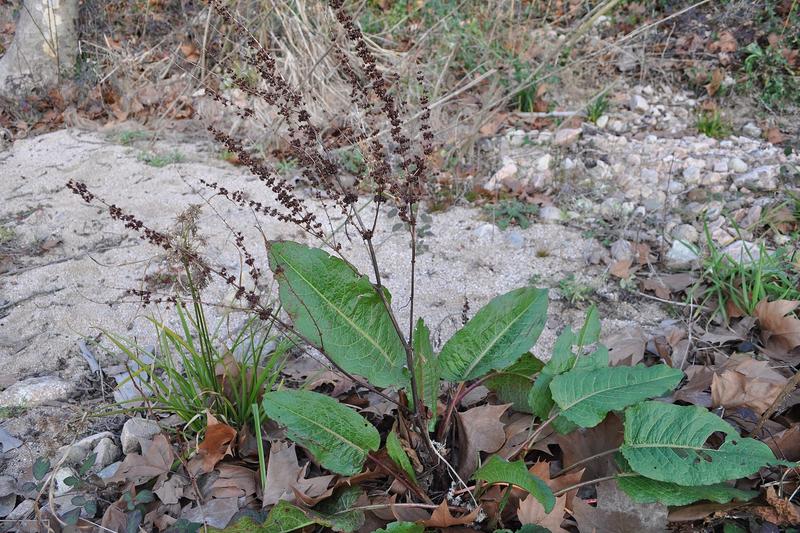
Quick facts
- Watering
- No watering required
- Sunlight
- Full sun to partial shade
- Soil
- Any soil, prefers heavy clay
- Humans
- Toxic
- Cats
- Toxic
- Dogs
- Toxic
- Height
- 60–120 cm
- Spread
- 30–60 cm
- Spacing
- 0 cm apart
About Dock
Broad-leaved dock is a persistent perennial weed native to Europe, including the UK, characterised by large, oval leaves and tall flowering spikes bearing reddish-brown seeds. This deep-rooted plant is not intentionally grown by gardeners but rather actively controlled, as it competes aggressively with cultivated plants and spreads rapidly across lawns, borders, and pastures. Its robust taproot can extend over a metre deep, making complete removal challenging. Despite its weedy nature, dock leaves have traditional uses for soothing nettle stings and the plant supports several native moth species.
UK fact: Dock leaves have been used in British folk medicine for centuries to relieve nettle stings, though scientific evidence for their effectiveness is limited; the cooling effect may simply come from rubbing the leaf on the skin.
Watering Dock
As an invasive weed, dock requires no watering and thrives on natural UK rainfall alone. The plant's deep taproot allows it to access moisture during dry spells, making it remarkably drought-tolerant. Established plants will survive even prolonged summer droughts common in southern England. Avoid watering areas where dock is present, as this only encourages more vigorous growth.
Sunlight requirements
Dock thrives in full sun but tolerates partial shade, often establishing itself in both open lawns and beneath hedgerows. In UK gardens, it commonly appears in sunny borders and vegetable patches where soil has been disturbed. Shaded conditions may slow growth slightly but will not prevent establishment.
Soil and feeding
Dock is highly adaptable and grows in virtually any soil type, though it shows a particular preference for heavy, compacted clay soils common throughout much of the UK. It tolerates a wide pH range from acidic to alkaline (pH 4.5-8.0) and thrives in both nutrient-rich and poor soils. The plant often indicates compacted, poorly drained ground and can establish in disturbed soil, waste ground, and neglected areas. Its presence suggests soil that would benefit from improved drainage and structure.
Dock requires no feeding and will thrive without any fertiliser application. In fact, applying fertiliser to areas where dock is present will only encourage more vigorous growth and seed production, making control more difficult.
Pruning Dock
Rather than pruning, dock requires complete removal to prevent spread. Cut flower spikes before they set seed from June onwards to prevent thousands of seeds dispersing across your garden. Regular mowing of lawns will weaken dock plants over time but will not eliminate them. For effective control, dig out the entire taproot using a fork or specialized weeding tool, ensuring you remove every fragment as even small pieces can regenerate.
Propagating Dock
Dock propagates prolifically by seed, with a single plant producing up to 60,000 seeds that remain viable in soil for over 50 years, creating a persistent seed bank. Seeds germinate readily in spring and autumn when soil is disturbed. The plant also regenerates vegetatively from root fragments, meaning any piece of taproot left in the ground after weeding can produce a new plant. This dual propagation strategy makes dock particularly difficult to eradicate once established in UK gardens.
Common problems
Dock itself is the problem rather than being troubled by pests or diseases, though it can host rust fungi and leaf beetles that rarely cause significant damage. The main issue for UK gardeners is its aggressive competition with desirable plants for water, nutrients, and space. Its deep taproot makes hand-weeding labour-intensive, and incomplete removal results in rapid regrowth. Dock is particularly problematic in lawns, vegetable gardens, and herbaceous borders, where it can quickly dominate if left unchecked.
Spot a problem with your plant? Photograph the affected area using the Loam app and it will suggest the most likely cause and treatment.
Safety
- Humans
-
Toxic
Dock contains oxalic acid and anthraquinone glycosides which can be toxic if consumed in large quantities, potentially causing kidney damage. Young leaves are sometimes eaten in small amounts but should be avoided by those with kidney problems or arthritis.
- Cats
-
Toxic
Contains soluble oxalates which can cause oral irritation, excessive drooling, vomiting, and difficulty swallowing if ingested. Large amounts may lead to kidney damage.
- Dogs
-
Toxic
Contains soluble oxalates which can cause oral irritation, excessive drooling, vomiting, and difficulty swallowing if ingested. Large amounts may lead to kidney damage.
Toxicity information is for general guidance only. If a person or pet has been exposed to this plant and you are concerned, seek advice from a medical professional or vet.
Seasonal care calendar
Monthly care guide for Dock in the UK, based on average conditions.
| Month | Care tasks |
|---|---|
| January | Dig out plants during dormancy when soil is workable; roots are easier to extract in winter. |
| February | Continue removal of dormant plants; check previously cleared areas for regrowth. |
| March | New seedlings emerge; hoe or hand-pull young plants before taproots develop. |
| April | Remove established plants before flowering; apply mulch to suppress seedling germination. |
| May | Monitor for flowering spikes and remove immediately to prevent seed set. |
| June | Cut all flower spikes before seeds develop; continue removing entire plants where possible. |
| July | Remove any remaining flower spikes; seeds begin to ripen and disperse from mid-month. |
| August | Continue vigilance for late-flowering plants; remove before seed dispersal. |
| September | Second flush of seedlings may appear; hoe or hand-pull while small. |
| October | Dig out established plants as growth slows; good time for thorough removal. |
| November | Continue removal while soil remains workable; leaves begin to die back. |
| December | Remove plants during mild spells; plan control strategy for the coming year. |
Frequently asked questions
- How do I get rid of dock in my lawn?
- Dig out the entire taproot using a daisy grubber or narrow trowel, ensuring you remove at least 15-20cm of root to prevent regrowth. For lawns, regular mowing weakens plants over time, but complete removal requires extracting the root. Spot-treat persistent plants with a selective lawn weedkiller containing 2,4-D or MCPA in spring or autumn when dock is actively growing. Always remove flower spikes before they seed to prevent further spread.
- Why does dock keep coming back after I've pulled it?
- Dock regenerates from any root fragments left in the soil, and its taproot can extend over a metre deep, making complete removal difficult. Even a small piece of root can produce a new plant. The Loam app can help you track removal efforts, set reminders to check for regrowth, and identify the best timing for control based on your local conditions and soil type.
- Is dock actually useful for treating nettle stings?
- While dock leaves are traditionally rubbed on nettle stings, scientific evidence for their effectiveness is limited. The cooling sensation may simply come from the moisture and rubbing action rather than any chemical properties. Some studies suggest dock contains compounds that might have mild anti-inflammatory effects, but modern antihistamine creams are more reliable for treating nettle stings.
Got a question about growing Dock that isn't covered here? Ask the Garden Advisor in the Loam app. It knows your saved plants and local conditions.
Related plants
This page was compiled with AI assistance and reviewed by our team. .