Creeping Buttercup
Ranunculus repens
Weeds and Invasives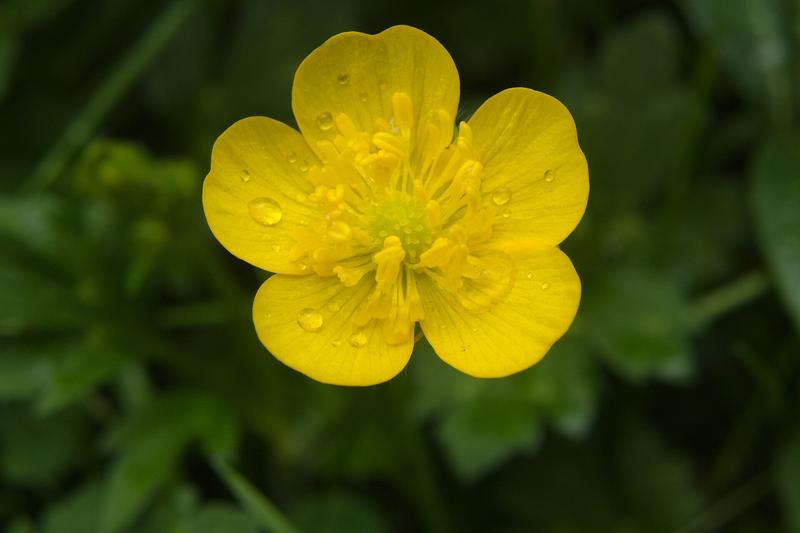
Quick facts
- Watering
- No watering required
- Sunlight
- Full sun to partial shade
- Soil
- Heavy, moisture-retentive, compacted clay
- Humans
- Toxic
- Cats
- Toxic
- Dogs
- Toxic
- Height
- 15–50 cm
- Spread
- 50–200 cm
- Spacing
- 0 cm apart
About Creeping Buttercup
Creeping buttercup is a persistent perennial weed native to the UK, characterised by glossy yellow flowers and creeping stolons that root at every node. It thrives in damp, compacted soils and is particularly problematic in lawns, borders, and pastures across Britain. While the bright flowers may appear cheerful in May and June, this aggressive spreader quickly dominates garden spaces, outcompeting desirable plants. Most UK gardeners seek to control or eradicate it rather than cultivate it, though it does provide early nectar for pollinators.
UK fact: Creeping buttercup has been a familiar sight in British meadows and gardens for centuries, with its name deriving from the old belief that cows eating the plant produced butter with a rich yellow colour, though the plant is actually toxic to livestock when fresh.
Watering Creeping Buttercup
As an invasive weed, creeping buttercup requires no supplementary watering and actively thrives in Britain's naturally damp climate. It is particularly vigorous in waterlogged or poorly drained soils, where many desirable plants struggle. The plant's preference for moisture means it often indicates drainage problems in lawns and borders. Improving drainage and soil structure is key to reducing its competitive advantage.
Sunlight requirements
Creeping buttercup tolerates a wide range of light conditions, from full sun to partial shade, making it particularly difficult to control. It performs best in open, sunny positions but will readily colonise shaded areas under trees and shrubs. In UK gardens, it thrives equally well on south-facing borders and north-facing damp corners.
Soil and feeding
Creeping buttercup flourishes in heavy, compacted clay soils with poor drainage, conditions common in many UK gardens. It tolerates a wide pH range from acidic to slightly alkaline (pH 5.0-7.5) but is most problematic in neutral to slightly acidic soils. The plant struggles in well-drained, sandy soils or improved garden loam. Improving soil structure through aeration, adding organic matter, and ensuring good drainage helps reduce its dominance by favouring competing plants.
No feeding is required or recommended for this invasive weed. In fact, avoiding fertiliser applications in infested areas can help reduce its vigour. Creeping buttercup thrives in nutrient-poor conditions where many garden plants struggle, giving it a competitive advantage.
Pruning Creeping Buttercup
Regular removal of flowers before they set seed in June and July helps prevent spread, though the plant primarily spreads vegetatively via stolons. Mowing lawns regularly at the correct height (not too short) can weaken creeping buttercup over time. Hand-pulling is ineffective unless every fragment of stolon and root is removed, as any remaining pieces will regenerate. The most effective control combines improving drainage, reducing soil compaction, and carefully digging out all plant material including the extensive root system.
Propagating Creeping Buttercup
Creeping buttercup propagates aggressively through creeping stolons that root at every node, allowing rapid colonisation of surrounding areas. Each rooted node can develop into an independent plant if separated. The plant also spreads by seed, with flowers producing numerous achenes that remain viable in soil for several years. Fragmentation during cultivation or mowing readily creates new plants from even small pieces of stolon or root.
Common problems
Creeping buttercup itself is the problem rather than suffering from pests or diseases. Its main issue is its aggressive, invasive nature, which allows it to outcompete desirable garden plants, particularly in damp, compacted conditions. The plant is toxic when fresh, containing protoanemonin which can cause skin irritation in sensitive individuals during handling. Control is difficult because any remaining root or stolon fragments regenerate, and the extensive root system makes complete removal challenging without damaging nearby plants.
Spot a problem with your plant? Photograph the affected area using the Loam app and it will suggest the most likely cause and treatment.
Safety
- Humans
-
Toxic
All parts contain protoanemonin, which can cause skin irritation, blistering, and mouth ulcers if ingested. Handle with gloves when removing.
- Cats
-
Toxic
Toxic if ingested, causing oral irritation, drooling, vomiting, and gastrointestinal upset. Fresh plant is more toxic than dried.
- Dogs
-
Toxic
Toxic if ingested, causing oral irritation, excessive drooling, vomiting, and diarrhoea. Fresh plant material is particularly harmful.
Toxicity information is for general guidance only. If a person or pet has been exposed to this plant and you are concerned, seek advice from a medical professional or vet.
Seasonal care calendar
Monthly care guide for Creeping Buttercup in the UK, based on average conditions.
| Month | Care tasks |
|---|---|
| January | Plan control strategy for the growing season ahead; avoid disturbing soil when waterlogged. |
| February | Begin careful hand-weeding on dry days, ensuring complete removal of roots and stolons. |
| March | Continue weeding before active growth accelerates; improve drainage in problem areas. |
| April | Monitor for new growth and remove promptly; apply mulch to suppress emerging shoots. |
| May | Flowers begin appearing; remove flower heads before seed set to prevent spread. |
| June | Peak flowering period; deadhead religiously to prevent seed production and spread. |
| July | Continue removing flowers and actively growing stolons; maintain regular lawn mowing. |
| August | Weed out any remaining plants before they establish further; improve soil structure. |
| September | Continue removal of plants and stolons; aerate compacted lawns to reduce future problems. |
| October | Final weeding session before winter; mulch borders to suppress spring regrowth. |
| November | Monitor for any late growth; avoid soil disturbance that might spread root fragments. |
| December | Plant remains dormant; review control efforts and plan improvements for next season. |
Frequently asked questions
- How do I get rid of creeping buttercup in my lawn?
- Improve drainage and reduce compaction through regular aeration, as creeping buttercup thrives in waterlogged conditions. Maintain lawn height at 2.5-4cm and overseed bare patches with grass to outcompete the weed. Hand-weed small infestations, removing all roots and stolons, or spot-treat with a selective herbicide containing MCPA or fluroxypyr in spring or autumn. Persistent effort over multiple seasons is usually required for complete control.
- Why does creeping buttercup keep coming back in my garden?
- Creeping buttercup regenerates from tiny root and stolon fragments left in the soil, and thrives in compacted, poorly drained conditions. The Loam app can help you track removal efforts, set reminders for regular monitoring, and provide personalised advice on improving your soil conditions to make your garden less hospitable to this persistent weed.
- Is creeping buttercup the same as meadow buttercup?
- No, creeping buttercup (Ranunculus repens) is distinct from meadow buttercup (Ranunculus acris). Creeping buttercup has creeping stolons that root at nodes, grooved flower stalks, and prefers damp, disturbed ground. Meadow buttercup grows in upright clumps without stolons, has smooth flower stalks, and prefers drier meadow conditions. Creeping buttercup is far more problematic as a garden weed due to its aggressive spreading habit.
Got a question about growing Creeping Buttercup that isn't covered here? Ask the Garden Advisor in the Loam app. It knows your saved plants and local conditions.
Related plants
This page was compiled with AI assistance and reviewed by our team. .