Choisya
Choisya ternata
Shrubs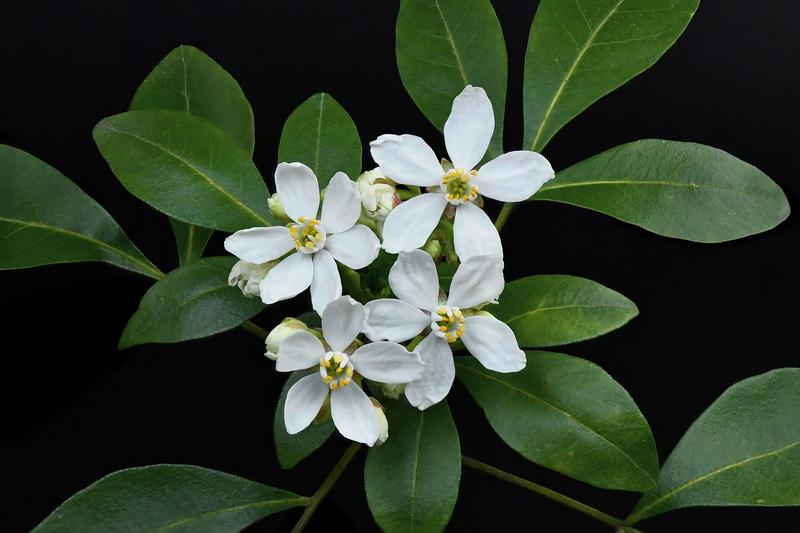
Quick facts
- Watering
- Weekly when establishing, then occasional
- Sunlight
- Full sun to partial shade
- Soil
- Well-drained, moderately fertile
- Humans
- Unknown
- Cats
- Unknown
- Dogs
- Unknown
- Height
- 150–250 cm
- Spread
- 150–250 cm
- Spacing
- 150–200 cm apart
- RHS recognition
- Award of Garden Merit
About Choisya
Choisya is an evergreen shrub native to Mexico, prized in British gardens for its glossy, aromatic foliage and clusters of fragrant white flowers in spring. The leaves release a pleasant citrus scent when crushed, whilst the star-shaped blooms often appear again in late summer. Its compact, rounded habit and year-round structure make it an excellent choice for borders, hedging, and container planting across the UK.
UK fact: Choisya ternata has held the RHS Award of Garden Merit since 1993 and thrives particularly well in the milder coastal regions of Cornwall, Devon, and the south coast, where it can flower almost continuously from April through to October.
Watering Choisya
Newly planted choisya requires weekly watering from spring through autumn, particularly during dry periods. Once established after 12-18 months, the plant is reasonably drought-tolerant and only needs watering during extended summer droughts lasting more than three weeks. Container-grown specimens require more frequent watering, typically twice weekly in summer. Avoid waterlogging, as choisya is susceptible to root rot in poorly drained soils.
Sunlight requirements
Plant in full sun for the best flowering display, though it will perform well in partial shade, particularly in hotter southern gardens. In the UK, a south- or west-facing position is ideal, whilst east-facing spots should be avoided in frost-prone areas as early morning sun can damage frozen buds. Golden-leaved varieties such as 'Sundance' benefit from some afternoon shade to prevent leaf scorch.
Soil and feeding
Plant in well-drained soil enriched with organic matter such as garden compost or well-rotted manure. Choisya tolerates most soil types including chalk and light sand, but performs best in moderately fertile ground with a pH between 6.0 and 7.5. On heavy clay soils, improve drainage by incorporating horticultural grit and planting on a slight mound. In containers, use a loam-based compost such as John Innes No. 3 mixed with additional grit for drainage.
Feed established plants in March with a general-purpose granular fertiliser such as Growmore or blood, fish and bone, scattered around the base at 70g per square metre. Container-grown choisya benefits from a liquid feed every fortnight during the growing season from April to August. Avoid high-nitrogen feeds which promote leafy growth at the expense of flowers.
Pruning Choisya
Choisya requires minimal pruning but benefits from light trimming after the main flowering period in late May or early June. Remove any frost-damaged, dead, or crossing branches, and trim back flowered shoots by one-third to maintain a compact shape and stimulate autumn flowering. Overgrown or leggy specimens can be renovated by cutting back hard to 30-45cm in April, though this will sacrifice that year's flowers. Avoid autumn or winter pruning as this removes flower buds and exposes tender growth to frost damage.
Propagating Choisya
The most reliable method is semi-ripe cuttings taken in July or August when new growth has begun to firm up. Cuttings typically root within 6-8 weeks in a propagator or on a warm windowsill. Alternatively, layer low-growing branches in spring by pegging them to the soil surface, though this method takes 12-18 months to produce rooted plants. Seed propagation is possible but slow and offspring may not come true to type.
Common problems
Choisya is generally trouble-free but can suffer from frost damage to young growth in exposed positions, particularly in northern and eastern regions. Snails occasionally shelter beneath the dense foliage and may damage young shoots in spring. Yellowing leaves can indicate waterlogged soil or, on alkaline soils, iron deficiency (chlorosis). In prolonged wet conditions, root rot caused by Phytophthora can occur, though this is uncommon in well-drained sites.
Spot a problem with your plant? Photograph the affected area using the Loam app and it will suggest the most likely cause and treatment.
Safety
- Humans
-
Unknown
Choisya contains alkaloids and essential oils that may cause mild skin irritation in sensitive individuals when handling foliage. Not considered seriously toxic but not for consumption.
- Cats
-
Unknown
No confirmed toxicity data available, though the aromatic oils may cause mild gastrointestinal upset if consumed in quantity. Monitor pets and contact a vet if symptoms occur.
- Dogs
-
Unknown
No confirmed toxicity data available, though the aromatic oils may cause mild gastrointestinal upset if consumed in quantity. Monitor pets and contact a vet if symptoms occur.
Toxicity information is for general guidance only. If a person or pet has been exposed to this plant and you are concerned, seek advice from a medical professional or vet.
Seasonal care calendar
Monthly care guide for Choisya in the UK, based on average conditions.
| Month | Care tasks |
|---|---|
| January | No action needed. Protect from severe frost with fleece if temperatures below -10°C are forecast. |
| February | Check for frost damage and remove any blackened shoots. Prepare planting sites for bare-root specimens. |
| March | Apply slow-release fertiliser around established plants. Plant container-grown specimens and water in well. |
| April | Enjoy the main flowering display. Renovate overgrown plants by hard pruning if necessary. Water newly planted specimens weekly. |
| May | Deadhead faded flowers and lightly trim after flowering to maintain shape and encourage autumn blooms. Continue watering young plants. |
| June | Complete any pruning by mid-month. Water during dry spells and apply mulch to conserve moisture. |
| July | Take semi-ripe cuttings for propagation. Water containers regularly and feed fortnightly with liquid fertiliser. |
| August | Continue taking cuttings until mid-month. Enjoy the second flush of flowers. Water during prolonged dry weather. |
| September | Reduce watering as temperatures cool. Pot on rooted cuttings into individual pots. |
| October | Plant new specimens while soil is still warm. Clear fallen leaves from around the base to deter slugs and snails. |
| November | Move container-grown plants to sheltered positions for winter. No pruning required. |
| December | No action needed. Enjoy the evergreen foliage structure in the winter garden. |
Frequently asked questions
- When should I prune choisya?
- Prune choisya immediately after the main spring flowering finishes in late May or early June. This timing allows the plant to produce new growth that will carry next year's flower buds. You can lightly trim to shape or remove up to one-third of the growth. Avoid autumn or winter pruning as this removes developing buds and reduces flowering. For overgrown plants, hard pruning in April is possible but sacrifices that year's blooms.
- Why are there brown spots on my choisya leaves?
- Brown spots on choisya leaves can indicate several issues including fungal leaf spot, frost damage, or pest problems such as scale insects. Check whether spots are dry and crispy (environmental damage) or spreading with yellow halos (fungal disease). The Loam app can help you diagnose the specific problem by analysing photos of affected leaves and recommend targeted treatment based on your plant's conditions and location.
- How do I propagate choisya from cuttings?
- Take semi-ripe cuttings in July or August when new growth has begun to firm up. Cut 10-15cm lengths just below a leaf node, remove lower leaves, and dip the cut end in hormone rooting powder. Insert into pots of 50:50 compost and grit, water well, and cover with a plastic bag or place in a propagator. Keep in a shaded cold frame and cuttings should root within 8-12 weeks. Pot on individually the following spring.
Got a question about growing Choisya that isn't covered here? Ask the Garden Advisor in the Loam app. It knows your saved plants and local conditions.
Related plants
This page was compiled with AI assistance and reviewed by our team. .