Carpenteria
Carpenteria californica
Shrubs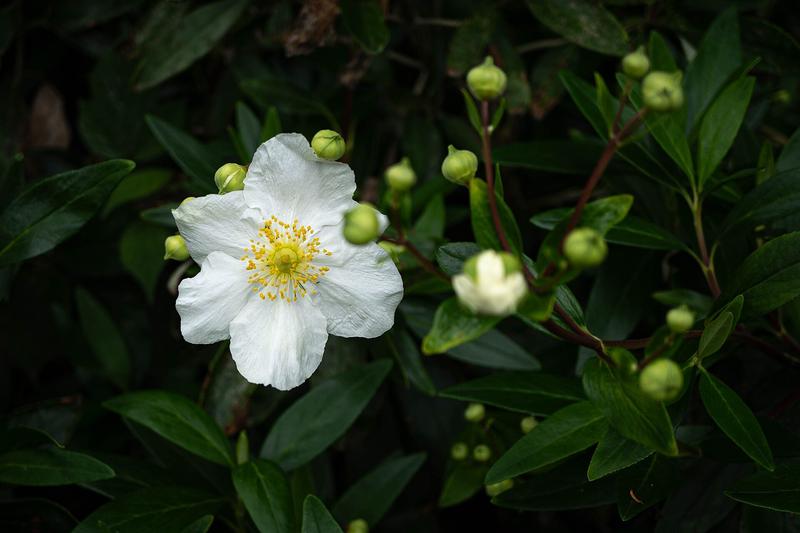
Quick facts
- Watering
- Weekly during establishment
- Sunlight
- Full sun
- Soil
- Well-drained, moderately fertile
- Humans
- Unknown
- Cats
- Unknown
- Dogs
- Unknown
- Height
- 150–200 cm
- Spread
- 150–200 cm
- Spacing
- 150–180 cm apart
- RHS recognition
- Award of Garden Merit
About Carpenteria
Carpenteria is a stunning evergreen shrub native to California, prized for its large, fragrant white flowers with golden stamens that appear in summer. This elegant plant brings a Mediterranean feel to UK gardens with its glossy dark green foliage and architectural form. British gardeners value it as a choice specimen for sheltered borders and south-facing walls, where it creates a striking focal point. Though requiring some protection in colder regions, it rewards careful placement with a spectacular floral display.
UK fact: Carpenteria californica received the RHS Award of Garden Merit in 1993, recognising its exceptional garden performance in British conditions when given appropriate shelter and well-drained soil.
Watering Carpenteria
Water regularly during the first two growing seasons to establish a deep root system, particularly during dry spells. Once established, Carpenteria is moderately drought-tolerant and requires watering only during prolonged dry periods in summer. In the UK, natural rainfall is usually sufficient for mature plants, though those grown against walls may need supplementary watering. Avoid waterlogging, especially in winter, as this can lead to root rot.
Sunlight requirements
Carpenteria thrives in full sun, ideally against a south or west-facing wall which provides warmth and shelter. In the UK, the reflected heat from a sunny wall helps ripen the wood and encourages abundant flowering. Avoid exposed positions or east-facing aspects where early morning sun on frosted growth can cause damage.
Soil and feeding
Carpenteria requires well-drained soil and will not tolerate heavy clay or waterlogged conditions, particularly in winter. It performs best in moderately fertile, neutral to slightly alkaline soil with a pH of 6.5-7.5. Improve drainage on heavier soils by incorporating grit and organic matter before planting. In containers, use a loam-based compost such as John Innes No. 3 with added horticultural grit.
Apply a balanced slow-release fertiliser in early spring around the base of the plant. A light mulch of well-rotted compost in spring helps retain moisture and provides gentle nutrition. Avoid high-nitrogen feeds which promote soft growth susceptible to frost damage.
Pruning Carpenteria
Prune immediately after flowering in late summer, removing spent flower stems and any dead or damaged wood. Carpenteria flowers on the previous year's growth, so avoid hard pruning which will reduce the following year's display. Lightly shape the plant to maintain an attractive form and remove any frost-damaged shoots in spring once new growth begins. Wall-trained specimens can be tied in and shaped as needed after flowering.
Propagating Carpenteria
Propagate from semi-ripe cuttings taken in late summer, using healthy non-flowering shoots with a heel. Root in a mix of equal parts peat-free compost and sharp sand in a cold frame or unheated greenhouse. Layering is also successful: peg down a low-growing stem in spring and sever from the parent plant once rooted the following year. Seed can be sown in spring, though germination is slow and plants may take several years to flower.
Common problems
Carpenteria is generally trouble-free but can suffer frost damage to young growth in harsh winters, particularly in exposed positions. Aphids may occasionally colonise new shoots in spring and should be controlled promptly. Poor drainage leads to root rot and yellowing foliage, especially on heavy soils. In very dry summers, spider mites can become problematic on wall-grown plants where air circulation is restricted.
Spot a problem with your plant? Photograph the affected area using the Loam app and it will suggest the most likely cause and treatment.
Safety
- Humans
-
Unknown
No specific toxicity data available for Carpenteria californica. As with all plants, avoid ingestion and wash hands after handling.
- Cats
-
Unknown
No specific toxicity data available. Monitor pets and contact a vet if plant material is consumed.
- Dogs
-
Unknown
No specific toxicity data available. Monitor pets and contact a vet if plant material is consumed.
Toxicity information is for general guidance only. If a person or pet has been exposed to this plant and you are concerned, seek advice from a medical professional or vet.
Seasonal care calendar
Monthly care guide for Carpenteria in the UK, based on average conditions.
| Month | Care tasks |
|---|---|
| January | No action needed. Protect from severe frost with fleece if temperatures drop below -10°C. |
| February | Check for frost damage but avoid pruning until spring growth begins. |
| March | Remove any frost-damaged shoots. Apply slow-release fertiliser and mulch around the base. |
| April | Water young plants regularly as growth accelerates. Check for aphids on new shoots. |
| May | Continue watering during dry spells. Flower buds begin to form. |
| June | Enjoy the spectacular white flowers. Water wall-grown plants during dry weather. |
| July | Main flowering period continues. Deadhead spent blooms if accessible. |
| August | Prune after flowering finishes, removing spent stems. Take semi-ripe cuttings for propagation. |
| September | Complete any pruning. Water if weather remains dry. |
| October | Reduce watering as growth slows. Ensure good drainage before winter. |
| November | No action needed. Check wall ties are secure on trained specimens. |
| December | No action needed. Monitor weather forecasts for severe frost warnings. |
Frequently asked questions
- Why is my Carpenteria not flowering?
- Carpenteria flowers on the previous year's wood, so hard pruning or frost damage to shoots will reduce blooms. Ensure the plant receives full sun and avoid pruning between autumn and late summer. Young plants may take 2-3 years to flower well. Excessive shade or nitrogen-rich feeding can also promote leafy growth at the expense of flowers.
- How can I tell if my Carpenteria needs watering?
- Check soil moisture 5cm below the surface – if dry, water thoroughly. The Loam app can send personalised watering reminders based on your local weather, plant age, and soil type, taking the guesswork out of Carpenteria care and helping you maintain the perfect moisture balance.
- Can Carpenteria survive a British winter outdoors?
- Yes, Carpenteria is hardy to around -10°C and survives most UK winters when planted in a sheltered spot against a south or west-facing wall. In colder regions or exposed gardens, provide winter protection with fleece during severe frosts. Good drainage is essential as waterlogged roots are more susceptible to frost damage.
Got a question about growing Carpenteria that isn't covered here? Ask the Garden Advisor in the Loam app. It knows your saved plants and local conditions.
Related plants
This page was compiled with AI assistance and reviewed by our team. .