Callicarpa
Callicarpa bodinieri
Shrubs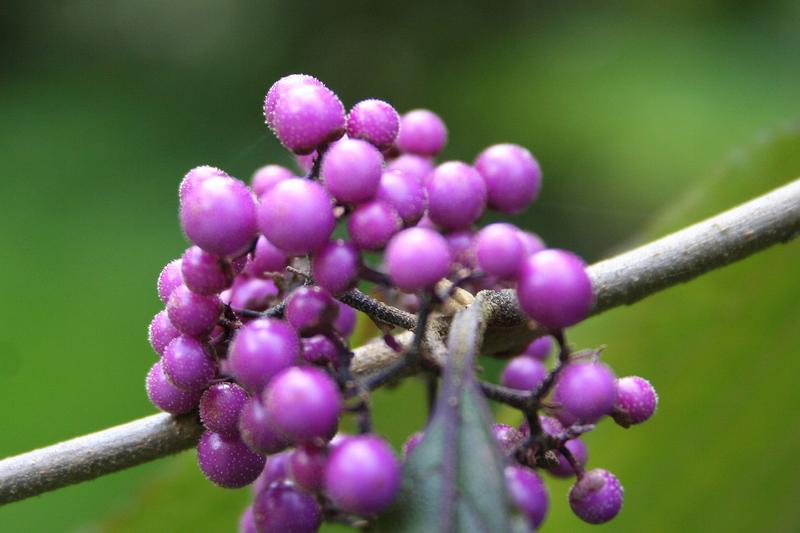
Quick facts
- Watering
- Weekly during establishment
- Sunlight
- Full sun to partial shade
- Soil
- Moist, well-drained, fertile loam
- Humans
- Unknown
- Cats
- Unknown
- Dogs
- Unknown
- Height
- 200–300 cm
- Spread
- 150–250 cm
- Spacing
- 150–200 cm apart
- RHS recognition
- Award of Garden Merit
About Callicarpa
Callicarpa bodinieri is a deciduous shrub native to China, prized in UK gardens for its spectacular display of metallic violet berries that persist from autumn into winter. Growing 2–3 metres tall, it produces small lilac flowers in summer followed by clusters of iridescent purple fruits that create a stunning architectural feature when other plants are fading. British gardeners value this shrub for its late-season interest and its ability to thrive in most UK conditions, making it an excellent choice for mixed borders and wildlife gardens.
UK fact: Callicarpa bodinieri var. giraldii 'Profusion' holds the RHS Award of Garden Merit and is particularly well-suited to British gardens, where the cooler autumn temperatures intensify the metallic sheen of its purple berries.
Watering Callicarpa
Newly planted callicarpa requires consistent moisture to establish a strong root system, so water weekly from April to September if rainfall is less than 2.5 cm per week. Once established after two years, the shrub is reasonably drought-tolerant and typically needs watering only during extended dry periods in summer. In heavy clay soils common across much of the UK, avoid overwatering as this can lead to root rot. Apply a 5–7 cm layer of mulch around the base to retain moisture and regulate soil temperature.
Sunlight requirements
Plant in a position receiving at least 4–6 hours of direct sunlight daily for optimal fruiting. In the UK, a south- or west-facing aspect is ideal, though the shrub will tolerate partial shade in warmer regions. Berry production and colour intensity diminish significantly in heavy shade, so avoid planting under dense tree canopies or on north-facing walls.
Soil and feeding
This adaptable shrub performs best in rich, loamy soil with plenty of organic matter, typical of many British gardens. It tolerates both slightly acidic and slightly alkaline conditions (pH 5.5–7.5), making it suitable for most UK soil types. Improve heavy clay by incorporating grit and compost to enhance drainage, whilst sandy soils benefit from generous additions of well-rotted manure or garden compost to improve moisture retention. Avoid waterlogged sites, particularly in winter, as prolonged wet conditions can damage roots.
Feed callicarpa in March with a general-purpose granular fertiliser such as Growmore or blood, fish and bone, scattering approximately 70 g per square metre around the root zone. A 5 cm layer of well-rotted garden compost or manure applied as a mulch in spring provides additional nutrients and improves soil structure. Avoid high-nitrogen feeds after June, as these promote soft growth at the expense of berry production.
Pruning Callicarpa
Callicarpa flowers and fruits on the current season's growth, so prune between February and early March before new growth begins. Cut back all stems by one-third to one-half to maintain a compact shape and stimulate strong new shoots that will carry the best berry display. Remove any dead, damaged, or crossing branches to improve air circulation. For overgrown or neglected specimens, hard pruning to 30–45 cm above ground level will rejuvenate the plant, though you'll sacrifice that year's berries.
Propagating Callicarpa
The most reliable propagation method for UK gardeners is semi-ripe cuttings taken in mid to late summer when growth has begun to firm up. Cuttings typically root within 6–8 weeks with the aid of a heated propagator or warm windowsill. Hardwood cuttings taken in November can also succeed but are slower to establish. Layering is another option, bending a low branch to the ground in spring and pegging it down until roots form by the following autumn.
Common problems
Callicarpa is generally trouble-free in UK gardens with few serious pest or disease problems. Aphids may occasionally colonise soft new growth in spring but rarely cause lasting damage and can be controlled with a strong jet of water or insecticidal soap. In very wet conditions or poorly drained soil, root rot can occur, so ensuring good drainage is essential. The berries are attractive to birds, particularly thrushes and blackbirds, which may strip the display in late autumn, though this is part of the plant's wildlife value rather than a true problem.
Spot a problem with your plant? Photograph the affected area using the Loam app and it will suggest the most likely cause and treatment.
Safety
- Humans
-
Unknown
There is limited information on the toxicity of Callicarpa berries to humans. Whilst not commonly reported as poisonous, they are not considered edible and should not be consumed.
- Cats
-
Unknown
No specific toxicity data is available for cats. As with most ornamental berries, it is advisable to prevent pets from consuming the fruits.
- Dogs
-
Unknown
No specific toxicity data is available for dogs. Whilst not widely reported as toxic, ingestion of berries may cause mild gastrointestinal upset, so discourage consumption.
Toxicity information is for general guidance only. If a person or pet has been exposed to this plant and you are concerned, seek advice from a medical professional or vet.
Seasonal care calendar
Monthly care guide for Callicarpa in the UK, based on average conditions.
| Month | Care tasks |
|---|---|
| January | No action needed. The shrub is fully dormant, though berries may still provide winter interest if not yet eaten by birds. |
| February | Prune established plants from mid-month onwards, cutting back last year's growth by one-third to one-half to encourage strong new stems. |
| March | Complete pruning by early March. Apply a balanced fertiliser around the root zone and mulch with well-rotted compost or manure. |
| April | New growth emerges. Water newly planted specimens weekly if rainfall is insufficient. Check for aphids on young shoots. |
| May | Continue watering young plants during dry spells. Plant out rooted cuttings from last year once hardened off and all frost risk has passed. |
| June | Small lilac flowers begin to appear. Maintain watering for newly planted shrubs and remove any competing weeds around the base. |
| July | Flowering continues. Take semi-ripe cuttings from mid-month onwards for propagation. Water during dry periods, especially young plants. |
| August | Continue taking semi-ripe cuttings until late in the month. Green berries begin to form as flowers fade. Maintain watering in dry weather. |
| September | Berries start to develop their characteristic metallic purple colour. Reduce watering as autumn rains return. Enjoy the developing display. |
| October | Peak berry display as foliage begins to drop, revealing the full spectacle of violet fruits. Birds may start feeding on berries. |
| November | Berries persist into early winter. Take hardwood cuttings if desired. Clear fallen leaves from around the base to prevent fungal issues. |
| December | The shrub is dormant. Remaining berries provide valuable food for winter birds and continue to offer ornamental interest in the garden. |
Frequently asked questions
- When should I prune my callicarpa?
- Prune in late winter or early spring (February to early March) before new growth begins. Cut back the previous year's stems by one-third to one-half to encourage vigorous new shoots that will carry the current season's flowers and berries. Avoid autumn pruning, as this removes the developing berry display.
- Why are my callicarpa leaves turning yellow?
- Yellowing leaves on callicarpa can indicate several issues including waterlogging, nutrient deficiency, or pest problems. Check soil drainage and ensure the plant isn't sitting in waterlogged conditions. If you're unsure what's causing the problem, the Loam app can help diagnose leaf issues through photo identification and provide personalised care recommendations based on your specific growing conditions.
- What type of soil does callicarpa prefer?
- Callicarpa thrives in moist but well-drained soil and is adaptable to most soil types, including clay, loam, and sandy soils. It prefers a slightly acidic to neutral pH (5.5–7.0) but tolerates mildly alkaline conditions. Enrich poor soils with organic matter such as well-rotted compost or leaf mould at planting time to improve moisture retention and fertility.
Got a question about growing Callicarpa that isn't covered here? Ask the Garden Advisor in the Loam app. It knows your saved plants and local conditions.
Related plants
This page was compiled with AI assistance and reviewed by our team. .