Baptisia
Baptisia australis
Perennials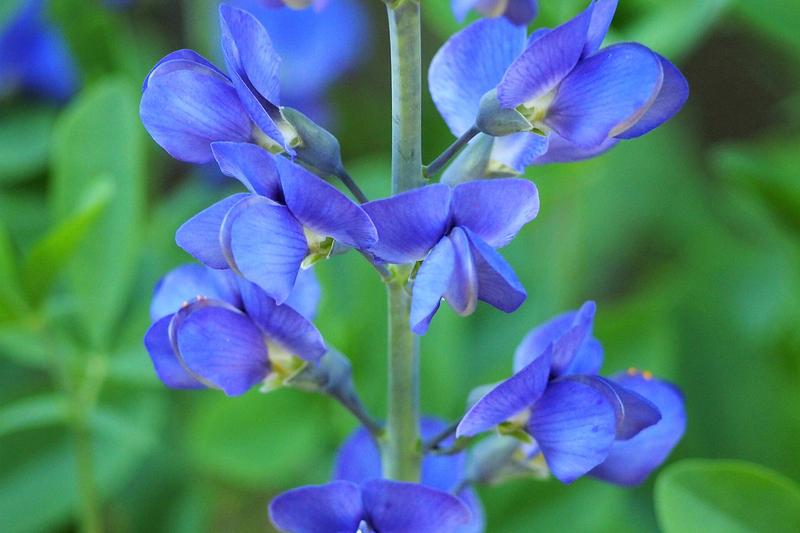
Quick facts
- Watering
- Fortnightly when establishing
- Sunlight
- Full sun to partial shade
- Soil
- Well-drained, moderately fertile
- Humans
- Toxic
- Cats
- Toxic
- Dogs
- Toxic
- Height
- 90–120 cm
- Spread
- 60–90 cm
- Spacing
- 75–90 cm apart
- RHS recognition
- Award of Garden Merit
About Baptisia
Baptisia australis is a robust herbaceous perennial native to North America, prized in UK gardens for its striking indigo-blue lupine-like flowers and attractive grey-green foliage. Growing to around 90–120 cm tall, this long-lived plant forms substantial clumps that provide excellent structure in mixed borders from late spring through summer. British gardeners value baptisia for its drought tolerance once established, its ability to fix nitrogen in the soil, and its decorative dark seed pods that persist into autumn.
UK fact: Baptisia australis received the Royal Horticultural Society's Award of Garden Merit in 1993, recognising its outstanding performance and reliability in British gardens despite its North American origins.
Watering Baptisia
Water newly planted baptisia regularly during the first growing season to establish its deep taproot, providing approximately 2.5 cm of water weekly during dry spells. Once established after 2–3 years, baptisia is remarkably drought-tolerant and rarely requires supplementary watering in most UK regions, thriving on natural rainfall alone. Avoid overwatering established plants, as baptisia resents waterlogged conditions and performs best when allowed to dry slightly between waterings. During prolonged summer droughts, an occasional deep soak every 2–3 weeks will maintain vigour.
Sunlight requirements
Baptisia performs best in full sun, producing the most abundant flowering and compact growth, though it tolerates partial shade particularly in southern UK gardens. In shadier positions, plants may become slightly taller and more lax in habit, requiring staking. A south- or west-facing border is ideal, though avoid very hot, dry spots against south-facing walls.
Soil and feeding
Baptisia thrives in well-drained, moderately fertile soil with a neutral to slightly acidic pH of 6.0–7.0, though it tolerates a range of soil types including sandy and clay loams provided drainage is adequate. Avoid overly rich soils, which can produce lush foliage at the expense of flowers and cause plants to flop. The deep taproot means baptisia tolerates poor, dry soils once established, making it excellent for challenging sites. Incorporate grit or sharp sand into heavy clay soils to improve drainage before planting.
Baptisia requires minimal feeding and actually performs better in lean to moderately fertile soils, as excessive nitrogen produces weak, floppy growth. A light application of general-purpose fertiliser such as blood, fish and bone in early spring is sufficient, or simply mulch with well-rotted compost. As a member of the legume family, baptisia fixes its own nitrogen, enriching the soil around it.
Pruning Baptisia
Cut back the entire plant to ground level in late autumn once foliage has died back, or leave the attractive seed pods standing through winter for structural interest and wildlife value, cutting back in late February before new growth emerges. Deadheading spent flowers is unnecessary unless you wish to prevent self-seeding, as the inflated black seed pods are highly ornamental. Baptisia rarely requires staking if grown in full sun with appropriate spacing, but plants in shade may benefit from support with grow-through hoops installed in early spring.
Propagating Baptisia
Baptisia is best propagated by seed sown in autumn or early spring, though germination can be slow and erratic; scarify seeds or soak in warm water for 24 hours before sowing to improve germination rates. Division is possible but challenging due to the deep taproot, and should only be attempted on mature plants (5+ years old) in early spring, using a sharp spade to section the crown and ensuring each division has several growing points. Root cuttings taken in late winter offer another option, though baptisia generally resents root disturbance and is best left undisturbed once established. Seed-grown plants typically take 2–3 years to reach flowering size.
Common problems
Baptisia is remarkably trouble-free in UK gardens, with few serious pest or disease problems. Powdery mildew may occasionally appear on foliage in late summer, particularly in dry conditions or crowded plantings, but rarely causes significant harm. Aphids can cluster on young growth in spring but are easily controlled with a strong jet of water or by encouraging natural predators. The main cultural problem is planting in poorly drained soil, which can lead to root rot; ensure good drainage and avoid overwatering to prevent this issue.
Spot a problem with your plant? Photograph the affected area using the Loam app and it will suggest the most likely cause and treatment.
Safety
- Humans
-
Toxic
All parts of baptisia contain toxic alkaloids and quinolizidine compounds that can cause gastrointestinal upset if ingested. Keep away from children.
- Cats
-
Toxic
Toxic to cats if ingested, causing vomiting, diarrhoea, and potential neurological symptoms. Keep cats away from the plant.
- Dogs
-
Toxic
Toxic to dogs if ingested, causing vomiting, diarrhoea, and abdominal pain. Prevent dogs from chewing or consuming any part of the plant.
Toxicity information is for general guidance only. If a person or pet has been exposed to this plant and you are concerned, seek advice from a medical professional or vet.
Seasonal care calendar
Monthly care guide for Baptisia in the UK, based on average conditions.
| Month | Care tasks |
|---|---|
| January | No action needed; plant fully dormant. |
| February | Cut back any remaining stems to ground level before new growth emerges. |
| March | Apply light dressing of blood, fish and bone around the base. Mulch with compost, keeping clear of emerging shoots. |
| April | Watch for emerging shoots and install support hoops if needed. Water newly planted specimens regularly. |
| May | Flower buds forming; continue watering young plants. Remove any competing weeds. |
| June | Peak flowering period; enjoy the indigo-blue blooms. Water during dry spells if newly planted. |
| July | Flowering continues into early July. Seed pods begin to form; leave in place for ornamental value. |
| August | Seed pods maturing and turning black. Collect seed if propagating, or leave for winter interest. |
| September | Foliage remains attractive. No action needed; established plants require no watering. |
| October | Foliage begins to yellow and die back. Leave seed pods standing for winter structure if desired. |
| November | Cut back to ground level, or leave standing for winter interest and to feed birds. |
| December | No action needed; plant fully dormant. |
Frequently asked questions
- Why is my baptisia not flowering?
- Baptisia typically takes 2–3 years from planting to produce its first flowers, so young plants require patience. Insufficient sunlight is the most common cause of poor flowering in established plants; ensure your baptisia receives at least 6 hours of direct sun daily. Overly rich soil or excessive nitrogen fertiliser can also promote leafy growth at the expense of blooms, so avoid overfeeding and grow in moderately fertile conditions.
- How do I know when my baptisia needs watering?
- Established baptisia is drought-tolerant and rarely needs watering in the UK, but newly planted specimens require regular moisture. Check soil moisture 5 cm below the surface; if dry, water deeply. The Loam app can send you personalised watering reminders based on your local weather conditions and your plant's establishment stage, taking the guesswork out of baptisia care.
- Can I move an established baptisia plant?
- Moving established baptisia is challenging and often unsuccessful due to its deep taproot, which can extend 60–90 cm into the soil. If you must relocate a baptisia, attempt it only in early spring before growth begins, dig as deeply as possible to preserve the taproot, and expect the plant to sulk for a year or two. It's generally better to leave baptisia undisturbed and propagate new plants from seed or cuttings instead.
Got a question about growing Baptisia that isn't covered here? Ask the Garden Advisor in the Loam app. It knows your saved plants and local conditions.
Related plants
This page was compiled with AI assistance and reviewed by our team. .