Amsonia
Amsonia tabernaemontana
Perennials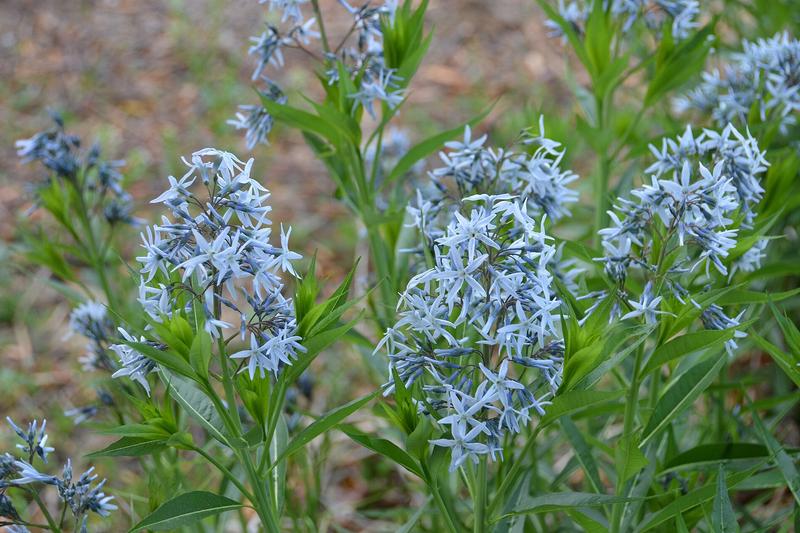
Quick facts
- Watering
- Weekly when young, minimal once established
- Sunlight
- Full sun to partial shade
- Soil
- Well-drained, moderately fertile loam
- Humans
- Unknown
- Cats
- Unknown
- Dogs
- Unknown
- Height
- 60–90 cm
- Spread
- 45–60 cm
- Spacing
- 45–60 cm apart
- RHS recognition
- Award of Garden Merit
About Amsonia
Amsonia is a graceful North American perennial valued for its clusters of pale blue, star-shaped flowers in late spring and exceptional golden-yellow autumn foliage. Growing 60–90 cm tall, it forms neat, shrubby clumps with narrow, willow-like leaves that create a fine-textured effect in borders. UK gardeners prize it for its low-maintenance nature, drought tolerance once established, and multi-season interest. It thrives in British gardens without staking, making it an excellent choice for naturalistic and prairie-style plantings.
UK fact: Amsonia tabernaemontana has been awarded the RHS Award of Garden Merit, recognising its outstanding performance and reliability in British gardens, where it proves hardier and more adaptable than many other North American perennials.
Watering Amsonia
Water newly planted amsonia regularly during the first growing season to establish a deep root system. Once established, it is remarkably drought-tolerant and requires watering only during prolonged dry spells in summer. In typical UK conditions with regular rainfall, mature plants rarely need supplementary watering. Avoid waterlogging, particularly in winter, as this can lead to root rot.
Sunlight requirements
Amsonia performs best in full sun, which promotes compact growth and the most vibrant autumn colour. In the UK, it tolerates partial shade, particularly in southern regions, though plants may become slightly taller and more lax. A south- or west-facing border is ideal, though it adapts well to east-facing positions with morning sun.
Soil and feeding
Amsonia thrives in well-drained soil of average to moderate fertility, performing well in both slightly acidic to neutral conditions (pH 5.5–7.0). It tolerates a range of soil types including clay loam, provided drainage is adequate. Avoid overly rich soils, which can cause floppy growth requiring staking. On heavy clay, incorporate grit or sharp sand at planting time to improve drainage and prevent winter waterlogging.
Amsonia requires minimal feeding and thrives in moderately fertile soil without supplementary fertiliser. If growing in poor soil, apply a light dressing of general-purpose fertiliser or well-rotted compost in early spring. Avoid high-nitrogen feeds, which promote soft, leggy growth at the expense of flowers and autumn colour.
Pruning Amsonia
Amsonia requires little pruning but benefits from a light trim after flowering in June or July to maintain a compact shape and prevent self-seeding. Cut back stems by one-third to encourage bushier growth and prevent flopping. Leave the foliage intact through autumn to enjoy the spectacular golden-yellow colour, then cut back to ground level in late winter before new growth emerges. Deadheading is optional, as the seed pods add winter interest.
Propagating Amsonia
Amsonia is easily propagated by division in early spring as new growth emerges, or in autumn after flowering. Lift established clumps and divide into sections with healthy roots and shoots, replanting immediately at the same depth. It can also be grown from seed sown in autumn in a cold frame, though seedlings take 2–3 years to reach flowering size. Softwood cuttings taken in late spring root readily in a gritty compost mix.
Common problems
Amsonia is remarkably trouble-free with few pest or disease problems in UK gardens. Slugs and snails may occasionally damage young spring growth, so protect emerging shoots with organic slug pellets or barriers. The plant is generally resistant to powdery mildew and rust. In overly rich or shaded conditions, stems may become floppy and require staking, though this is easily avoided by choosing an appropriate site with good light and moderate fertility.
Spot a problem with your plant? Photograph the affected area using the Loam app and it will suggest the most likely cause and treatment.
Safety
- Humans
-
Unknown
Amsonia contains alkaloids and may cause mild stomach upset if ingested; avoid consumption and handle with care.
- Cats
-
Unknown
May cause mild gastrointestinal upset if ingested; monitor pets around this plant.
- Dogs
-
Unknown
May cause mild gastrointestinal upset if ingested; monitor pets around this plant.
Toxicity information is for general guidance only. If a person or pet has been exposed to this plant and you are concerned, seek advice from a medical professional or vet.
Seasonal care calendar
Monthly care guide for Amsonia in the UK, based on average conditions.
| Month | Care tasks |
|---|---|
| January | No action needed; plant is fully dormant. |
| February | Cut back old stems to ground level before new growth emerges. |
| March | Apply light mulch of compost around the base; new shoots begin to emerge. |
| April | Protect emerging shoots from slugs; water if conditions are dry. |
| May | Flower buds form; water young plants regularly to establish roots. |
| June | Enjoy pale blue star-shaped flowers; lightly trim after flowering to maintain shape. |
| July | Complete post-flowering trim if not done in June; water during prolonged dry spells. |
| August | Foliage remains attractive; minimal watering needed for established plants. |
| September | Foliage begins to turn golden-yellow; divide established clumps if desired. |
| October | Enjoy spectacular autumn colour; leave foliage intact for seasonal interest. |
| November | Foliage fades; seed pods provide winter structure and interest. |
| December | No action needed; plant enters dormancy. |
Frequently asked questions
- Why is my amsonia flopping over and does it need staking?
- Amsonia typically flops when grown in overly rich soil, too much shade, or overcrowded conditions. Choose a sunny spot with moderately fertile, well-drained soil to promote sturdy, self-supporting growth. A light trim after flowering in June also helps maintain compact form. Properly sited plants rarely need staking.
- When should I divide my amsonia and how often does it need dividing?
- Divide amsonia in early spring or autumn every 4–5 years to maintain vigour, though it tolerates being left undisturbed for longer. The Loam app can send you timely reminders based on when you planted yours, and help you track which clumps are due for division.
- Will amsonia grow well in clay soil?
- Yes, amsonia tolerates clay soil provided drainage is adequate. Improve heavy clay by incorporating grit or sharp sand at planting time to prevent winter waterlogging, which can cause root rot. Once established, it performs reliably in clay loam without further amendment.
Got a question about growing Amsonia that isn't covered here? Ask the Garden Advisor in the Loam app. It knows your saved plants and local conditions.
Related plants
This page was compiled with AI assistance and reviewed by our team. .