Tropaeolum
Tropaeolum speciosum
Climbers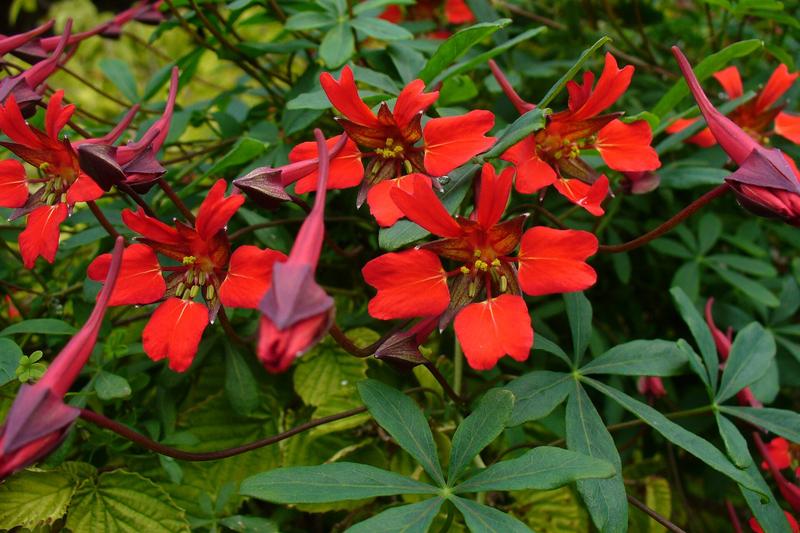
Quick facts
- Watering
- Regular during establishment
- Sunlight
- Partial shade
- Soil
- Moist, humus-rich, slightly acidic
- Humans
- Safe
- Cats
- Safe
- Dogs
- Safe
- Height
- 200–300 cm
- Spread
- 100–150 cm
- Spacing
- 60–90 cm apart
- RHS recognition
- Award of Garden Merit
About Tropaeolum
Tropaeolum speciosum, commonly known as flame flower or Scottish flame flower, is a herbaceous perennial climber native to Chile. It produces spectacular scarlet flowers from summer through autumn, followed by bright blue berries, scrambling through hedges and shrubs with delicate, lobed leaves. British gardeners prize it for its vivid colour and ability to weave through yew hedges and other dark evergreens, creating a striking contrast. Though challenging to establish, once settled it can become a long-lived garden feature in cooler, damper regions of the UK.
UK fact: Tropaeolum speciosum thrives particularly well in Scotland and the cooler, wetter regions of northern England and Wales, where it has naturalised in some gardens, earning its affectionate nickname 'Scottish flame flower' despite its South American origins.
Watering Tropaeolum
Water regularly during the first two growing seasons to help establish the rhizomatous root system. Once established, it tolerates typical UK rainfall in cooler regions but benefits from supplementary watering during dry summers, particularly in southern England. Mulch around the base to retain moisture and keep roots cool. Avoid waterlogging, but never allow the soil to dry out completely during the growing season.
Sunlight requirements
Plant in partial shade with roots kept cool, ideally on a north-facing aspect or where the base is shaded by other plants. The climbing stems can emerge into brighter light, but avoid hot, sunny positions which can cause stress. In Scotland and northern England, it tolerates more sun than in warmer southern counties.
Soil and feeding
Grows best in humus-rich, moisture-retentive soil that remains cool throughout summer. Add plenty of well-rotted compost or leaf mould at planting time to improve moisture retention. Prefers slightly acidic to neutral pH (5.5-7.0), making it ideal for pairing with rhododendrons, camellias, and other acid-loving plants. Avoid hot, dry, or heavy clay soils that bake in summer; in such conditions, improve drainage whilst adding organic matter to retain moisture.
Feed with a balanced liquid fertiliser every 4-6 weeks from late spring through summer to encourage prolific flowering. Avoid high-nitrogen feeds which promote leafy growth at the expense of flowers. A spring mulch of well-rotted compost or leaf mould provides slow-release nutrients and helps maintain soil conditions.
Pruning Tropaeolum
Tropaeolum speciosum dies back completely to underground rhizomes in winter. Remove dead stems and foliage in late autumn after the first frosts, or leave until early spring to provide some winter protection. No other pruning is required. If the plant becomes too vigorous, thin out stems during the growing season, but avoid disturbing the roots as this can set back growth significantly.
Propagating Tropaeolum
Division is the most reliable method but must be done carefully as the brittle rhizomes resent disturbance. Divide established clumps in early spring just as growth begins, ensuring each section has several growing points. Seed propagation is possible but slow; sow fresh seed in autumn in a cold frame, as germination can be erratic and may take 18 months. Once established, plants may self-seed in favourable conditions.
Common problems
Tropaeolum speciosum is relatively pest and disease-free but can be challenging to establish, often failing in its first year or two before suddenly thriving. Slugs and snails may damage emerging shoots in spring, so protect young growth with organic slug pellets or barriers. The main issue is cultural: hot, dry conditions or root disturbance cause decline, and plants simply refuse to grow in unsuitable locations. Blackfly can occasionally infest stems but rarely cause serious damage.
Spot a problem with your plant? Photograph the affected area using the Loam app and it will suggest the most likely cause and treatment.
Safety
- Humans
- Safe
- Cats
- Safe
- Dogs
- Safe
Toxicity information is for general guidance only.
Seasonal care calendar
Monthly care guide for Tropaeolum in the UK, based on average conditions.
| Month | Care tasks |
|---|---|
| January | Plant is dormant below ground. No action needed. |
| February | Plant remains dormant. Prepare planting sites by incorporating organic matter if planting in spring. |
| March | New shoots begin emerging. Plant pot-grown specimens or divide established clumps carefully. Apply mulch around the base. |
| April | Growth accelerates as stems begin climbing. Water during dry spells and watch for slug damage on young shoots. |
| May | Stems climb vigorously. Begin monthly feeding with balanced liquid fertiliser. Ensure soil remains moist. |
| June | First flowers begin to appear. Continue regular watering and feeding. Guide stems through host plants if needed. |
| July | Peak flowering period with vivid scarlet blooms. Maintain consistent moisture and continue monthly feeding. |
| August | Flowering continues strongly. Water regularly during dry weather. Blue berries begin forming as early flowers fade. |
| September | Late flowers and attractive blue berries present together. Collect ripe seed if propagating. Reduce feeding. |
| October | Flowering finishes and foliage begins to yellow. Allow berries to ripen fully. Sow fresh seed in cold frame. |
| November | Top growth dies back after frosts. Cut down dead stems or leave for wildlife and winter protection. |
| December | Plant fully dormant below ground. Clear away remaining dead foliage if not done earlier. |
Frequently asked questions
- How do I keep Tropaeolum speciosum roots cool in summer?
- Maintain cool roots by applying a thick mulch of leaf mould, compost, or bark chips around the base. Plant through evergreen shrubs like yew or rhododendrons that provide natural shade. Position in north-facing or partially shaded spots and ensure consistent moisture throughout summer. In southern England, consider planting on the shaded side of walls or fences. Monitor soil temperature and moisture levels regularly, especially during hot spells.
- Why is my Tropaeolum speciosum struggling and how can I diagnose problems?
- Flame flower struggles are usually caused by hot, dry conditions, root disturbance, or unsuitable positioning. Common signs include poor growth, failure to establish, or sudden disappearance. The Loam app can help you diagnose specific issues by analysing your growing conditions, tracking moisture levels, and providing personalised care reminders based on your location and microclimate. It's particularly useful for monitoring this temperamental plant's exacting requirements throughout the season.
- What type of soil does Tropaeolum speciosum need?
- Flame flower requires cool, moist, humus-rich soil that's slightly acidic to neutral (pH 6.0-7.0). The soil must retain moisture without becoming waterlogged. Improve heavy clay with organic matter and grit for drainage, or enrich sandy soils with plenty of compost, leaf mould, or well-rotted manure. Avoid hot, dry, or chalky soils. The roots must stay consistently cool and moist, so incorporate organic matter annually to maintain soil structure and moisture retention.
Got a question about growing Tropaeolum that isn't covered here? Ask the Garden Advisor in the Loam app. It knows your saved plants and local conditions.
Related plants
This page was compiled with AI assistance and reviewed by our team. .