Yew
Taxus baccata
Trees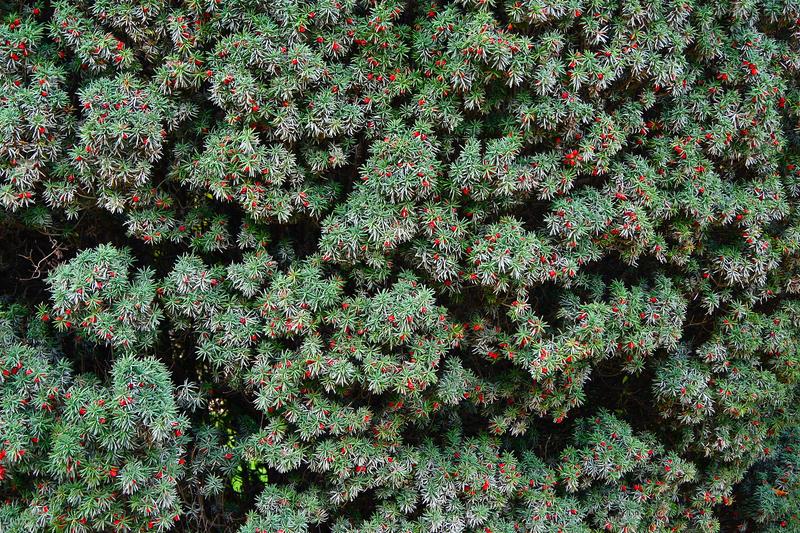
Quick facts
- Watering
- Weekly when young, minimal once established
- Sunlight
- Full sun to full shade
- Soil
- Well-drained, alkaline to neutral
- Humans
- Toxic
- Cats
- Toxic
- Dogs
- Toxic
- Height
- 1000–2000 cm
- Spread
- 800–1500 cm
- Spacing
- 60–100 cm apart
- RHS recognition
- Award of Garden Merit
About Yew
Yew is a slow-growing, evergreen conifer native to Britain and much of Europe, renowned for its dense, dark green foliage and striking red berries. This iconic tree has been a cornerstone of British landscapes for centuries, often found in churchyards and formal gardens where it responds beautifully to clipping and topiary. UK gardeners prize yew for its exceptional longevity, tolerance of deep shade, and ability to form impenetrable hedges. With proper care, yew becomes a magnificent architectural feature that can outlive generations.
UK fact: Many ancient yews in British churchyards are believed to be over 1,000 years old, predating the churches themselves, and the wood was historically prized for making English longbows during the medieval period.
Watering Yew
Water young yews weekly during their first two growing seasons, particularly during dry spells between April and September. Once established, yew is remarkably drought-tolerant and rarely requires supplementary watering in the UK climate, even during summer. Hedges may benefit from occasional deep watering during prolonged dry periods to maintain dense growth. Avoid waterlogging, as yew will not tolerate persistently wet roots.
Sunlight requirements
Yew is exceptionally versatile, thriving in full sun, partial shade, or even deep shade where few other conifers will grow. In British gardens, specimens in full sun develop denser foliage, whilst those in shade remain healthy but may grow more slowly. Avoid planting in exposed positions subject to cold, drying winds, particularly in northern regions.
Soil and feeding
Yew thrives in well-drained soils and is particularly happy on chalk and limestone, tolerating alkaline conditions better than most conifers. It adapts to a wide pH range from 5.5 to 8.0 but performs best in neutral to slightly alkaline soils. Heavy clay is acceptable provided drainage is adequate; improve waterlogged sites by incorporating grit and organic matter. Avoid very acidic, peaty soils where growth may be slower.
Apply a balanced slow-release fertiliser such as blood, fish and bone in early spring around the base of young trees to encourage establishment. Established yews rarely require feeding in most British garden soils, though hedges benefit from an annual spring feed to maintain vigour and dense foliage.
Pruning Yew
Yew responds exceptionally well to pruning and can be clipped into formal shapes or hedges from late summer (August) to early autumn. Avoid pruning during frosty periods or in spring when birds may be nesting. Hard renovation pruning into old wood is possible and yew will regenerate readily, making it ideal for restoring overgrown hedges. Remove any dead or damaged branches in late winter.
Propagating Yew
Yew is propagated from semi-ripe cuttings taken in late summer or early autumn, ideally in September. Take 10–15 cm heel cuttings from the current year's growth, remove lower foliage, and insert into gritty compost in a cold frame. Cuttings root slowly, often taking 12–18 months, so patience is essential. Seed propagation is possible but extremely slow, requiring cold stratification and taking several years to produce sizeable plants.
Common problems
Yew is generally trouble-free but can suffer from Phytophthora root rot in waterlogged soils, causing foliage to turn bronze and die back. Scale insects occasionally infest branches, appearing as brown lumps on stems and causing sooty mould; treat with horticultural soap in spring. Vine weevil larvae may damage roots of container-grown specimens. Browning foliage in winter is often environmental stress from cold winds or waterlogging rather than disease.
Spot a problem with your plant? Photograph the affected area using the Loam app and it will suggest the most likely cause and treatment.
Safety
- Humans
-
Toxic
All parts of yew except the red aril are highly toxic, containing taxine alkaloids that can cause cardiac arrest. Seeds, foliage, and bark are extremely dangerous if ingested.
- Cats
-
Toxic
All parts except the red aril are highly toxic to cats, causing vomiting, difficulty breathing, tremors, and potentially fatal cardiac effects.
- Dogs
-
Toxic
All parts except the red aril are highly toxic to dogs, causing vomiting, tremors, difficulty breathing, and potentially fatal heart failure even in small quantities.
Toxicity information is for general guidance only. If a person or pet has been exposed to this plant and you are concerned, seek advice from a medical professional or vet.
Seasonal care calendar
Monthly care guide for Yew in the UK, based on average conditions.
| Month | Care tasks |
|---|---|
| January | No action needed; avoid pruning during frost. |
| February | Remove any snow accumulation from branches to prevent breakage. |
| March | Apply slow-release fertiliser around young trees and hedges. |
| April | Begin weekly watering of newly planted specimens; check for scale insects. |
| May | Continue watering young plants during dry spells. |
| June | Monitor soil moisture; water if prolonged dry weather. |
| July | Water young trees weekly; established specimens need minimal care. |
| August | Clip hedges and topiary; take semi-ripe cuttings for propagation. |
| September | Continue hedge trimming if needed; take cuttings in cold frame. |
| October | Red berries ripen; ideal time for planting new specimens. |
| November | Plant bare-root or container-grown yews; mulch around base. |
| December | No action needed; avoid disturbing during dormancy. |
Frequently asked questions
- How fast does yew grow in the UK?
- Yew is slow-growing, typically adding 15–30 cm per year in British conditions. Young plants grow faster with good care, whilst mature specimens slow considerably. This slow growth makes yew ideal for formal hedges that require infrequent trimming, though patience is needed to achieve height.
- Why is my yew hedge turning brown?
- Browning can indicate waterlogging, root rot, cold wind damage, or drought stress. The Loam app can help diagnose the cause based on your soil conditions, recent weather, and photographs, then provide tailored recovery advice for your specific location.
- Can I cut yew back hard to reduce its size?
- Yes, yew tolerates hard renovation pruning exceptionally well and will regenerate from old wood, unlike most conifers. Cut back overgrown hedges or trees in late summer, and new growth will emerge the following spring, though full recovery takes 2–3 years.
Got a question about growing Yew that isn't covered here? Ask the Garden Advisor in the Loam app. It knows your saved plants and local conditions.
Related plants
This page was compiled with AI assistance and reviewed by our team. .