Holly
Ilex aquifolium
Shrubs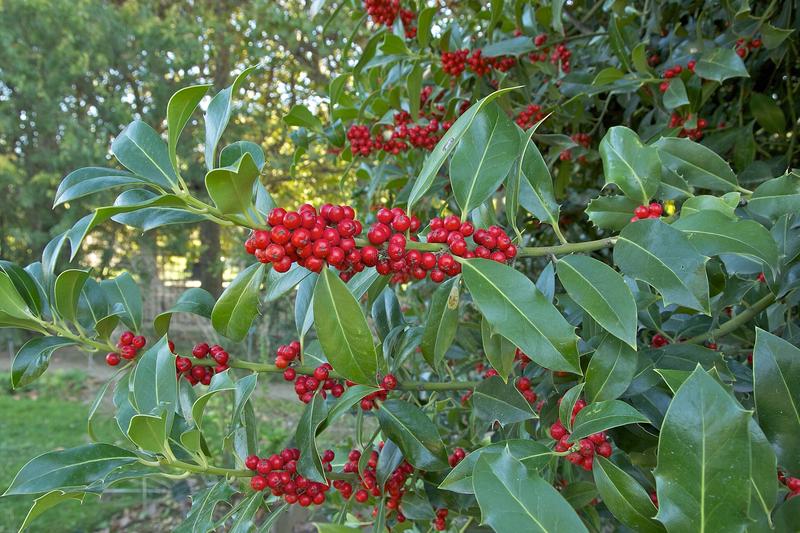
Quick facts
- Watering
- Weekly when young, minimal once established
- Sunlight
- Full sun to partial shade
- Soil
- Well-drained, slightly acidic to neutral
- Humans
- Toxic
- Cats
- Toxic
- Dogs
- Toxic
- Height
- 300–1500 cm
- Spread
- 200–800 cm
- Spacing
- 60–150 cm apart
- RHS recognition
- Award of Garden Merit
About Holly
Holly is a native British evergreen shrub or small tree renowned for its glossy, spiny dark green leaves and bright red berries. This iconic plant has been cherished in the UK for centuries, both as a garden specimen and for its traditional use in Christmas decorations. Holly makes an excellent hedging plant, specimen tree, or wildlife-friendly addition to mixed borders, providing year-round structure and winter interest. Its dense growth habit and prickly foliage also make it a superb choice for security hedging in British gardens.
UK fact: Holly has been a protected species in the UK since 1981 under the Wildlife and Countryside Act, making it illegal to uproot wild plants without the landowner's permission, reflecting its importance to British heritage and wildlife.
Watering Holly
Water newly planted hollies weekly during dry spells in their first growing season, ensuring the root ball doesn't dry out completely. Once established after two to three years, holly is exceptionally tolerant of British weather patterns and rarely needs supplementary watering except during prolonged summer droughts. Container-grown specimens require more frequent watering, particularly during hot weather, as their roots cannot access ground moisture. In heavy clay soils common across much of the UK, take care not to overwater, as holly dislikes waterlogged conditions.
Sunlight requirements
Whilst holly tolerates a wide range of light conditions, plants grown in full sun typically produce the best berry displays and maintain denser foliage. In British gardens, avoid deep shade beneath large trees, as this can result in sparse growth and reduced fruiting. North-facing or east-facing positions are perfectly suitable, though variegated cultivars may show better leaf colour in brighter spots.
Soil and feeding
Holly thrives in a wide range of soil types, from sandy loams to clay, provided drainage is adequate. The ideal pH range is 5.5 to 7.0, making it well-suited to the slightly acidic conditions found in many parts of the UK. Improve heavy clay soils by incorporating organic matter and grit to prevent waterlogging, which can lead to root rot. On chalk or alkaline soils, holly may develop chlorosis (yellowing leaves), though it generally tolerates these conditions better than many other acid-loving plants.
Feed established holly plants in March or early April with a general-purpose slow-release fertiliser such as blood, fish and bone or Growmore at 70g per square metre. Container-grown specimens benefit from monthly liquid feeds during the growing season from April to August. Avoid high-nitrogen fertilisers in late summer, as this can promote soft growth vulnerable to frost damage.
Pruning Holly
The optimal time to prune holly in the UK is late August, after birds have nested but before berries fully develop. Light trimming maintains shape and encourages dense growth, whilst hard pruning is well-tolerated if renovation is needed. When pruning hedges, use secateurs rather than hedge trimmers where possible to avoid unsightly cut leaves, though this is more practical for smaller specimens. Holly responds well to rejuvenation pruning, and even old, overgrown plants can be cut back hard in late winter if necessary, though this will sacrifice that year's berries.
Propagating Holly
Semi-ripe cuttings taken in August or September offer the most reliable propagation method for holly, with rooting typically taking three to four months. Hardwood cuttings can be taken in winter but are slower to establish. Growing from seed is possible but requires stratification and may take 18 months to germinate, with seedlings taking several years to reach a useful size. Note that only female plants produce berries, and you'll need a male pollinator nearby, so vegetative propagation from known female plants is preferable if berries are desired.
Common problems
Holly leaf miner is the most common pest in UK gardens, causing distinctive yellow or purple blotches on leaves where larvae tunnel through the tissue. Holly leaf blight (Phytophthora ilicis) can cause black spots and leaf drop, particularly in wet conditions or on stressed plants. Aphids occasionally colonise new growth in spring, and scale insects may appear on stems. Poor berry production is usually due to lack of a male pollinator nearby, excessively shady conditions, or pruning at the wrong time of year which removes developing flower buds.
Spot a problem with your plant? Photograph the affected area using the Loam app and it will suggest the most likely cause and treatment.
Safety
- Humans
-
Toxic
Holly berries are toxic if ingested, containing saponins and theobromine that can cause nausea, vomiting, and diarrhoea. Children are particularly at risk due to the attractive appearance of the bright red berries. The spiny leaves can also cause physical injury.
- Cats
-
Toxic
Holly berries and leaves are toxic to cats, causing vomiting, diarrhoea, and abdominal pain if ingested. The spiny leaves may also cause mouth injuries. Cats are generally deterred by the prickly foliage.
- Dogs
-
Toxic
Holly berries are toxic to dogs, containing compounds that cause vomiting, diarrhoea, drooling, and lethargy. The spiny leaves can cause mouth and throat irritation. Keep fallen berries cleared if dogs have access to the area.
Toxicity information is for general guidance only. If a person or pet has been exposed to this plant and you are concerned, seek advice from a medical professional or vet.
Seasonal care calendar
Monthly care guide for Holly in the UK, based on average conditions.
| Month | Care tasks |
|---|---|
| January | Protect berries from hungry birds with netting if you wish to preserve them. Check stakes and ties on young plants after winter gales. |
| February | Hard renovation pruning can be carried out this month if needed, though you'll sacrifice berries for the year. Prepare planting sites for bare-root specimens. |
| March | Plant container-grown or bare-root holly. Apply slow-release fertiliser around established plants. Check for aphids on new growth and treat if necessary. |
| April | Water newly planted specimens during dry spells. Watch for signs of holly leaf miner and remove affected leaves promptly to reduce spread. |
| May | Small white flowers appear on mature plants this month. Continue watering young plants regularly. Mulch around the base with well-rotted compost. |
| June | Flowering continues into early June. Monitor for pests, particularly aphids and leaf miner. Water container-grown plants regularly during dry weather. |
| July | Green berries begin to develop on female plants. Ensure adequate watering during hot, dry spells, especially for plants in containers or recently planted specimens. |
| August | Prime time for pruning and shaping holly hedges and specimens. Take semi-ripe cuttings for propagation. Berries begin to colour on early varieties. |
| September | Continue taking semi-ripe cuttings early in the month. Berries ripen to their characteristic red colour. Prepare planting sites for autumn planting. |
| October | Excellent month for planting container-grown holly. Collect and sow seeds if propagating, though stratification will be needed. Berries provide valuable food for wildlife. |
| November | Continue planting during mild spells. Collect foliage for Christmas decorations later in the month. Check young plants are secure against winter winds. |
| December | Harvest sprigs for festive decorations, taking care not to over-strip plants. Avoid pruning now as you'll remove developing flower buds for next year. |
Frequently asked questions
- When should I prune holly in the UK?
- Prune holly in late summer (August) after flowering but before berries fully develop, or in late winter (February-March) if you're willing to sacrifice some berries. Avoid pruning in autumn and winter when berries provide ornamental value and wildlife food. Light trimming of hedges can be done in spring, but heavy pruning should wait until late summer when the plant is actively growing and wounds heal quickly. Never prune during hard frosts.
- Why are my holly leaves turning yellow?
- Yellowing holly leaves can indicate several issues: nutrient deficiency (particularly iron or nitrogen), waterlogging, drought stress, or pest damage from holly leaf miner. Check soil moisture first—holly prefers well-drained conditions. If leaves show yellow blotches or trails, suspect leaf miner. For general yellowing, feed with an ericaceous fertiliser in spring. The Loam app can help diagnose the specific cause through photos and provide personalised care recommendations based on your plant's conditions.
- What soil conditions does holly prefer?
- Holly thrives in moist but well-drained soil and tolerates most soil types including clay, sand, and chalk, though it prefers slightly acidic to neutral pH (5.5-7.5). It dislikes waterlogged conditions which can cause root rot and yellowing leaves. Improve heavy clay with organic matter and grit for drainage. Holly is remarkably adaptable and will grow in poor soils, but enriching the planting hole with compost helps establishment. It tolerates coastal conditions and urban pollution well.
Got a question about growing Holly that isn't covered here? Ask the Garden Advisor in the Loam app. It knows your saved plants and local conditions.
Related plants
This page was compiled with AI assistance and reviewed by our team. .