Flowering Currant
Ribes sanguineum
Shrubs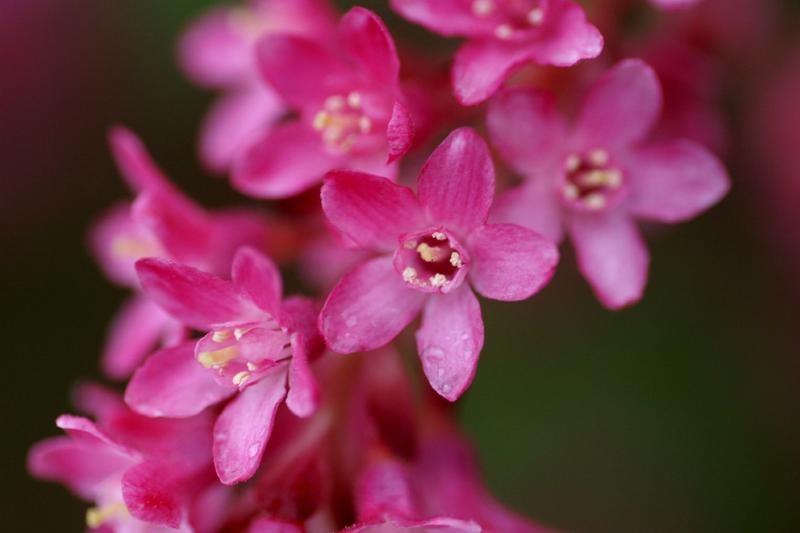
Quick facts
- Watering
- Weekly during establishment
- Sunlight
- Full sun to partial shade
- Soil
- Well-drained, moderately fertile
- Humans
- Safe
- Cats
- Safe
- Dogs
- Safe
- Height
- 200–300 cm
- Spread
- 150–250 cm
- Spacing
- 150–200 cm apart
- RHS recognition
- Award of Garden Merit
About Flowering Currant
Flowering Currant is a deciduous shrub native to western North America, prized in British gardens for its abundant clusters of pink to deep red flowers that appear in early spring. Growing 2–3 metres tall, it produces dangling racemes of tubular blooms before the leaves fully emerge, providing vital early nectar for bees and other pollinators. UK gardeners value this robust shrub for its reliability, ease of cultivation, and ability to thrive in a wide range of conditions, making it a staple in cottage gardens and mixed borders across the country.
UK fact: Ribes sanguineum has held the RHS Award of Garden Merit since 1993, with cultivars such as 'Pulborough Scarlet' particularly celebrated in British gardens for their deep crimson flowers and compact habit.
Watering Flowering Currant
Newly planted shrubs require weekly watering during dry spells in their first year, applying approximately 10–15 litres per plant to encourage deep rooting. Established specimens are highly resilient and rarely need supplementary watering except during prolonged summer droughts. In typical UK conditions with regular rainfall, mature plants are largely self-sufficient. Avoid waterlogging, particularly in heavy clay soils, as this can lead to root rot.
Sunlight requirements
Plant in a position receiving at least four to six hours of direct sunlight for the most prolific flowering display. In the UK, an east- or west-facing aspect works well, whilst south-facing positions are ideal in cooler northern regions. Specimens grown in partial shade will still thrive but may produce fewer flower clusters and exhibit slightly more open growth.
Soil and feeding
This adaptable shrub tolerates a wide range of soil conditions, from sandy loams to heavier clay, provided drainage is adequate. It performs best in soils with a pH of 6.5–7.5, though it will grow satisfactorily in slightly acidic conditions. Improve heavy clay by incorporating organic matter or grit at planting time to enhance drainage. Avoid excessively rich soils, which can promote lush foliage at the expense of flowering.
Feed established plants in March with a slow-release granular fertiliser such as Growmore or blood, fish and bone, scattering a handful around the base and lightly forking in. Avoid high-nitrogen feeds, which encourage leafy growth rather than flowers. A light mulch of well-rotted compost or manure in autumn provides additional nutrients and improves soil structure.
Pruning Flowering Currant
Flowering Currant blooms on wood produced the previous year, so prune as soon as the flowers fade in May or early June. Remove up to one-third of the oldest stems at ground level to promote fresh, flowering shoots from the base. Lightly trim back flowered stems to a strong outward-facing bud to maintain an open, balanced framework. Avoid autumn or winter pruning, as this will remove the developing flower buds and significantly reduce the following spring's display.
Propagating Flowering Currant
Semi-ripe cuttings taken in July or August root readily, whilst hardwood cuttings taken in November offer a simple, low-maintenance method. Both techniques have high success rates in UK conditions. Select healthy, non-flowering shoots and use a free-draining compost mix. Cuttings typically root within 6–10 weeks for semi-ripe material and by the following spring for hardwood cuttings.
Common problems
Flowering Currant is generally trouble-free but can occasionally suffer from aphid infestations on new growth in spring, causing leaf distortion and sticky honeydew. Powdery mildew may appear as a white coating on leaves during dry summers, though this is usually cosmetic and doesn't significantly harm the plant. Coral spot fungus can affect dead or damaged wood, appearing as pink or orange pustules; prune out affected material promptly and dispose of it. In some gardens, birds may peck at developing flower buds in late winter, though this is rarely severe enough to warrant intervention.
Spot a problem with your plant? Photograph the affected area using the Loam app and it will suggest the most likely cause and treatment.
Safety
- Humans
- Safe
- Cats
- Safe
- Dogs
- Safe
Toxicity information is for general guidance only.
Seasonal care calendar
Monthly care guide for Flowering Currant in the UK, based on average conditions.
| Month | Care tasks |
|---|---|
| January | Check established plants for any storm damage and remove broken branches. Avoid disturbing the base where flower buds are developing. |
| February | Flower buds begin to swell. Apply a slow-release fertiliser around the base if not done in early spring. Prepare planting sites for bare-root specimens. |
| March | Flowering begins, typically mid to late month. Plant bare-root or container-grown specimens. Apply mulch around established plants, keeping it clear of stems. |
| April | Peak flowering period. Enjoy the display and observe pollinating insects. Water newly planted specimens weekly if conditions are dry. |
| May | Flowers fade and leaves fully emerge. Prune immediately after flowering, removing up to one-third of old stems. Continue watering new plants during dry spells. |
| June | Complete any remaining pruning early in the month. Monitor for aphids on fresh growth and treat if necessary. Ensure adequate watering during dry weather. |
| July | Take semi-ripe cuttings for propagation. Watch for powdery mildew in dry conditions. Water young plants regularly during hot spells. |
| August | Continue taking semi-ripe cuttings if desired. Maintain watering for recently planted specimens. Remove any diseased or damaged foliage. |
| September | Reduce watering as temperatures cool. Prepare planting sites for autumn planting. Pot on rooted cuttings taken earlier in summer. |
| October | Ideal month for planting container-grown specimens. Apply a mulch of well-rotted compost or manure around the base. Leaves begin to turn and drop. |
| November | Take hardwood cuttings and insert into a cold frame or sheltered bed. Continue planting during mild spells. Clear fallen leaves from around the base. |
| December | Plants are fully dormant. Avoid pruning as flower buds are forming. Check supports and ties on young specimens after winter gales. |
Frequently asked questions
- When should I prune Flowering Currant?
- Prune Flowering Currant immediately after flowering in late May or early June. This timing is crucial because the shrub flowers on the previous year's wood—pruning in autumn or winter removes the flower buds. Remove up to one-third of the oldest stems at ground level and shorten remaining stems by up to half to control size whilst maintaining next year's flowering.
- Why are the leaves on my Flowering Currant turning yellow?
- Yellowing leaves can indicate several issues including waterlogging, nutrient deficiency (particularly iron in alkaline soils), or pest problems such as aphids. Check soil drainage and examine leaf undersides for pests. The Loam app can help you diagnose the specific cause by analysing photos of your plant and provide personalised care recommendations based on your garden conditions.
- How do I propagate Flowering Currant from cuttings?
- Take hardwood cuttings in late autumn (November–December) when the plant is dormant. Cut pencil-thick stems about 20–25cm long, trim just below a bud at the base and above a bud at the top. Insert two-thirds of the cutting into gritty compost or directly into prepared ground outdoors. Cuttings should root by spring and can be transplanted the following autumn.
Got a question about growing Flowering Currant that isn't covered here? Ask the Garden Advisor in the Loam app. It knows your saved plants and local conditions.
Related plants
This page was compiled with AI assistance and reviewed by our team. .