Phlox
Phlox paniculata
Perennials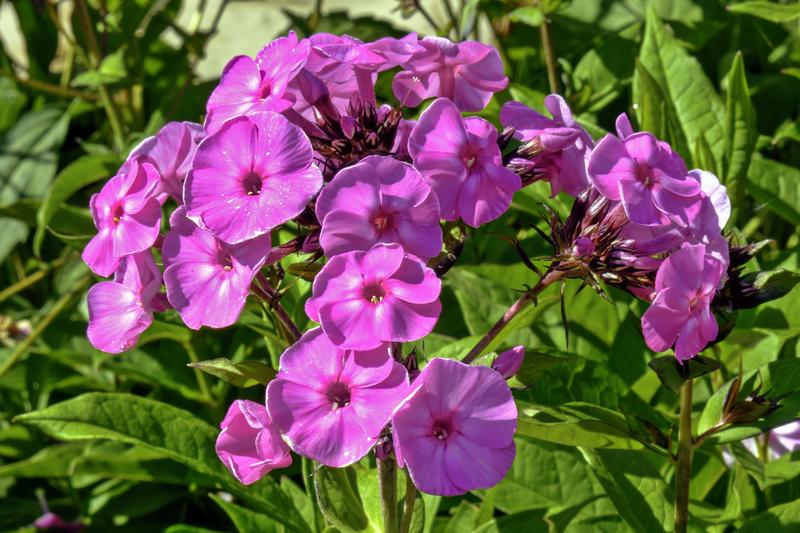
Quick facts
- Watering
- Weekly during dry spells
- Sunlight
- Full sun to partial shade
- Soil
- Moist, well-drained, fertile loam
- Humans
- Safe
- Cats
- Safe
- Dogs
- Safe
- Height
- 60–120 cm
- Spread
- 45–75 cm
- Spacing
- 45–60 cm apart
- RHS recognition
- Award of Garden Merit
About Phlox
Phlox paniculata is a classic cottage garden perennial native to eastern North America, prized for its fragrant, dome-shaped flower heads in shades of pink, purple, white, and red. Growing 60–120 cm tall, it blooms from mid-summer to early autumn, providing colour and scent when many other perennials are fading. UK gardeners value phlox for its ability to attract pollinators, its long flowering season, and its suitability for herbaceous borders and cutting gardens. Many cultivars have been bred for improved mildew resistance and a wider colour range.
UK fact: Several Phlox paniculata cultivars hold the RHS Award of Garden Merit, including 'David' (white), 'Blue Paradise' (lavender-blue), and 'Bright Eyes' (pale pink with crimson eye), recognising their excellent performance in British gardens.
Watering Phlox
Phlox requires consistent moisture throughout the growing season, particularly from late spring through summer when actively growing and flowering. Water deeply once or twice weekly during dry spells, applying water at the base of the plant rather than overhead to minimise powdery mildew risk. Established plants are moderately drought-tolerant but flower best with regular watering. Mulching around the base helps retain soil moisture and keeps roots cool during warm UK summers.
Sunlight requirements
Plant phlox in a position receiving at least six hours of direct sunlight daily for the most prolific flowering. In hotter, drier parts of the UK, particularly southern England, light afternoon shade can help prevent stress and reduce powdery mildew. Avoid deep shade, which leads to weak, leggy growth and poor flowering.
Soil and feeding
Grow phlox in fertile, humus-rich soil that retains moisture without becoming waterlogged. The ideal pH is neutral to slightly alkaline (6.5–7.5), though phlox tolerates a range of soil types. Before planting, incorporate well-rotted compost or manure to improve soil structure and fertility. Heavy clay soils benefit from added grit or sharp sand to improve drainage, whilst sandy soils need generous organic matter to increase water retention.
Apply a general-purpose granular fertiliser such as blood, fish and bone in early spring as new growth emerges. A second light feed in early summer supports the flowering period. Top-dress annually with well-rotted compost or manure in spring to maintain soil fertility and moisture retention.
Pruning Phlox
Remove spent flower heads throughout the blooming period to encourage further flushes and prevent self-seeding. In late autumn after flowering finishes, cut stems back to ground level, or leave standing over winter for structure and wildlife habitat, then cut back in early spring before new growth appears. To reduce height and encourage bushier growth with more flower heads, pinch out the growing tips of stems in late spring when plants are 30–40 cm tall, though this may delay flowering slightly.
Propagating Phlox
Division is the easiest method, carried out every three to four years in early spring or autumn to rejuvenate clumps and maintain vigour. Root cuttings taken in winter produce healthy, disease-free plants, particularly useful if the parent plant shows signs of eelworm infestation. Basal cuttings can be taken in spring from new shoots emerging at the base. Phlox can be grown from seed, but cultivars will not come true and seedlings often revert to magenta-pink.
Common problems
Powdery mildew is the most common problem, appearing as white powdery coating on leaves, particularly in dry conditions or where air circulation is poor; choose resistant cultivars, ensure adequate spacing, and water at the base rather than overhead. Phlox eelworm causes distorted, narrowed leaves and stunted growth; affected plants should be destroyed, and propagation by root cuttings rather than division prevents spread. Slugs and snails may damage young shoots in spring. Occasionally, phlox may suffer from leaf spot or stem rot in very wet conditions.
Spot a problem with your plant? Photograph the affected area using the Loam app and it will suggest the most likely cause and treatment.
Safety
- Humans
- Safe
- Cats
- Safe
- Dogs
- Safe
Toxicity information is for general guidance only.
Seasonal care calendar
Monthly care guide for Phlox in the UK, based on average conditions.
| Month | Care tasks |
|---|---|
| January | Take root cuttings from healthy plants for propagation. Check mulch is in place around dormant crowns. |
| February | Continue taking root cuttings if conditions allow. Prepare planting sites by incorporating organic matter. |
| March | Apply balanced fertiliser as new shoots emerge. Divide established clumps. Plant new specimens. Mulch with compost. |
| April | Water during dry spells as growth accelerates. Watch for slug damage on emerging shoots and protect as needed. |
| May | Pinch out growing tips to encourage bushier growth if desired. Stake tall varieties. Water regularly and watch for early mildew signs. |
| June | Water consistently as flower buds develop. Apply a light liquid feed. Monitor for powdery mildew and ensure good air circulation. |
| July | Enjoy peak flowering. Deadhead regularly to prolong blooms. Water deeply during dry weather. Check for pests and diseases. |
| August | Continue deadheading spent flowers. Maintain watering regime. Cut flowers for indoor arrangements to encourage further blooms. |
| September | Late-flowering varieties still in bloom. Deadhead as needed. Divide congested clumps if not done in spring. |
| October | Flowering finishes. Cut back stems to ground level or leave for winter structure. Plant new specimens whilst soil is still warm. |
| November | Finish cutting back if not already done. Tidy borders and apply mulch around crowns for winter protection. |
| December | Plants fully dormant. Take root cuttings for propagation. Plan new planting schemes for spring. |
Frequently asked questions
- How do I prevent powdery mildew on phlox?
- Prevent powdery mildew by ensuring good air circulation through proper spacing (45-60cm apart), watering at the base rather than overhead, and choosing mildew-resistant cultivars such as 'David' or 'Blue Paradise'. Avoid planting in sheltered, dry spots and thin overcrowded clumps. Remove affected leaves promptly and consider mulching to maintain even soil moisture.
- Why are my phlox leaves turning yellow and drooping?
- Yellowing, drooping leaves can indicate several issues including overwatering, underwatering, nutrient deficiency, or root problems. Check soil moisture levels and drainage, and examine the base of the plant for signs of rot or pest damage. The Loam app can help diagnose the specific cause by analysing photos of your plant and provide personalised care recommendations based on your conditions.
- What soil conditions do phlox prefer?
- Phlox thrives in fertile, moisture-retentive but well-drained soil with a neutral to slightly alkaline pH (6.5-7.5). Enrich poor soils with organic matter such as garden compost or well-rotted manure before planting. Avoid waterlogged conditions which can cause root rot, and mulch annually in spring to retain moisture and suppress weeds whilst keeping the crown clear.
Got a question about growing Phlox that isn't covered here? Ask the Garden Advisor in the Loam app. It knows your saved plants and local conditions.
Related plants
This page was compiled with AI assistance and reviewed by our team. .