Star of Bethlehem
Ornithogalum umbellatum
Bulbs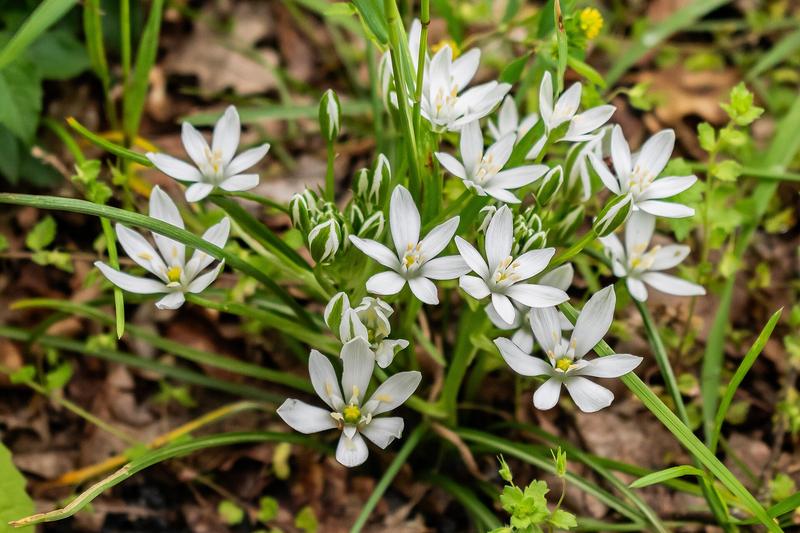
Quick facts
- Watering
- Minimal once established
- Sunlight
- Full sun to partial shade
- Soil
- Well-drained, moderately fertile
- Humans
- Toxic
- Cats
- Toxic
- Dogs
- Toxic
- Height
- 15–30 cm
- Spread
- 5–10 cm
- Spacing
- 8–10 cm apart
About Star of Bethlehem
Star of Bethlehem is a spring-flowering bulb native to Europe and the Mediterranean, producing clusters of pristine white, star-shaped flowers with distinctive green stripes on the reverse. Each flower opens only in sunlight, creating a charming display from April to May above grass-like foliage. UK gardeners value this naturalising bulb for woodland gardens, rock gardens, and naturalised lawns, where it spreads readily to form drifts of starry blooms. Though beautiful, it can become invasive in favourable conditions and all parts are toxic.
UK fact: Star of Bethlehem has naturalised so successfully across British churchyards, meadows, and woodland edges that it's often mistaken for a native wildflower, though it was introduced to the UK in the late 16th century and has since become a common sight in southern England.
Watering Star of Bethlehem
Star of Bethlehem requires little supplementary watering once established, relying on natural UK rainfall during its spring growing season. Water newly planted bulbs if autumn conditions are exceptionally dry, but avoid waterlogging which causes bulb rot. During the active growing period from March to May, ensure soil doesn't dry out completely, though established clumps are remarkably drought-tolerant. Once foliage dies back in early summer, bulbs enter dormancy and require no watering.
Sunlight requirements
Star of Bethlehem performs best in full sun where flowers open fully during daylight hours, though it tolerates partial shade particularly in southern UK gardens. Plant in positions that receive morning sun, as flowers close in shade and during overcast weather. Avoid deep shade under dense tree canopies where flowering will be significantly reduced.
Soil and feeding
Star of Bethlehem thrives in well-drained soil and tolerates a wide range of soil types from sandy loam to clay, provided drainage is adequate. It prefers neutral to slightly alkaline conditions (pH 6.5-7.5) and performs well in the chalky soils common across southern England. Improve heavy clay with grit or sharp sand before planting to prevent waterlogging. Moderately fertile soil is ideal; overly rich soil encourages foliage at the expense of flowers and increases invasive spread.
Star of Bethlehem requires minimal feeding and thrives in average garden soil without supplementary fertiliser. If growing in poor soil, apply a light dressing of bone meal when planting bulbs in autumn. Avoid high-nitrogen feeds which promote excessive foliage growth and encourage the plant to spread more aggressively through British gardens.
Pruning Star of Bethlehem
Deadhead spent flowers if you wish to prevent self-seeding, though this is labour-intensive with naturalised plantings. Allow foliage to die back naturally after flowering, typically by late June, as the leaves provide energy for next year's blooms. Resist the temptation to cut back or tie up yellowing foliage for at least six weeks after flowering. In lawns, delay mowing until foliage has completely withered to ensure bulbs have sufficient time to replenish.
Propagating Star of Bethlehem
Star of Bethlehem propagates readily by division of bulb clumps or from offsets, which form abundantly around parent bulbs. Lift and divide congested clumps in late summer once foliage has died back completely, separating offsets and replanting immediately at 8-10cm depth. The plant also self-seeds freely in UK gardens, with seedlings taking 3-4 years to reach flowering size. For controlled propagation, collect seed from capsules in June and sow fresh in pots, though division is faster and more reliable for most gardeners.
Common problems
Star of Bethlehem is largely trouble-free but can become invasive in favourable UK conditions, spreading through both bulb offsets and prolific self-seeding. Slugs and snails occasionally damage emerging foliage in spring, particularly in damp conditions. Bulb rot can occur in poorly drained or waterlogged soil, especially during wet British winters. The plant's greatest issue is its toxicity and potential to escape cultivation, becoming a persistent weed in lawns and borders that's difficult to eradicate once established.
Spot a problem with your plant? Photograph the affected area using the Loam app and it will suggest the most likely cause and treatment.
Safety
- Humans
-
Toxic
All parts of Star of Bethlehem are toxic if ingested, containing cardiac glycosides that can cause nausea, vomiting, and irregular heartbeat. Handle bulbs with care and wash hands after planting.
- Cats
-
Toxic
Toxic to cats if ingested, causing vomiting, diarrhoea, and potentially cardiac effects. Keep cats away from plants and bulbs.
- Dogs
-
Toxic
Toxic to dogs if ingested, causing vomiting, diarrhoea, drooling, and potentially serious cardiac problems. Prevent dogs from accessing bulbs or foliage.
Toxicity information is for general guidance only. If a person or pet has been exposed to this plant and you are concerned, seek advice from a medical professional or vet.
Seasonal care calendar
Monthly care guide for Star of Bethlehem in the UK, based on average conditions.
| Month | Care tasks |
|---|---|
| January | No action needed; bulbs dormant underground. |
| February | First shoots may emerge in mild winters; protect from slug damage. |
| March | Foliage emerges strongly; apply slug pellets if damage occurs. |
| April | Flowering begins; enjoy the starry white blooms opening in sunshine. |
| May | Peak flowering period; deadhead to prevent self-seeding if desired. |
| June | Flowering finishes; allow foliage to die back naturally before removing. |
| July | Foliage fully withered; lift and divide congested clumps if needed. |
| August | Ideal time to divide and replant bulbs; bulbs entering dormancy. |
| September | Plant new bulbs 8-10cm deep in prepared soil. |
| October | Continue planting bulbs; ensure good drainage before winter. |
| November | Final opportunity to plant bulbs; mulch new plantings lightly. |
| December | No action needed; bulbs dormant underground. |
Frequently asked questions
- Is Star of Bethlehem invasive in UK gardens?
- Yes, Star of Bethlehem can become invasive in UK gardens, spreading rapidly through bulb offsets and prolific self-seeding. It's particularly aggressive in lawns and borders with favourable conditions. Plant only where you can contain its spread, deadhead spent flowers to prevent seeding, and avoid planting near wild areas. Once established, it's difficult to eradicate completely.
- Why won't my Star of Bethlehem flowers open?
- Star of Bethlehem flowers only open in direct sunlight and remain closed during overcast weather or in shade. If your plants consistently fail to open, they may be in too much shade or experiencing prolonged cloudy conditions. The Loam app can help you track sunlight patterns in your garden and suggest better planting positions for sun-loving bulbs.
- When should I plant Star of Bethlehem bulbs?
- Plant Star of Bethlehem bulbs in autumn, ideally between September and November, at a depth of 8-10cm in well-drained soil. This allows bulbs to establish roots before winter and flower the following spring. Avoid planting in waterlogged areas, and space bulbs 8-10cm apart for naturalised drifts.
Got a question about growing Star of Bethlehem that isn't covered here? Ask the Garden Advisor in the Loam app. It knows your saved plants and local conditions.
Related plants
This page was compiled with AI assistance and reviewed by our team. .