Olive
Olea europaea
Trees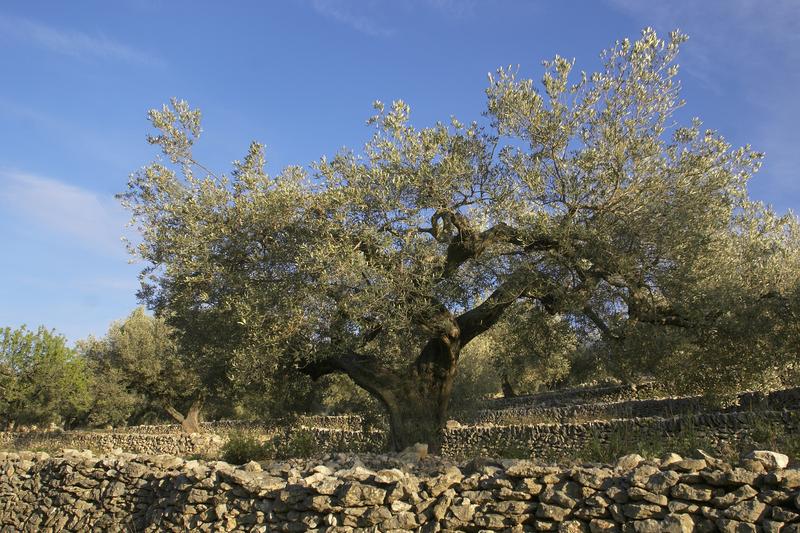
Quick facts
- Watering
- Fortnightly when established
- Sunlight
- Full sun
- Soil
- Well-drained, alkaline to neutral
- Humans
- Safe
- Cats
- Safe
- Dogs
- Safe
- Height
- 300–800 cm
- Spread
- 200–600 cm
- Spacing
- 400–600 cm apart
- RHS recognition
- Award of Garden Merit
About Olive
The olive is an evergreen Mediterranean tree prized for its silvery-grey foliage, gnarled trunk, and potential to produce edible fruit in warm UK microclimates. Native to the Mediterranean basin, it has become increasingly popular in British gardens as a specimen tree for patios and sheltered borders. UK gardeners value olives primarily as ornamental features, though fruiting is possible in southern regions with long, warm summers. The tree's drought tolerance and architectural form make it an elegant choice for contemporary and Mediterranean-style gardens.
UK fact: Several olive cultivars have received the RHS Award of Garden Merit, and mature specimens have survived in sheltered British gardens for over a century, with notable examples thriving in coastal Devon and Cornwall where mild winters allow year-round outdoor cultivation.
Watering Olive
Water newly planted olives weekly during their first growing season to establish deep roots. Established trees in the ground are remarkably drought-tolerant and typically need watering only during prolonged dry periods in summer. Container-grown olives require more frequent attention—water when the top 5cm of compost feels dry, typically every 7-14 days in summer and monthly in winter. Overwatering is more harmful than underwatering, causing root rot and leaf drop, so ensure containers have excellent drainage.
Sunlight requirements
Position in the sunniest spot available, ideally a south-facing wall or sheltered patio where the tree receives at least six hours of direct sunlight daily. In the UK, reflected heat from paving or walls significantly improves growth and fruiting potential. Avoid shaded positions, as insufficient light leads to poor growth, reduced flowering, and increased susceptibility to frost damage.
Soil and feeding
Plant in free-draining soil with a pH of 6.5-8.5; olives particularly thrive in slightly alkaline conditions. Improve heavy clay by incorporating generous amounts of horticultural grit and planting on a slight mound to prevent waterlogging. For container cultivation, use a loam-based compost such as John Innes No. 3 mixed with 30% horticultural grit. Avoid rich, moisture-retentive soils, which encourage soft growth vulnerable to frost and promote root diseases in the UK's wet winters.
Apply a general-purpose liquid feed every 3-4 weeks from April to September for potted specimens. Trees in the ground rarely need feeding once established, though a light application of blood, fish and bone in early spring can boost growth. Avoid high-nitrogen feeds in late summer, as they promote soft growth susceptible to frost damage.
Pruning Olive
The optimal time for pruning is May to early June when growth resumes and frost damage becomes apparent. Remove dead, diseased, or crossing branches, and thin the canopy to allow light penetration and air circulation. Olives fruit on the previous year's growth, so avoid heavy pruning if fruit production is desired. Young trees benefit from formative pruning to develop a clear trunk and balanced framework, whilst mature specimens need only light maintenance pruning to control size and shape.
Propagating Olive
Semi-ripe cuttings taken in July or August offer the best success rate for home propagators. Select healthy, non-flowering shoots from the current season's growth, 10-15cm long, and root in a gritty compost mix with bottom heat. Hardwood cuttings taken in October can also succeed but root more slowly. Rooting typically takes 8-12 weeks, and young plants need frost protection for their first two winters.
Common problems
Olive trees in the UK are generally trouble-free but can suffer from scale insects, which appear as brown bumps on stems and leaves, weakening growth and producing sticky honeydew. Peacock spot, a fungal disease causing circular lesions on leaves, occurs in humid conditions and is best prevented through good air circulation and avoiding overhead watering. Cold damage is the most common problem, with severe frosts causing dieback, leaf drop, and bark splitting—container-grown specimens should be moved to frost-free protection during harsh winters. Overwatering and poor drainage lead to root rot, manifesting as yellowing leaves and general decline.
Spot a problem with your plant? Photograph the affected area using the Loam app and it will suggest the most likely cause and treatment.
Safety
- Humans
- Safe
- Cats
- Safe
- Dogs
- Safe
Toxicity information is for general guidance only.
Seasonal care calendar
Monthly care guide for Olive in the UK, based on average conditions.
| Month | Care tasks |
|---|---|
| January | Protect container-grown trees from severe frost by moving to a cold greenhouse or wrapping pots with horticultural fleece. |
| February | Continue frost protection. Check containers for waterlogging and ensure drainage holes are clear. |
| March | Begin watering container specimens as growth resumes. Apply blood, fish and bone to established trees. |
| April | Start monthly liquid feeding of potted olives. Watch for scale insects and treat if necessary. |
| May | Prune to remove frost damage and shape the tree. Small creamy-white flowers may appear. Repot container specimens if rootbound. |
| June | Continue feeding and watering. Flowers develop into small green fruits in warm locations. |
| July | Take semi-ripe cuttings for propagation. Water containers regularly during dry spells. Monitor for peacock spot. |
| August | Continue watering and feeding. Fruits begin to swell and change colour in favourable conditions. |
| September | Reduce feeding frequency. Fruits ripen from green to purple-black in warm years. Harvest when fully coloured. |
| October | Stop feeding. Reduce watering as growth slows. Take hardwood cuttings if desired. |
| November | Move container trees to sheltered positions. Water sparingly, only when compost is dry. |
| December | Provide frost protection during cold snaps. Keep compost barely moist through winter dormancy. |
Frequently asked questions
- When is the best time to prune an olive tree?
- Prune in late spring (May to early June) after the risk of hard frost has passed. This timing allows you to assess and remove any frost-damaged growth whilst avoiding pruning wounds being exposed to winter cold.
- Why are the leaves on my olive tree turning yellow?
- Yellowing leaves usually indicate overwatering or poor drainage, especially in winter. Ensure containers have adequate drainage holes and reduce watering frequency. Nutrient deficiency can also cause yellowing—feed container plants regularly during the growing season. If you're unsure what's causing the problem, the Loam app can help diagnose leaf issues and provide personalised care recommendations for your specific conditions.
- What type of compost should I use for planting an olive tree?
- Use a loam-based compost such as John Innes No. 3 mixed with horticultural grit or sharp sand (roughly 3 parts compost to 1 part grit). This provides the weight and stability olive trees need whilst ensuring excellent drainage. Avoid peat-based multipurpose composts as they retain too much moisture and can lead to root rot. For in-ground planting, improve heavy clay soils by incorporating grit and organic matter.
Got a question about growing Olive that isn't covered here? Ask the Garden Advisor in the Loam app. It knows your saved plants and local conditions.
Related plants
This page was compiled with AI assistance and reviewed by our team. .