Honey Bush
Melianthus major
Perennials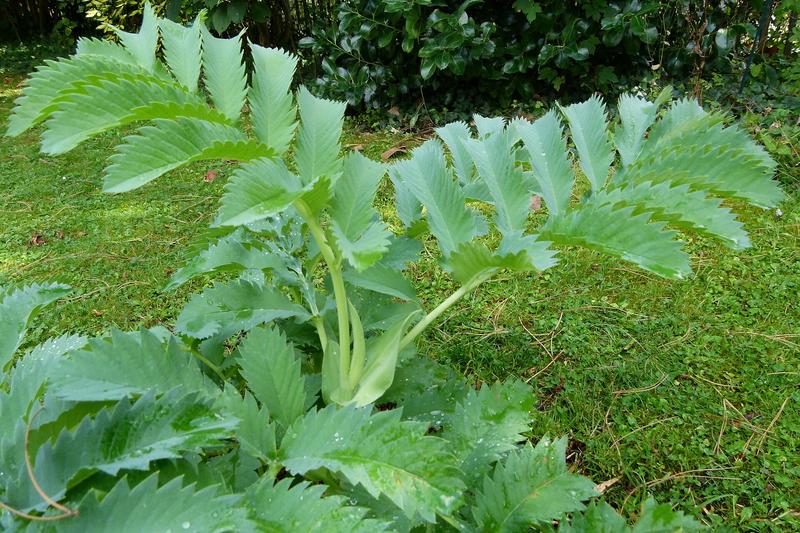
Quick facts
- Watering
- Weekly during growing season
- Sunlight
- Full sun to partial shade
- Soil
- Well-drained, moderately fertile
- Humans
- Toxic
- Cats
- Toxic
- Dogs
- Toxic
- Height
- 180–300 cm
- Spread
- 90–200 cm
- Spacing
- 120–150 cm apart
- RHS recognition
- Award of Garden Merit
About Honey Bush
Honey Bush is a striking architectural perennial from South Africa, prized for its dramatic blue-grey serrated foliage and exotic appearance. In late spring and summer, it produces unusual dark red flower spikes that contrast beautifully with the glaucous leaves. UK gardeners value it as a bold focal point in exotic-style borders and coastal gardens, where its sculptural form adds year-round interest. Though tender, it thrives in sheltered city gardens and mild coastal areas, bringing a touch of the subtropical to British planting schemes.
UK fact: Melianthus major received the RHS Award of Garden Merit and has become a favourite in fashionable London gardens, particularly thriving in the milder microclimates of inner-city areas where winter temperatures rarely drop below freezing.
Watering Honey Bush
Water regularly during the growing season from spring to autumn, ensuring the soil remains moist but never waterlogged. Established plants show good drought tolerance once their root systems are developed, but perform best with consistent moisture during dry spells. In winter, reduce watering significantly, keeping plants on the dry side to prevent root rot in cold, wet conditions. Container-grown specimens require more frequent watering than those in the ground.
Sunlight requirements
Honey Bush performs best in full sun, which encourages the most vibrant foliage colour and flowering, though it tolerates light shade. In the UK, position against a south or west-facing wall to maximise warmth and provide shelter from cold winds. Avoid exposed northerly aspects, particularly in colder regions where frost damage is more likely.
Soil and feeding
Honey Bush requires well-drained soil and will not tolerate winter waterlogging, which can prove fatal in the UK climate. It thrives in moderately fertile, sandy or loamy soils with a neutral to slightly acidic pH of 6.0-7.0. Improve heavy clay soils with grit and organic matter to enhance drainage, or consider growing in large containers filled with a loam-based compost such as John Innes No. 3. Good drainage is particularly critical during the British winter months.
Apply a balanced liquid fertiliser monthly during the growing season from April to September to support vigorous foliage growth and flowering. In spring, mulch around the base with well-rotted compost or manure to provide slow-release nutrients. Avoid high-nitrogen feeds in late summer, as soft growth is more susceptible to frost damage.
Pruning Honey Bush
Prune in mid to late spring after the risk of hard frost has passed, cutting back frost-damaged growth to healthy wood. You can cut Honey Bush hard back to near ground level to rejuvenate overgrown plants or to encourage bushier growth with fresh foliage. Remove spent flower spikes after blooming to maintain a tidy appearance. In mild areas, plants may retain their foliage through winter and require only light tidying rather than hard pruning.
Propagating Honey Bush
Propagate Honey Bush from semi-ripe cuttings taken in late summer, selecting non-flowering shoots around 10-15cm long. Remove lower leaves, dip in rooting hormone, and insert into pots of gritty compost, keeping in a sheltered cold frame or unheated greenhouse over winter. Alternatively, sow fresh seed in spring at 15-18°C, though germination can be erratic. Division of established clumps is possible in spring, carefully separating rooted sections and replanting immediately.
Common problems
Honey Bush is relatively trouble-free but can suffer from frost damage in harsh UK winters, with foliage blackening and stems dying back. Aphids may colonise new growth in spring and summer, particularly on flower spikes, and can be controlled with insecticidal soap or by encouraging natural predators. In poorly drained soils or during wet winters, root rot can occur, so ensuring excellent drainage is essential. Slugs and snails occasionally damage emerging shoots in spring.
Spot a problem with your plant? Photograph the affected area using the Loam app and it will suggest the most likely cause and treatment.
Safety
- Humans
-
Toxic
All parts of Honey Bush are toxic if ingested, causing nausea, vomiting, and abdominal pain. The sap may cause skin irritation in sensitive individuals. Keep away from children.
- Cats
-
Toxic
Toxic to cats if ingested, causing gastrointestinal upset. Keep cats away from the plant.
- Dogs
-
Toxic
Toxic to dogs if ingested, causing vomiting, diarrhoea, and abdominal discomfort. Prevent access to the plant.
Toxicity information is for general guidance only. If a person or pet has been exposed to this plant and you are concerned, seek advice from a medical professional or vet.
Seasonal care calendar
Monthly care guide for Honey Bush in the UK, based on average conditions.
| Month | Care tasks |
|---|---|
| January | Protect from severe frost with fleece or move containers under cover. Check mulch is in place around the base. |
| February | Continue frost protection. Avoid pruning until risk of hard frost passes. |
| March | Begin light pruning of frost-damaged growth once temperatures rise. Apply slow-release fertiliser. |
| April | Complete main pruning, cutting back hard if needed. Take divisions. Begin regular watering as growth resumes. |
| May | Water regularly and begin monthly liquid feeding. Mulch with well-rotted compost. |
| June | Continue watering and feeding. Flower spikes begin to emerge. Watch for aphids on new growth. |
| July | Maintain watering during dry spells. Flowers at their peak. Deadhead spent blooms. |
| August | Take semi-ripe cuttings. Continue watering and feeding. Remove faded flower spikes. |
| September | Reduce feeding frequency. Continue watering if dry. Pot up rooted cuttings. |
| October | Stop feeding. Reduce watering. Move container plants to sheltered positions. |
| November | Apply protective mulch around the base. Prepare fleece for frost protection. |
| December | Protect from frost. Keep on the dry side. Monitor for waterlogging. |
Frequently asked questions
- Is Honey Bush hardy enough to survive UK winters?
- Honey Bush is borderline hardy (RHS H3), surviving winters in mild coastal areas and sheltered city gardens, but requiring protection elsewhere. In colder regions, grow in containers and move under cover in winter, or provide thick mulch and fleece protection. Plants may die back to ground level but often resprout from the base in spring if roots survive.
- Why are my Honey Bush leaves turning brown and how can I prevent it?
- Brown leaves are typically caused by frost damage or waterlogging during winter. The Loam app can send you timely reminders to protect your plant before frost and help diagnose whether drainage or cold is the issue, with personalised advice for your garden's conditions.
- When should I prune my Honey Bush for the best results?
- Prune Honey Bush in mid to late spring (April-May) after the last frost, once you can see which stems have survived winter. You can cut it back hard to near ground level to encourage fresh, vigorous growth, or simply remove frost-damaged sections. Avoid autumn pruning, as this stimulates soft growth vulnerable to winter cold.
Got a question about growing Honey Bush that isn't covered here? Ask the Garden Advisor in the Loam app. It knows your saved plants and local conditions.
Related plants
This page was compiled with AI assistance and reviewed by our team. .