Box-leaved Honeysuckle
Lonicera nitida
Shrubs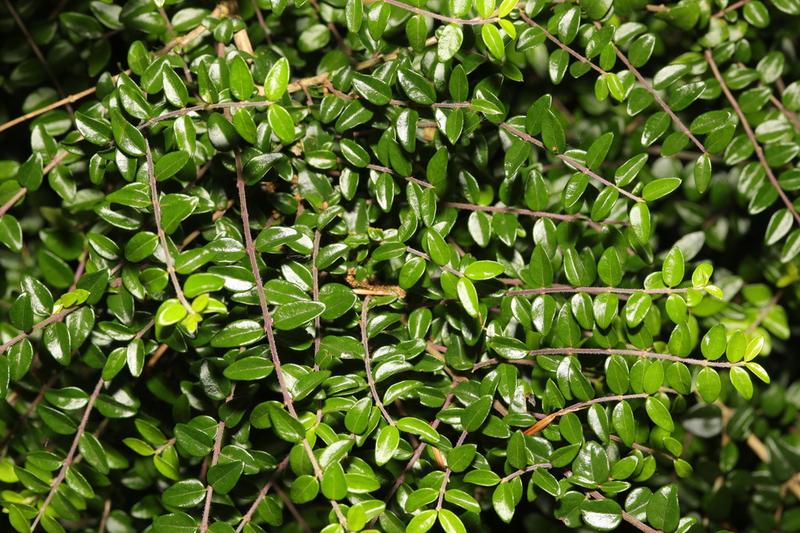
Quick facts
- Watering
- Weekly during establishment
- Sunlight
- Full sun to partial shade
- Soil
- Well-drained, moderately fertile
- Humans
- Toxic
- Cats
- Toxic
- Dogs
- Toxic
- Height
- 100–150 cm
- Spread
- 100–150 cm
- Spacing
- 30–45 cm apart
- RHS recognition
- Award of Garden Merit
About Box-leaved Honeysuckle
Box-leaved Honeysuckle is a dense, evergreen shrub native to western China, widely grown in UK gardens as a low-maintenance hedging plant and box substitute. With small, glossy, oval leaves and a naturally compact habit, it responds exceptionally well to regular clipping and can be shaped into formal hedges or topiary. British gardeners value it for its rapid growth, year-round foliage, and tolerance of pollution, making it particularly popular in urban and coastal gardens. Though it produces small, creamy-white flowers in spring, it is primarily cultivated for its neat, evergreen structure rather than floral display.
UK fact: Lonicera nitida gained popularity in British gardens during the 1970s and 1980s as an affordable, fast-growing alternative to box hedging, and several cultivars including 'Baggesen's Gold' have received the RHS Award of Garden Merit for their reliability in UK conditions.
Watering Box-leaved Honeysuckle
Water newly planted Box-leaved Honeysuckle weekly during the first growing season to establish a strong root system, particularly during dry spells between April and September. Once established, plants are remarkably drought-tolerant and rarely require supplementary watering except during prolonged summer droughts. Hedging plants benefit from occasional deep watering during extended dry periods to maintain dense, healthy foliage. Avoid waterlogging, as this can lead to root rot, particularly in heavy clay soils.
Sunlight requirements
Box-leaved Honeysuckle thrives in full sun to partial shade, performing well in most UK garden positions. In full sun, foliage remains dense and compact, whilst plants in partial shade may become slightly more open in habit. Avoid deep shade, particularly on north-facing walls, as this can lead to sparse, leggy growth and reduced vigour.
Soil and feeding
Lonicera nitida adapts to a wide range of soil types, from light sandy soils to heavy clay, provided drainage is adequate. It performs best in moderately fertile, well-drained soil with a pH between 6.0 and 7.5, tolerating both slightly acidic and alkaline conditions. On heavy clay, incorporate organic matter and grit at planting to improve drainage and prevent waterlogging. The plant tolerates poor soils and coastal conditions remarkably well, making it suitable for challenging UK garden sites.
Apply a balanced general-purpose fertiliser such as Growmore or blood, fish and bone in early spring at 70g per square metre to encourage vigorous growth and dense foliage. Hedging plants benefit from a second light feed in midsummer after the main trim to support recovery and new growth. Avoid high-nitrogen feeds in autumn, as this promotes soft growth susceptible to frost damage.
Pruning Box-leaved Honeysuckle
Prune Box-leaved Honeysuckle hedges two to three times during the growing season, typically in late spring, midsummer, and early autumn, to maintain a neat, formal shape. Use sharp hedging shears or a hedge trimmer, cutting back new growth by half to encourage dense branching. Renovate overgrown or neglected plants by hard pruning in late winter or early spring, cutting back to 30-45cm from the ground; plants respond well and regenerate vigorously. Remove any dead, damaged, or crossing branches during the dormant season to maintain good structure and air circulation.
Propagating Box-leaved Honeysuckle
Box-leaved Honeysuckle propagates readily from semi-ripe cuttings taken in late summer (July to September). Take 10-15cm cuttings from healthy, non-flowering shoots, remove the lower leaves, and insert into pots of free-draining compost mixed with horticultural grit. Place in a cold frame or sheltered spot, keeping the compost moist but not waterlogged; cuttings typically root within 6-8 weeks. Hardwood cuttings can also be taken in late autumn and inserted directly into prepared ground outdoors, though success rates are slightly lower than with semi-ripe material.
Common problems
Box-leaved Honeysuckle is generally pest and disease-free, though aphids can occasionally infest new growth in spring, causing distorted leaves and sticky honeydew. Powdery mildew may appear on foliage during dry summers, particularly on plants in poor air circulation, but rarely causes serious harm. Honey fungus can affect plants in infected gardens, causing dieback and eventual death, with no effective treatment available. Overwatering or poorly drained soils can lead to root rot and yellowing foliage, whilst plants in deep shade may become sparse and leggy.
Spot a problem with your plant? Photograph the affected area using the Loam app and it will suggest the most likely cause and treatment.
Safety
- Humans
-
Toxic
Berries are mildly toxic if ingested, causing stomach upset and nausea. Keep away from young children.
- Cats
-
Toxic
Berries and foliage can cause vomiting and diarrhoea if ingested in quantity.
- Dogs
-
Toxic
Berries and foliage can cause vomiting, diarrhoea, and stomach upset if consumed.
Toxicity information is for general guidance only. If a person or pet has been exposed to this plant and you are concerned, seek advice from a medical professional or vet.
Seasonal care calendar
Monthly care guide for Box-leaved Honeysuckle in the UK, based on average conditions.
| Month | Care tasks |
|---|---|
| January | No action needed; plants are dormant. |
| February | Renovate overgrown hedges by hard pruning on mild days. |
| March | Apply balanced fertiliser and mulch around the base. Plant new hedging. |
| April | Water newly planted specimens weekly. Watch for aphids on new growth. |
| May | First trim of hedges to shape and encourage dense growth. |
| June | Continue watering young plants during dry spells. Monitor for pests. |
| July | Second trim of hedges. Take semi-ripe cuttings for propagation. |
| August | Continue taking semi-ripe cuttings. Water during prolonged dry weather. |
| September | Final trim of hedges in early September. Plant new hedging. |
| October | Clear fallen leaves from around the base to prevent fungal issues. |
| November | Take hardwood cuttings if desired. Reduce watering. |
| December | No action needed; plants are dormant. |
Frequently asked questions
- How often should I trim Box-leaved Honeysuckle hedges?
- Trim Box-leaved Honeysuckle hedges two to three times during the growing season: in late spring (May), midsummer (July), and early autumn (September). Regular trimming encourages dense, compact growth and maintains a neat formal shape. Use sharp hedging shears or a hedge trimmer, cutting back new growth by half each time.
- Why is my Box-leaved Honeysuckle turning brown and sparse?
- Browning and sparse growth can result from several issues including waterlogging, deep shade, or root problems. The Loam app can help diagnose the specific cause by analysing your plant's growing conditions, watering history, and symptoms, then provide personalised recovery advice and set reminders for corrective care.
- Can Box-leaved Honeysuckle be used as a substitute for box hedging?
- Yes, Box-leaved Honeysuckle makes an excellent fast-growing alternative to box, particularly in areas affected by box blight or box tree caterpillar. It clips well into formal shapes, remains evergreen year-round, and establishes much more quickly than Buxus. However, it requires more frequent trimming (2-3 times annually versus once for box) to maintain a tight, formal appearance.
Got a question about growing Box-leaved Honeysuckle that isn't covered here? Ask the Garden Advisor in the Loam app. It knows your saved plants and local conditions.
Related plants
This page was compiled with AI assistance and reviewed by our team. .