Lady's Bedstraw
Galium verum
Wildflowers and Natives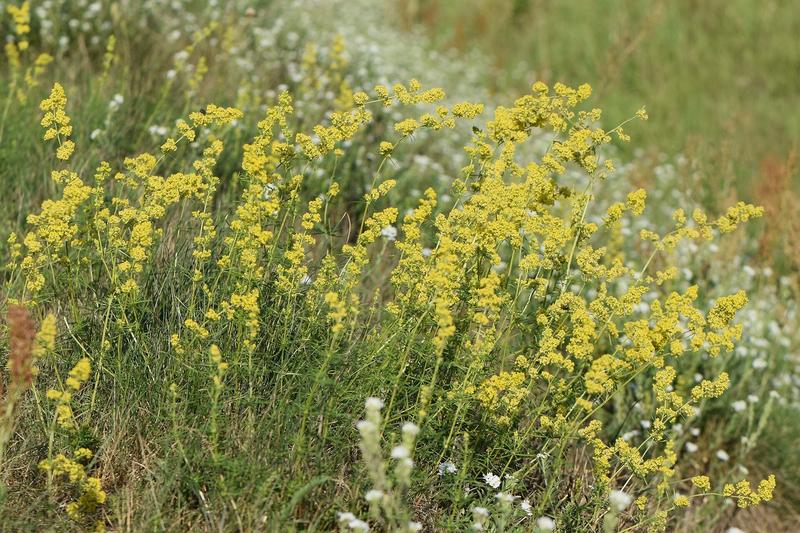
Quick facts
- Watering
- Minimal once established
- Sunlight
- Full sun to partial shade
- Soil
- Well-drained, neutral to alkaline
- Humans
- Safe
- Cats
- Safe
- Dogs
- Safe
- Height
- 15–60 cm
- Spread
- 30–60 cm
- Spacing
- 30–45 cm apart
About Lady's Bedstraw
Lady's Bedstraw is a charming native British wildflower producing masses of tiny, honey-scented yellow flowers from June to September atop slender stems clad with whorls of narrow leaves. This low-growing perennial spreads to form attractive mats in meadows, grasslands, and roadside verges throughout the UK. Gardeners value it for wildlife-friendly planting schemes, wildflower meadows, and cottage gardens where its delicate appearance and sweet fragrance attract bees, butterflies, and other pollinators. Its traditional uses in cheese-making and as a mattress stuffing reflect its long association with British rural life.
UK fact: Lady's Bedstraw was historically used to curdle milk in cheese production and as a yellow dye for wool, whilst its dried stems were stuffed into mattresses—hence the common name—because the coumarin-scented foliage was believed to repel fleas and improve sleep.
Watering Lady's Bedstraw
This drought-tolerant native requires little watering once established, making it ideal for low-maintenance UK gardens and dry, free-draining sites. Water newly planted specimens during their first summer to help roots establish, particularly during prolonged dry spells. Established plants cope admirably with typical British rainfall and require no supplementary watering except in severe drought. Avoid overwatering, as Lady's Bedstraw naturally thrives in lean, dry conditions and may suffer from excessive moisture.
Sunlight requirements
Lady's Bedstraw thrives in full sun, producing the most abundant flowers in open, sunny positions typical of traditional British meadows. It tolerates partial shade but may become leggy with reduced flowering in shadier spots. In UK gardens, south or west-facing borders and sunny banks provide ideal conditions, though it adapts well to most aspects except deep shade.
Soil and feeding
Lady's Bedstraw performs best in well-drained, moderately fertile to poor soils with a neutral to alkaline pH (6.5-8.0), reflecting its natural habitat on chalk and limestone grasslands across Britain. It tolerates sandy, gravelly, or chalky soils and actually flowers more profusely in lean conditions rather than rich, fertile ground. Heavy clay soils should be improved with grit or sharp sand to enhance drainage. Avoid overly acidic soils, though it shows reasonable tolerance across a range of pH levels.
Lady's Bedstraw requires no feeding and actually performs better in nutrient-poor conditions, producing more flowers and maintaining a compact habit. Avoid fertilisers entirely, as rich soil encourages excessive foliage growth at the expense of flowering and can make plants floppy and prone to collapse.
Pruning Lady's Bedstraw
Cut back spent flower stems in late autumn or early spring to maintain a tidy appearance and prevent excessive self-seeding if desired, though many gardeners leave seedheads for winter interest and wildlife. In wildflower meadows, mow or cut back in late summer after flowering has finished and seeds have dispersed, removing cuttings to maintain low soil fertility. Trim lightly in spring if plants become untidy or sprawling. No other pruning is necessary for this low-maintenance native perennial.
Propagating Lady's Bedstraw
Lady's Bedstraw propagates readily from seed sown in autumn or spring directly where plants are to grow, or in modules for transplanting later—autumn sowing often gives better germination. Division of established clumps in spring or autumn provides another reliable method, separating rooted sections and replanting immediately. Plants also self-seed freely in suitable conditions, naturalising in meadows and gravel gardens. Collect ripe seed in late summer for sowing, or allow natural dispersal for informal plantings.
Common problems
Lady's Bedstraw is remarkably trouble-free, suffering from few pests or diseases in UK gardens. Powdery mildew may occasionally appear on foliage in dry conditions with poor air circulation, though this rarely causes serious harm. Aphids sometimes colonise young growth but are usually controlled by natural predators. The main cultural issue is excessive vigour in rich soils, leading to floppy growth that may require staking or cutting back—growing in lean, poor soil prevents this problem entirely.
Spot a problem with your plant? Photograph the affected area using the Loam app and it will suggest the most likely cause and treatment.
Safety
- Humans
- Safe
- Cats
- Safe
- Dogs
- Safe
Toxicity information is for general guidance only.
Seasonal care calendar
Monthly care guide for Lady's Bedstraw in the UK, based on average conditions.
| Month | Care tasks |
|---|---|
| January | No action needed; plants fully dormant. |
| February | No action needed; plants dormant. |
| March | Cut back old stems if not done in autumn. Sow seed in modules or direct. Divide established clumps. |
| April | Plant out module-raised seedlings. New growth emerges from base. |
| May | Water newly planted specimens during dry spells. Foliage develops rapidly. |
| June | Flowering begins. Deadhead lightly to prolong display if desired. |
| July | Peak flowering period. Enjoy the honey-scented blooms and visiting pollinators. |
| August | Flowering continues. Allow some flowers to set seed for self-sowing or collect ripe seed. |
| September | Flowering finishes. Collect seed for sowing. Cut back in meadow plantings after seed dispersal. |
| October | Sow collected seed in modules or direct. Divide established clumps if needed. |
| November | Cut back spent stems or leave for winter structure. Plants enter dormancy. |
| December | No action needed; plants dormant. |
Frequently asked questions
- How do I grow Lady's Bedstraw in my garden?
- Grow Lady's Bedstraw in full sun in well-drained, neutral to alkaline soil. Sow seed in spring or autumn, or plant divisions 30-45cm apart. It thrives in poor, lean soil and requires minimal watering once established, making it perfect for wildflower meadows, gravel gardens, and sunny borders.
- Why is my Lady's Bedstraw not flowering well?
- Poor flowering usually results from too much shade or overly rich soil causing excessive leafy growth. The Loam app can help you diagnose growing conditions and provide personalised advice based on your garden's specific light levels and soil type to maximise flowering.
- Is Lady's Bedstraw invasive in UK gardens?
- Lady's Bedstraw is a native British wildflower that self-seeds freely but is not considered invasive. It spreads to form attractive mats in suitable conditions but is easily controlled by cutting back before seed dispersal or removing unwanted seedlings. In wildflower meadows, its natural spreading habit is beneficial.
Got a question about growing Lady's Bedstraw that isn't covered here? Ask the Garden Advisor in the Loam app. It knows your saved plants and local conditions.
Related plants
This page was compiled with AI assistance and reviewed by our team. .