Cleavers
Galium aparine
Weeds and Invasives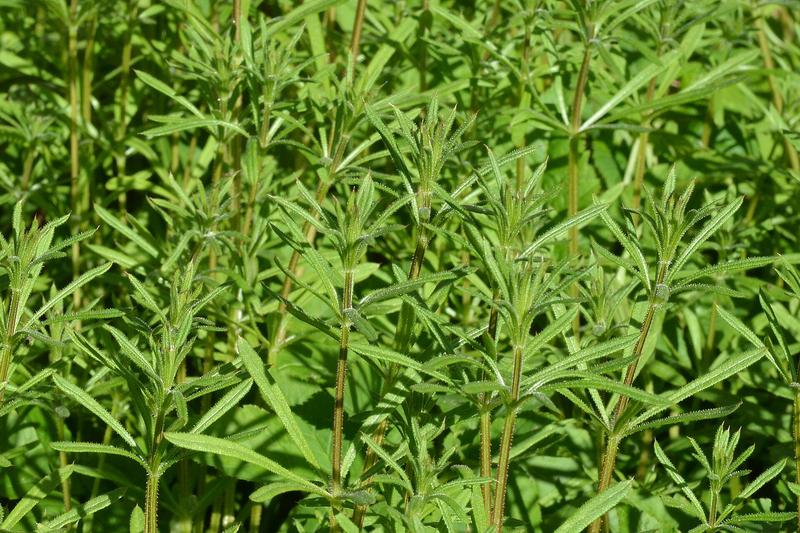
Quick facts
- Watering
- No watering required
- Sunlight
- Full sun to partial shade
- Soil
- Any soil type
- Humans
- Safe
- Cats
- Safe
- Dogs
- Safe
- Height
- 30–120 cm
- Spread
- 30–90 cm
- Spacing
- 0 cm apart
About Cleavers
Cleavers is a vigorous annual weed native to the UK, characterised by its scrambling stems covered in tiny hooked bristles that cling to clothing and animal fur. Growing up to 120 cm tall, it produces whorls of narrow leaves and small white flowers from spring to summer, followed by burr-like seed heads. Whilst most UK gardeners seek to control or eradicate it, some foragers value young shoots as an edible spring green and traditional herbal remedy. Its rapid growth and prolific seed production make it a persistent challenge in British gardens, allotments, and hedgerows.
UK fact: Cleavers has been used in British folk medicine for centuries, with medieval herbalists prescribing it as a spring tonic and blood purifier, and the roasted seeds were once used as a coffee substitute in rural Britain during times of scarcity.
Watering Cleavers
As an invasive weed, cleavers requires no supplementary watering and thrives on natural UK rainfall alone. It is remarkably drought-tolerant once established, with deep roots accessing moisture even during dry British summers. Gardeners should avoid watering areas where cleavers is present, as this only encourages more vigorous growth. The plant's ability to flourish without irrigation is one reason it becomes so problematic in UK gardens.
Sunlight requirements
Cleavers thrives in a wide range of light conditions across the UK, from full sun to partial shade, making it adaptable to most garden situations. It often flourishes in hedgerows, woodland edges, and shaded borders where it can scramble through other vegetation. In British gardens, it commonly appears in both sunny vegetable patches and shadier ornamental beds, demonstrating its opportunistic nature.
Soil and feeding
Cleavers is highly adaptable and grows in virtually any soil type found in UK gardens, from heavy clay to light sand, and tolerates both acidic and alkaline conditions (pH 5.0-8.0). It shows a preference for nitrogen-rich soils, which is why it often appears in well-fertilised vegetable beds and compost heaps. The weed thrives in both well-drained and moisture-retentive soils, making it difficult to discourage through soil management alone. Its tolerance of poor, compacted soil means it can colonise neglected areas where other plants struggle.
Cleavers requires no feeding and actively benefits from nutrient-rich conditions, growing more vigorously in fertilised soil. Avoid applying fertiliser to areas where cleavers is present, as this will only encourage faster, more prolific growth and seed production.
Pruning Cleavers
Rather than pruning, cleavers requires complete removal before it sets seed to prevent further spread. Pull or hoe young plants in early spring when soil is moist, ensuring you remove the entire root system to prevent regrowth. Cut back any mature plants before they flower (typically April-May in the UK) to stop seed production, though removal is preferable. The hooked bristles make handling unpleasant, so wear gloves when removing cleavers from borders and hedgerows.
Propagating Cleavers
Cleavers propagates readily from seed, with each plant producing hundreds of burr-like seeds that disperse by clinging to clothing, animal fur, and garden tools. Seeds germinate in autumn and early spring when soil temperatures are cool, with autumn-germinating plants overwintering as small rosettes before rapid spring growth. In UK gardens, preventing seed production is the most effective control strategy, as seeds remain viable in soil for several years. Gardeners should never intentionally propagate cleavers, and should dispose of pulled plants carefully to prevent accidental spread through seed dispersal.
Common problems
Cleavers itself is the problem rather than being susceptible to pests or diseases, as its vigorous growth smothers desirable plants and competes for nutrients, water, and light. The hooked bristles make it difficult to remove from ornamental plantings without damaging neighbouring plants. Seed dispersal via the burr-like fruits is the primary issue for UK gardeners, as a single overlooked plant can produce hundreds of seeds that spread throughout the garden on clothing, pets, and tools. The plant's ability to scramble through hedges and shrubs makes complete eradication challenging, requiring persistent monitoring and removal over multiple seasons.
Spot a problem with your plant? Photograph the affected area using the Loam app and it will suggest the most likely cause and treatment.
Safety
- Humans
- Safe
- Cats
- Safe
- Dogs
- Safe
Toxicity information is for general guidance only.
Seasonal care calendar
Monthly care guide for Cleavers in the UK, based on average conditions.
| Month | Care tasks |
|---|---|
| January | Check for overwintered rosettes in borders and remove whilst soil is workable. |
| February | Hoe emerging seedlings before they establish deep roots. |
| March | Remove young plants before rapid spring growth begins; mulch bare soil to suppress germination. |
| April | Critical month: remove all plants before flowering begins to prevent seed production. |
| May | Cut back or pull any flowering plants immediately to stop seed development. |
| June | Monitor for seed heads and remove before seeds mature and disperse. |
| July | Continue removing any remaining plants; dispose carefully to prevent seed spread. |
| August | Check hedgerows and borders for late-season growth and remove. |
| September | Remove autumn-germinating seedlings before they establish. |
| October | Hoe new seedlings and apply mulch to suppress further germination. |
| November | Final check for seedlings; remove whilst small and easy to control. |
| December | Monitor overwintering rosettes but minimal growth during dormant period. |
Frequently asked questions
- How do I get rid of cleavers in my garden?
- Remove cleavers by hand-pulling or hoeing in early spring before they flower, ensuring you extract the entire root system. The key is preventing seed production by removing plants before April-May flowering. Mulching bare soil with 5-8 cm of organic matter suppresses germination, whilst regular monitoring and removal over 2-3 seasons depletes the seed bank. Never compost seeding plants, as seeds remain viable and will spread when compost is used.
- Why does cleavers keep coming back in the same spot?
- Cleavers seeds remain viable in soil for several years, germinating in waves throughout autumn and spring. The Loam app can help you set monthly reminders during peak germination periods (March-April and September-October) to catch seedlings early, track which areas need attention, and monitor your progress in depleting the seed bank over multiple seasons.
- Are cleavers edible or useful for anything?
- Young cleavers shoots are edible when cooked like spinach and have been used as a spring green in British foraging tradition, though the texture becomes unpleasant as plants mature. Historically, cleavers was valued as a medicinal herb for lymphatic and kidney support, and the roasted seeds were used as a coffee substitute. However, most modern UK gardeners consider it purely a nuisance weed due to its invasive nature and prolific seed production.
Got a question about growing Cleavers that isn't covered here? Ask the Garden Advisor in the Loam app. It knows your saved plants and local conditions.
Related plants
This page was compiled with AI assistance and reviewed by our team. .