Kohlrabi
Brassica oleracea var. gongylodes
Vegetables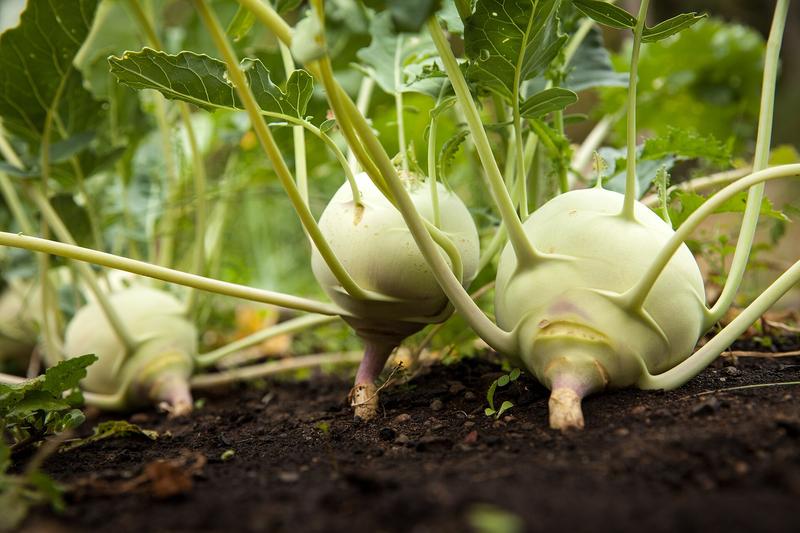
Quick facts
- Watering
- Weekly, more in dry spells
- Sunlight
- Full sun to partial shade
- Soil
- Fertile, well-drained, moisture-retentive
- Humans
- Safe
- Cats
- Safe
- Dogs
- Safe
- Height
- 30–45 cm
- Spread
- 25–35 cm
- Spacing
- 20–30 cm apart
About Kohlrabi
Kohlrabi is an unusual brassica vegetable forming a swollen, globe-shaped stem above ground, available in pale green or purple varieties. Originally from northern Europe, it has been cultivated in British kitchen gardens since the 16th century and thrives in the UK's cool, temperate climate. UK gardeners value kohlrabi for its crisp, sweet flavour reminiscent of mild turnip or broccoli stem, and its relatively quick maturity of 8-10 weeks. The entire plant is edible, with both the crunchy bulb and tender young leaves used in salads, stir-fries, and traditional European dishes.
UK fact: Kohlrabi was particularly popular in Victorian British kitchen gardens and experienced a resurgence during World War II as part of the 'Dig for Victory' campaign, valued for its quick growth and reliable cropping in the British climate.
Watering Kohlrabi
Water kohlrabi regularly, providing approximately 2.5 cm of water per week through rainfall or irrigation. During dry periods, particularly in May through August, increase watering to twice weekly to prevent the bulbs from becoming fibrous or cracking. Mulch around plants with well-rotted compost to retain moisture and regulate soil temperature. Inconsistent watering is the primary cause of poor-quality, tough bulbs, so aim for steady moisture rather than cycles of drought and saturation.
Sunlight requirements
Position kohlrabi in a spot receiving at least 6 hours of direct sunlight daily for optimal bulb development. In southern England, light afternoon shade during July and August can help prevent premature flowering. North-facing plots in Scotland and northern England may produce slightly slower growth but still yield excellent crops with adequate light.
Soil and feeding
Grow kohlrabi in fertile, well-cultivated soil enriched with plenty of organic matter such as garden compost or well-rotted manure dug in during autumn or early spring. The ideal pH range is 6.5-7.5; lime acidic soils if necessary, as kohlrabi shares the brassica family's preference for slightly alkaline conditions which also helps prevent clubroot disease. Heavy clay soils benefit from the addition of horticultural grit and organic matter to improve drainage, whilst sandy soils require generous compost incorporation to boost water retention. Avoid freshly manured ground which can cause forking and poor bulb formation.
Incorporate a general-purpose fertiliser such as blood, fish and bone at 70g per square metre before sowing or transplanting. Four weeks after planting, apply a nitrogen-rich liquid feed such as comfrey tea or diluted seaweed solution fortnightly to encourage steady growth. Avoid excessive nitrogen late in the season as this promotes leafy growth at the expense of bulb quality.
Pruning Kohlrabi
Kohlrabi requires minimal pruning, but removing damaged or yellowing lower leaves helps prevent fungal diseases and improves airflow around developing bulbs. Harvest bulbs when they reach 5-10 cm in diameter for the sweetest, most tender flavour; larger bulbs become woody and fibrous. Cut the bulb at soil level with a sharp knife, leaving the root in the ground to decompose and add organic matter. Young leaves can be harvested sparingly throughout the growing season for use in salads without harming bulb development.
Propagating Kohlrabi
Sow kohlrabi seeds directly into prepared soil from mid-March onwards once the soil temperature reaches 7°C, or start earlier crops indoors in February in modules or seed trays. For continuous harvest, make successive sowings every 2-3 weeks until early August. Seeds germinate quickly, usually within 7-10 days in warm conditions. Thin direct-sown seedlings to 20-30 cm apart when they develop their first true leaves, or transplant module-raised plants at the same spacing when they have 4-5 true leaves.
Common problems
Kohlrabi is susceptible to typical brassica pests including cabbage white butterfly caterpillars, flea beetles, and pigeons, all of which can severely damage young plants. Protect crops with fine insect-proof mesh or fleece from sowing until harvest to exclude flying pests. Clubroot disease can be problematic in acidic or poorly drained soils; improve drainage, lime soil to raise pH above 7.0, and practise crop rotation, avoiding planting brassicas in the same spot for at least four years. Bolting (premature flowering) occurs during hot, dry conditions or if plants experience transplant shock, rendering bulbs inedible; maintain consistent moisture and avoid root disturbance when transplanting.
Spot a problem with your plant? Photograph the affected area using the Loam app and it will suggest the most likely cause and treatment.
Safety
- Humans
- Safe
- Cats
- Safe
- Dogs
- Safe
Toxicity information is for general guidance only.
Seasonal care calendar
Monthly care guide for Kohlrabi in the UK, based on average conditions.
| Month | Care tasks |
|---|---|
| January | Plan crop rotation and order seeds. Prepare vegetable beds by incorporating well-rotted manure or compost if weather permits. |
| February | Sow early crops indoors in modules on a warm windowsill or in a heated greenhouse for transplanting in April. |
| March | Begin outdoor sowings under cloches or fleece from mid-month in milder regions. Continue indoor sowings for succession planting. |
| April | Sow directly outdoors in prepared beds. Transplant February-sown modules outdoors under fleece protection. Make successive sowings every 2-3 weeks. |
| May | Continue succession sowing. Thin direct-sown seedlings to final spacing. Water regularly and protect from flea beetles with mesh netting. |
| June | Harvest early sowings when bulbs reach 5-8 cm diameter. Continue succession sowing until mid-month. Water frequently during dry spells and apply liquid feed. |
| July | Harvest maincrop kohlrabi regularly. Make final sowings in early July for autumn harvest. Maintain consistent watering to prevent bolting in hot weather. |
| August | Continue harvesting summer crops. Water and feed late sowings. Remove any bolted plants promptly. |
| September | Harvest remaining summer crops and begin harvesting autumn-sown kohlrabi. Plants can tolerate light frosts, improving flavour. |
| October | Harvest autumn crops before hard frosts. Kohlrabi stores well in a cool shed or can be left in the ground in milder regions with fleece protection. |
| November | Harvest any remaining crops before severe frosts. Clear spent plants and add to compost heap. Begin planning next year's rotation. |
| December | No active growing. Review the season's successes and order seed catalogues for spring planning. |
Frequently asked questions
- How do I know when kohlrabi is ready to harvest?
- Kohlrabi is ready to harvest when the swollen stem reaches 5-8 cm in diameter, typically 8-10 weeks after sowing. The bulb should feel firm and the skin should be smooth and taut. Harvest promptly at this size for the sweetest, most tender flavour – bulbs left to grow larger than 10 cm become woody and fibrous. Use a sharp knife to cut just below the bulb, leaving the root in the ground.
- Why are my kohlrabi leaves turning yellow?
- Yellowing kohlrabi leaves usually indicate nitrogen deficiency, waterlogging, or pest damage to roots. Check soil drainage and reduce watering if soggy, or feed with a nitrogen-rich fertiliser if growth is slow. Yellow patches with holes suggest pest activity. The Loam app can help diagnose the specific cause by analysing photos of your plant and tracking growing conditions to provide personalised care recommendations.
- What soil conditions does kohlrabi need?
- Kohlrabi thrives in firm, fertile, moisture-retentive soil with a pH of 6.5-7.5. Prepare beds by incorporating well-rotted compost or manure several weeks before sowing, and ensure good drainage as waterlogged soil causes root problems. Unlike other brassicas, kohlrabi tolerates lighter soils reasonably well. Firm the soil after planting by treading gently – loose soil encourages poor bulb development and increases bolting risk.
Got a question about growing Kohlrabi that isn't covered here? Ask the Garden Advisor in the Loam app. It knows your saved plants and local conditions.
Related plants
This page was compiled with AI assistance and reviewed by our team. .