Cauliflower
Brassica oleracea var. botrytis
Vegetables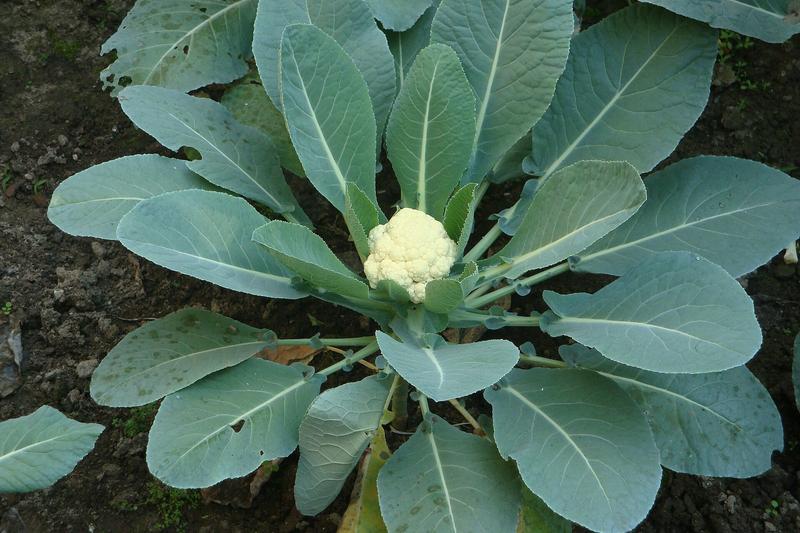
Quick facts
- Watering
- Twice weekly during curd formation
- Sunlight
- Full sun
- Soil
- Firm, fertile, moisture-retentive
- Humans
- Safe
- Cats
- Safe
- Dogs
- Safe
- Height
- 45–60 cm
- Spread
- 45–60 cm
- Spacing
- 50–60 cm apart
About Cauliflower
Cauliflower is a cool-season brassica prized for its dense, white curd (immature flower head) that forms a compact dome surrounded by protective leaves. Originating from the Mediterranean, it has been cultivated in British kitchen gardens since the 17th century and remains a staple vegetable crop. UK gardeners value cauliflower for its versatility in cooking and the satisfaction of producing perfect, tight heads through careful cultivation. With varieties suited to spring, summer, and autumn harvesting, it can provide fresh produce for much of the year in the British climate.
UK fact: Cauliflower has been grown in Cornwall since the 18th century, where the mild coastal climate proved ideal for winter production, establishing the region as Britain's premier cauliflower-growing area with harvests from November through to May.
Watering Cauliflower
Water deeply and regularly, providing 20-25 litres per square metre weekly during dry spells, increasing to twice weekly once curds begin forming. The critical period is from transplanting through to curd maturity; even brief drought stress can ruin the crop. In typical British summers, rainfall may suffice, but be prepared to irrigate during dry periods. Mulching around plants with well-rotted compost helps retain soil moisture and keeps roots cool.
Sunlight requirements
Position in an open site receiving at least six hours of direct sunlight daily. In the UK, a south-facing plot is ideal, though plants will tolerate light afternoon shade in particularly hot summers. Avoid planting in the shadow of taller crops or buildings, as insufficient light leads to loose, poorly formed curds and increased susceptibility to disease.
Soil and feeding
Prepare beds with generous amounts of well-rotted manure or compost several weeks before planting, then firm the soil well by treading—cauliflowers need a solid root run. The ideal pH is 6.5-7.5; lime acidic soils in autumn if necessary, as brassicas struggle below pH 6.0. Heavy clay soils suit cauliflower well provided drainage is adequate, whilst sandy soils require substantial organic matter to retain moisture. Avoid freshly manured ground, which can cause loose, leafy growth at the expense of curd formation.
Apply a general-purpose granular fertiliser such as Growmore at 70g per square metre before planting. Give a liquid feed high in nitrogen (such as diluted comfrey tea or commercial tomato feed at half strength) three weeks after transplanting to boost leaf growth. Once curds start developing, switch to a balanced feed to support curd formation without promoting excessive leafy growth.
Pruning Cauliflower
Cauliflower doesn't require pruning in the traditional sense, but curd protection is essential for quality. When curds reach 5-7cm diameter, bend or snap a few inner leaves over the top to shade the curd and maintain its white colour—this is called 'blanching'. In autumn varieties, tie leaves loosely with string or an elastic band to protect curds from frost damage. Remove any yellowing or damaged outer leaves to improve air circulation and reduce disease risk, but retain healthy foliage to nourish the developing curd.
Propagating Cauliflower
Sow seeds thinly in modules or a prepared seedbed from March to May for summer and autumn crops, or in September-October under cover for overwintering types that mature the following spring. Germination occurs at 7-20°C within 7-12 days. Transplant seedlings when they're 10-15cm tall with a well-developed root system, typically 5-6 weeks after sowing. Handle carefully to avoid root disturbance, and plant firmly with the lowest leaves just above soil level.
Common problems
Cauliflower is susceptible to the full range of brassica pests and diseases common in UK gardens. Cabbage white caterpillars, cabbage root fly, and pigeons are the main pests; use fine mesh netting from planting onwards for effective protection. Clubroot is a serious soil-borne disease causing swollen, distorted roots and stunted growth—practice crop rotation, lime acidic soils, and choose resistant varieties where clubroot is present. Physiological problems include buttoning (premature tiny curds caused by transplant shock, drought, or cold), blindness (failure to form curds due to frost damage to growing points), and riceyness (curds separating into loose segments from heat stress or over-maturity).
Spot a problem with your plant? Photograph the affected area using the Loam app and it will suggest the most likely cause and treatment.
Safety
- Humans
- Safe
- Cats
- Safe
- Dogs
- Safe
Toxicity information is for general guidance only.
Seasonal care calendar
Monthly care guide for Cauliflower in the UK, based on average conditions.
| Month | Care tasks |
|---|---|
| January | Check overwintering plants and firm any lifted by frost. Protect developing curds from severe weather with fleece or cloches. |
| February | Begin harvesting overwintered varieties as curds mature. Prepare beds for spring sowings by incorporating compost and lime if needed. |
| March | Sow summer varieties in modules under cover. Transplant autumn-sown plants to final positions. Continue harvesting overwintered crops. |
| April | Transplant March-sown seedlings outdoors under fleece. Sow further batches for succession. Apply nitrogen-rich feed to established plants. |
| May | Sow autumn varieties in modules. Transplant April-sown plants. Water regularly and watch for cabbage white butterflies—net all plants. |
| June | Transplant May sowings. Water established plants twice weekly in dry weather. Begin blanching curds by folding leaves over them. |
| July | Harvest early summer varieties. Maintain consistent watering during curd development. Continue blanching and check for caterpillars weekly. |
| August | Harvest summer crops as curds reach full size. Transplant final autumn varieties. Water generously during dry spells to prevent buttoning. |
| September | Sow overwintering varieties in modules under cover. Continue harvesting summer and early autumn types. Tie leaves over autumn curds for protection. |
| October | Transplant September-sown seedlings to cold frames or sheltered beds. Harvest autumn varieties. Remove crop debris to prevent disease carryover. |
| November | Protect overwintering plants with cloches in cold regions. Harvest late autumn varieties before hard frosts. Check plants and firm if necessary. |
| December | Minimal activity. Check overwintering crops and provide fleece protection during severe cold snaps. Plan crop rotation for next season. |
Frequently asked questions
- When should I plant cauliflower seedlings outside in the UK?
- Timing depends on variety: plant summer types from late March to May, autumn varieties in May to June, and winter types in May. Crucially, wait until seedlings have at least 5-6 true leaves and soil temperature reaches 10°C. Transplant in the evening or on overcast days to reduce shock. Plant firmly with the lowest leaves just above soil level, spacing 60cm apart in rows 60cm apart.
- Why is my cauliflower not forming a head?
- Failure to form curds usually stems from environmental stress—inconsistent watering, nutrient deficiency (especially nitrogen), extreme temperatures, or root disturbance. Cauliflowers are notoriously fussy and need steady, optimal conditions throughout growth. If you're struggling to diagnose the specific cause, the Loam app can help identify problems through photos and provide personalised care reminders to keep conditions stable.
- What spacing and soil conditions does cauliflower need?
- Cauliflowers require fertile, firm, moisture-retentive soil with pH 6.5-7.5 and plenty of organic matter. Space plants 60cm apart in all directions to allow full curd development. The soil must be consolidated (tread it down after digging) as loose soil encourages poor root anchorage and buttoning. Prepare beds several weeks ahead, incorporating well-rotted manure or compost and a general fertiliser.
Got a question about growing Cauliflower that isn't covered here? Ask the Garden Advisor in the Loam app. It knows your saved plants and local conditions.
Related plants
This page was compiled with AI assistance and reviewed by our team. .