Golden Rain Tree
Koelreuteria paniculata
Trees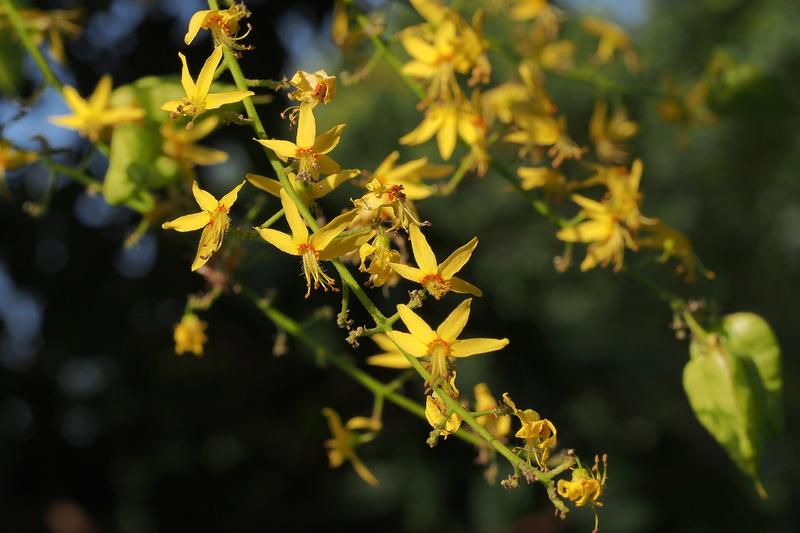
Quick facts
- Watering
- Weekly when young, minimal once established
- Sunlight
- Full sun
- Soil
- Well-drained, moderately fertile
- Humans
- Toxic
- Cats
- Toxic
- Dogs
- Toxic
- Height
- 700–1000 cm
- Spread
- 600–900 cm
- Spacing
- 800–1000 cm apart
- RHS recognition
- Award of Garden Merit
About Golden Rain Tree
The Golden Rain Tree is a deciduous ornamental tree native to China and Korea, prized for its spectacular display of golden-yellow flowers in mid to late summer. Growing to a modest size, it produces large panicles of bright yellow blooms followed by distinctive papery seed pods that resemble Chinese lanterns. UK gardeners value this tree for its late-season interest, attractive pinnate foliage that turns golden in autumn, and tolerance of urban pollution and drought once established.
UK fact: The Golden Rain Tree holds an RHS Award of Garden Merit and thrives particularly well in the warmer, drier regions of southern and eastern England, where hot summers encourage the best flowering and seed pod production.
Watering Golden Rain Tree
Water newly planted trees weekly during their first two growing seasons to establish a deep root system. Once established, Golden Rain Trees are remarkably drought-tolerant and rarely need supplementary watering except during prolonged dry spells in summer. Young trees benefit from mulching to retain moisture, but avoid waterlogging as this can lead to root rot. In containers, water when the top 5cm of compost feels dry.
Sunlight requirements
Golden Rain Tree requires full sun to flower profusely and develop its characteristic golden autumn colour. Plant in a south or west-facing position sheltered from cold winds, particularly in northern gardens. The tree tolerates urban conditions well and benefits from the reflected heat of paved areas, which helps ripen the wood and encourage flowering.
Soil and feeding
Golden Rain Tree adapts to a wide range of soil types but performs best in well-drained, moderately fertile loam with a neutral to slightly alkaline pH of 6.5-8.0. It tolerates poor, dry soils and urban pollution exceptionally well, making it ideal for city gardens. Avoid heavy clay that remains waterlogged in winter, as this can damage roots. The tree is surprisingly tolerant of chalk and limestone soils, unlike many ornamental trees.
Apply a balanced slow-release fertiliser such as blood, fish and bone in early spring around the root zone of young trees to encourage establishment. Mature trees rarely require feeding unless growing in very poor soil. Over-feeding can produce excessive leafy growth at the expense of flowers.
Pruning Golden Rain Tree
Prune Golden Rain Tree in late winter or early spring whilst dormant to maintain shape and remove any dead, diseased or crossing branches. This tree naturally develops an attractive rounded crown and requires minimal pruning beyond formative work in the first few years. Remove lower branches gradually if a clear trunk is desired, and avoid heavy pruning as this can spoil the tree's natural form. Always use sharp, clean tools and seal large cuts to prevent disease.
Propagating Golden Rain Tree
Golden Rain Tree can be propagated from seed sown in autumn in a cold frame, though seedlings may take several years to reach flowering size. Fresh seed germinates more reliably than stored seed. Semi-ripe cuttings taken in mid to late summer can be rooted with bottom heat and hormone rooting powder, though success rates are variable. Root cuttings taken in winter offer another option for propagation. The easiest method for home gardeners is to collect and pot up self-sown seedlings that often appear beneath mature trees.
Common problems
Golden Rain Tree is generally pest and disease-free in the UK, making it a low-maintenance choice. Coral spot fungus can occasionally affect dead wood, so remove any dead branches promptly. Young trees may suffer frost damage to new growth in late spring, particularly in northern regions, though they usually recover. In very dry summers, leaves may scorch at the edges, but this is cosmetic and doesn't harm the tree. Verticillium wilt is rare but can affect stressed trees, causing branch dieback.
Spot a problem with your plant? Photograph the affected area using the Loam app and it will suggest the most likely cause and treatment.
Safety
- Humans
-
Toxic
All parts of the Golden Rain Tree, particularly the seeds and unripe seed pods, are toxic if ingested and can cause vomiting, diarrhoea and abdominal pain.
- Cats
-
Toxic
Toxic to cats if ingested, causing gastrointestinal upset. Keep cats away from fallen seed pods.
- Dogs
-
Toxic
Toxic to dogs if ingested, causing vomiting and diarrhoea. Prevent dogs from chewing seed pods or seeds.
Toxicity information is for general guidance only. If a person or pet has been exposed to this plant and you are concerned, seek advice from a medical professional or vet.
Seasonal care calendar
Monthly care guide for Golden Rain Tree in the UK, based on average conditions.
| Month | Care tasks |
|---|---|
| January | No action needed; tree is fully dormant. |
| February | Prune to shape if needed whilst still dormant. |
| March | Apply slow-release fertiliser around young trees and refresh mulch. |
| April | Watch for new leaf growth; protect young trees from late frosts. |
| May | Water young trees weekly if weather is dry. |
| June | Continue watering young specimens; foliage now fully developed. |
| July | Enjoy the spectacular golden-yellow flower panicles; water if very dry. |
| August | Flowers fade and distinctive papery seed pods begin to form. |
| September | Collect seed for propagation; foliage begins to turn golden. |
| October | Enjoy autumn colour as leaves turn yellow; seed pods persist. |
| November | Leaves fall; collect and compost or leave as natural mulch. |
| December | No action needed; tree enters dormancy. |
Frequently asked questions
- When does Golden Rain Tree flower in the UK?
- Golden Rain Tree flowers in mid to late summer, typically from July to August in the UK, producing large panicles of bright golden-yellow blooms. The flowering period is later than most ornamental trees, making it valuable for extending seasonal interest. Hot, dry summers encourage the most prolific flowering, which is why the tree performs particularly well in southern and eastern England.
- Why isn't my Golden Rain Tree flowering?
- Young trees may take 5-7 years to flower, whilst insufficient sunlight, over-feeding with nitrogen, or cool summers can all reduce blooming. The Loam app can help you track your tree's age and growing conditions, send reminders for appropriate feeding schedules, and provide personalised advice based on your local climate to encourage better flowering.
- How big does a Golden Rain Tree grow in the UK?
- In the UK, Golden Rain Tree typically reaches 7-10 metres in height with a spread of 6-9 metres, making it suitable for medium to large gardens. Growth is relatively slow, taking 20-30 years to reach full size, and the tree naturally forms an attractive rounded crown. It's considerably smaller than many forest trees, making it ideal for urban and suburban gardens where space is limited.
Got a question about growing Golden Rain Tree that isn't covered here? Ask the Garden Advisor in the Loam app. It knows your saved plants and local conditions.
Related plants
This page was compiled with AI assistance and reviewed by our team. .