Laburnum
Laburnum anagyroides
Trees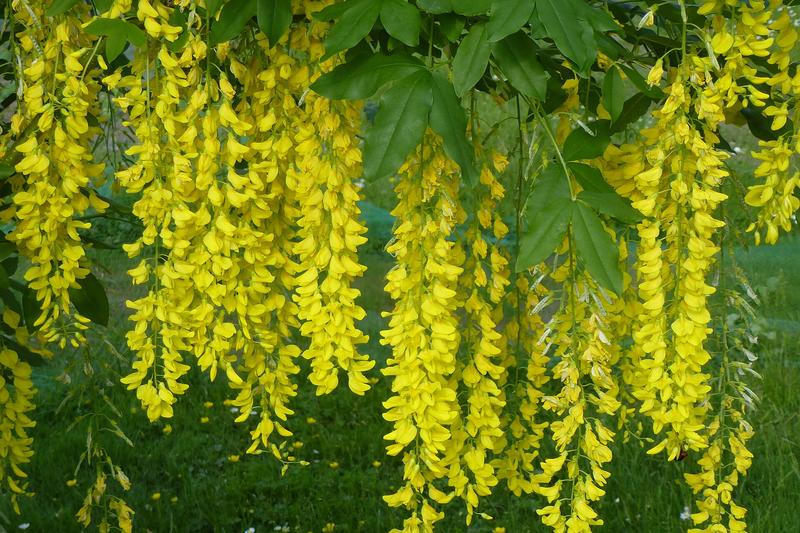
Quick facts
- Watering
- Weekly when young, minimal once established
- Sunlight
- Full sun to partial shade
- Soil
- Well-drained, moderately fertile
- Humans
- Toxic
- Cats
- Toxic
- Dogs
- Toxic
- Height
- 400–700 cm
- Spread
- 300–500 cm
- Spacing
- 400–500 cm apart
- RHS recognition
- Award of Garden Merit
About Laburnum
Laburnum is a deciduous tree renowned for its spectacular cascading chains of golden-yellow flowers in late spring, creating a stunning display that has made it a favourite in British gardens for centuries. Native to central and southern Europe, this small to medium-sized tree typically reaches 4–7 metres in height with an elegant, spreading habit. UK gardeners prize it for its ability to thrive in most soil types and its dramatic floral impact, often trained over arches and pergolas to showcase the pendulous blooms. Despite its beauty, all parts of the plant are highly toxic, requiring careful placement away from children and pets.
UK fact: Laburnum has been a staple of British cottage gardens since Victorian times, when it was frequently planted to create the iconic 'laburnum arch' – a tunnel of golden blooms that became a hallmark of grand estate gardens, most famously at Bodnant Garden in North Wales where the laburnum tunnel remains one of the UK's most photographed garden features.
Watering Laburnum
Young laburnum trees require regular watering during their first two growing seasons, particularly during dry spells in spring and summer. Water deeply once or twice weekly during establishment, ensuring the root zone remains moist but not waterlogged. Once established, laburnum is remarkably drought-tolerant and typically requires no supplementary watering in the UK climate except during prolonged dry periods. Mature trees develop deep root systems that access moisture from lower soil levels, making them well-suited to British conditions.
Sunlight requirements
Laburnum performs best in full sun, which encourages the most prolific flowering, though it tolerates partial shade reasonably well. In the UK, position in a south or west-facing location for optimal bloom production. Trees in shadier spots will still flower but may produce fewer racemes and develop a more open, leggy habit.
Soil and feeding
Laburnum adapts to a wide range of soil types but performs best in well-drained, moderately fertile ground with a neutral to slightly alkaline pH (6.5–7.5). It tolerates chalky and limestone soils particularly well, making it ideal for many UK gardens. Avoid heavy clay that remains waterlogged in winter, as this can lead to root rot and poor establishment. On very poor soils, incorporate organic matter at planting time to improve structure and nutrient availability.
Apply a balanced general-purpose fertiliser in early spring for young trees, scattering around the root zone and watering in well. Established laburnums rarely require feeding if growing in reasonably fertile soil, though a light application of blood, fish and bone in March can boost flowering performance. Avoid high-nitrogen feeds which promote leafy growth at the expense of flowers.
Pruning Laburnum
Prune laburnum minimally and only when necessary, as it is susceptible to bleeding and disease entry through wounds. Any essential pruning should be carried out in late summer (July to August) when the tree is in full leaf and sap flow is reduced. Remove dead, damaged or crossing branches, and thin overcrowded growth to maintain an open framework. When training over arches or pergolas, tie in young growth whilst flexible and prune side shoots back to maintain the desired shape after flowering.
Propagating Laburnum
Laburnum is most commonly propagated from seed sown in autumn, though germination can be erratic and seedlings may take 5–7 years to flower. Collect ripe seed pods in late summer, extract the seeds (wearing gloves due to toxicity), and sow in deep pots of gritty compost, leaving outdoors over winter for cold stratification. Named cultivars such as 'Vossii' must be grafted onto seedling rootstocks in late winter to maintain their characteristics. Semi-ripe cuttings taken in summer occasionally root but success rates are low, making grafting the preferred method for cultivar propagation.
Common problems
Laburnum leaf miner is the most common pest in the UK, causing unsightly brown blotches on foliage from late spring onwards, though damage is largely cosmetic and rarely affects tree health. Honey fungus can be fatal, causing dieback and eventual death, identifiable by white fungal growth beneath bark and bootlace-like rhizomorphs in the soil. Powdery mildew may appear on leaves in dry summers but is rarely serious. The tree's extreme toxicity means all parts, especially seeds, are dangerous if ingested, requiring careful siting away from areas used by children and pets.
Spot a problem with your plant? Photograph the affected area using the Loam app and it will suggest the most likely cause and treatment.
Safety
- Humans
-
Toxic
All parts of laburnum are highly toxic, particularly the seeds, which contain cytisine. Ingestion can cause severe vomiting, convulsions, and in serious cases, coma or death. Children are especially at risk due to the attractive pea-like seed pods.
- Cats
-
Toxic
All parts are toxic to cats, causing vomiting, excessive salivation, abdominal pain, and potentially fatal convulsions if ingested in quantity.
- Dogs
-
Toxic
Highly toxic to dogs, with seeds being particularly dangerous. Ingestion causes vomiting, tremors, excessive drooling, and can lead to seizures, coma, or death in severe cases.
Toxicity information is for general guidance only. If a person or pet has been exposed to this plant and you are concerned, seek advice from a medical professional or vet.
Seasonal care calendar
Monthly care guide for Laburnum in the UK, based on average conditions.
| Month | Care tasks |
|---|---|
| January | No action needed – tree fully dormant. |
| February | Check tree stakes and ties, adjusting if necessary to prevent rubbing. |
| March | Apply balanced fertiliser around young trees and mulch the root zone. |
| April | Watch for emerging flower buds and early signs of leaf miner damage. |
| May | Enjoy peak flowering display – typically mid to late May in most UK regions. |
| June | Deadhead spent flower racemes if accessible to improve appearance. |
| July | Carry out any essential pruning whilst tree is in full leaf. |
| August | Complete pruning by mid-month and monitor for powdery mildew in dry weather. |
| September | Collect seed pods for propagation if desired, wearing gloves due to toxicity. |
| October | Sow collected seeds in pots and leave outdoors for cold stratification. |
| November | Clear fallen leaves from around the base to reduce overwintering pests. |
| December | No action needed – tree entering full dormancy. |
Frequently asked questions
- Why is my laburnum not flowering?
- Insufficient sunlight is the most common cause – laburnums need at least 6 hours of direct sun for prolific flowering. Young trees may take 3–5 years to flower after planting. Excessive nitrogen fertiliser promotes leafy growth at the expense of blooms, whilst late spring frosts can damage emerging flower buds. Ensure your tree is in a sunny position and avoid high-nitrogen feeds.
- How do I know when to prune my laburnum?
- Laburnum should only be pruned in late summer (July–August) when in full leaf to minimise bleeding and disease risk. The Loam app can send you timely reminders for pruning and help you identify which branches to remove with personalised care schedules tailored to your tree's age and condition.
- Is laburnum safe to plant in a family garden?
- Laburnum is extremely toxic, especially the seeds, making it unsuitable for gardens used by young children or where pets roam freely. If you choose to plant it, position it well away from play areas, remove seed pods before they ripen, and educate family members about the dangers. Consider safer alternatives like wisteria for similar cascading flowers if toxicity is a concern.
Got a question about growing Laburnum that isn't covered here? Ask the Garden Advisor in the Loam app. It knows your saved plants and local conditions.
Related plants
This page was compiled with AI assistance and reviewed by our team. .