Hebe
Hebe (formerly Veronica)
Shrubs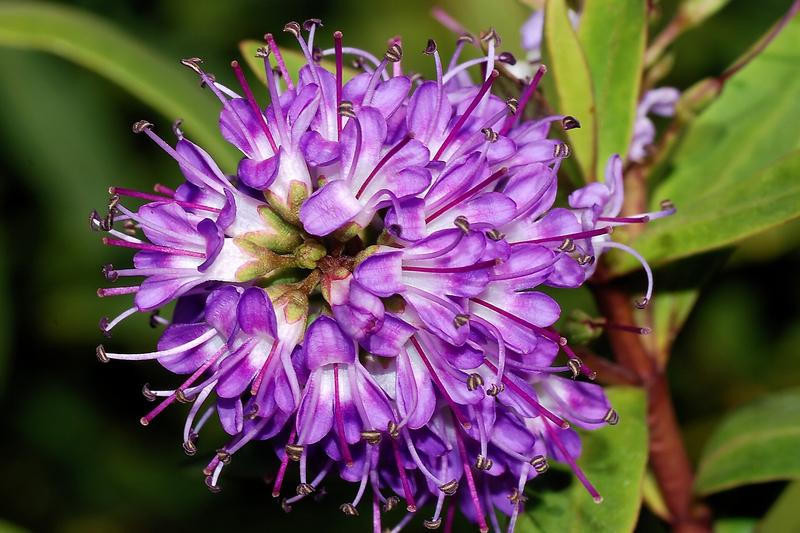
Quick facts
- Watering
- Weekly when establishing, then occasional
- Sunlight
- Full sun to partial shade
- Soil
- Well-drained, neutral to slightly alkaline
- Humans
- Safe
- Cats
- Safe
- Dogs
- Safe
- Height
- 30–120 cm
- Spread
- 30–120 cm
- Spacing
- 40–90 cm apart
- RHS recognition
- Award of Garden Merit
About Hebe
Hebe is an evergreen shrub native to New Zealand and South America, prized for its neat, rounded habit and spikes of small flowers in shades of white, pink, purple, or blue. The glossy, often variegated foliage provides year-round structure in borders, containers, and coastal gardens. UK gardeners value hebes for their long flowering season from late spring through autumn and their tolerance of salt-laden winds, making them ideal for seaside planting.
UK fact: Many hebe cultivars hold the RHS Award of Garden Merit, and they became particularly popular in British gardens during the Victorian era when plant hunters introduced numerous New Zealand species to UK nurseries.
Watering Hebe
Newly planted hebes require weekly watering throughout their first summer to develop a strong root system. Once established, they are reasonably drought-tolerant and typically need watering only during extended dry periods in summer. Container-grown specimens require more frequent watering, particularly during hot weather, as pots dry out quickly. Avoid waterlogging, as hebes are susceptible to root rot in poorly drained conditions.
Sunlight requirements
Position hebes in full sun for the best flowering and compact growth, though they will tolerate partial shade in warmer UK regions. South or west-facing aspects are ideal, providing good light without excessive exposure to cold easterly winds. In northern gardens, a sheltered sunny spot against a wall offers valuable winter protection.
Soil and feeding
Plant hebes in well-drained soil with a neutral to slightly alkaline pH (6.5–7.5), though they tolerate mildly acidic conditions. They perform well in sandy or loamy soils and are excellent for coastal gardens where salt spray and free-draining conditions suit them perfectly. Heavy clay soils should be improved with grit and organic matter, or consider planting on a slight mound to improve drainage. Poor drainage is the most common cause of hebe failure in UK gardens.
Feed hebes in early spring with a general-purpose slow-release fertiliser such as blood, fish and bone or a balanced granular feed. Container-grown plants benefit from fortnightly liquid feeds during the growing season from April to August. Avoid high-nitrogen feeds, which promote soft growth susceptible to frost damage.
Pruning Hebe
Deadhead spent flower spikes regularly to encourage further blooms and maintain a tidy appearance. In late spring or early summer, after the main flowering flush, lightly trim back shoots by one-third to maintain a compact, bushy habit. Avoid cutting into old, woody growth, as hebes are reluctant to regenerate from bare wood. Remove any frost-damaged or dead stems in spring once the risk of severe frost has passed.
Propagating Hebe
The most reliable method of propagating hebes is from semi-ripe cuttings taken in July or August. Select healthy, non-flowering shoots from the current season's growth and prepare 7–10 cm cuttings. Cuttings root within 4–6 weeks in a sheltered cold frame or on a windowsill. Pot on rooted cuttings individually and overwinter in a frost-free greenhouse before planting out the following spring.
Common problems
Hebes are generally trouble-free but can suffer from downy mildew in humid conditions, causing yellowing leaves and white fungal growth beneath. Leaf spot diseases may occur in wet summers, resulting in brown or purple spots on foliage. Aphids occasionally colonise new growth in spring, and frost damage can cause dieback of shoots in severe winters, particularly on tender varieties. Root rot is common in poorly drained soils, leading to wilting and plant collapse.
Spot a problem with your plant? Photograph the affected area using the Loam app and it will suggest the most likely cause and treatment.
Safety
- Humans
- Safe
- Cats
- Safe
- Dogs
- Safe
Toxicity information is for general guidance only.
Seasonal care calendar
Monthly care guide for Hebe in the UK, based on average conditions.
| Month | Care tasks |
|---|---|
| January | No action needed. Avoid disturbing plants during cold weather. |
| February | Check for frost damage but delay pruning until spring frosts have passed. |
| March | Remove any frost-damaged stems. Apply slow-release fertiliser around established plants. |
| April | Plant new hebes. Water newly planted specimens regularly. Watch for aphids on new growth. |
| May | Flowering begins. Deadhead spent blooms regularly to encourage further flowers. |
| June | Continue deadheading. Water during dry spells, especially container plants. Light prune after main flowering flush. |
| July | Take semi-ripe cuttings for propagation. Maintain watering in hot, dry weather. |
| August | Continue taking cuttings. Deadhead to prolong flowering into autumn. |
| September | Reduce watering as growth slows. Pot on rooted cuttings taken in summer. |
| October | Plant new hebes while soil is still warm. Clear fallen leaves from around plants. |
| November | Protect tender varieties with fleece in cold regions. Move container plants to sheltered spots. |
| December | No action needed. Ensure good drainage around plants to prevent waterlogging. |
Frequently asked questions
- When should I prune my hebe?
- Prune hebes lightly in late spring or early summer, immediately after the main flowering flush. Avoid autumn or winter pruning, as this removes flower buds and exposes plants to frost damage.
- Why are my hebe leaves turning brown?
- Brown leaves can indicate several issues including frost damage, drought stress, root rot, or fungal disease. Check soil moisture and drainage first. For accurate diagnosis of your specific plant's symptoms and personalised care advice, the Loam app can analyse photos and help identify the exact cause.
- How do I propagate hebe from cuttings?
- Take semi-ripe cuttings in late summer, choosing non-flowering shoots about 7-10cm long. Remove lower leaves, dip in hormone rooting powder, and insert into gritty compost. Keep in a cold frame or covered with a plastic bag until rooted in 6-8 weeks. This is particularly useful for replacing leggy or ageing plants.
Got a question about growing Hebe that isn't covered here? Ask the Garden Advisor in the Loam app. It knows your saved plants and local conditions.
Related plants
This page was compiled with AI assistance and reviewed by our team. .