Elecampane
Inula helenium
Herbs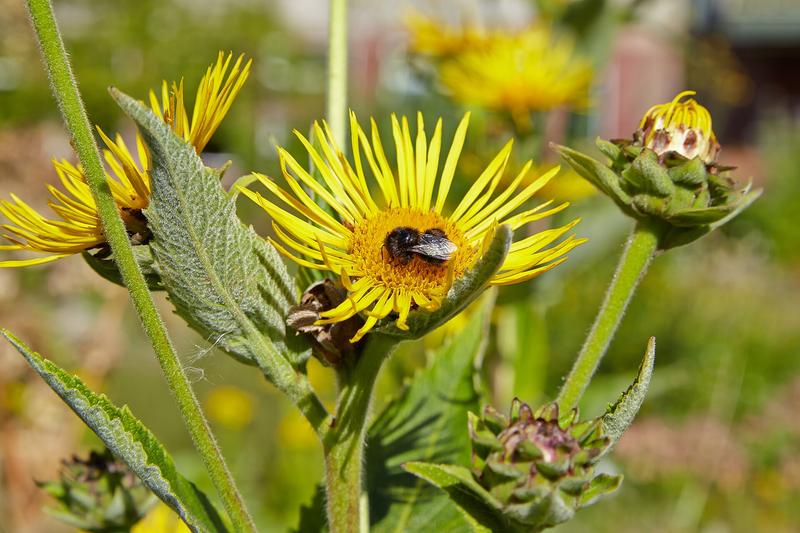
Quick facts
- Watering
- Weekly during dry spells
- Sunlight
- Full sun to partial shade
- Soil
- Moist, fertile, well-drained
- Humans
- Unknown
- Cats
- Unknown
- Dogs
- Unknown
- Height
- 150–200 cm
- Spread
- 60–90 cm
- Spacing
- 75–90 cm apart
About Elecampane
Elecampane is a striking herbaceous perennial native to Europe and Asia, forming bold clumps of large, velvety leaves and tall stems topped with bright yellow daisy-like flowers in summer. Growing up to 2 metres tall, this ancient medicinal herb has been cultivated in British gardens and monastery plots for centuries, prized for its aromatic roots used in traditional remedies and confectionery. UK gardeners value elecampane as both an ornamental back-of-border plant and a heritage herb, thriving in cottage gardens and wildlife-friendly plantings where its flowers attract bees and butterflies.
UK fact: Elecampane has been grown in British herb gardens since Roman times and was once widely cultivated in Yorkshire and Lincolnshire for its roots, which were candied and sold as sweets in Victorian Britain.
Watering Elecampane
Once established, elecampane is reasonably drought-tolerant but performs best with consistent moisture, particularly during the growing season from April to August. Water weekly during dry spells, providing a thorough soak rather than frequent light watering to encourage deep root development. In heavy clay soils common across much of the UK, reduce watering frequency to prevent waterlogging. Newly planted specimens require regular watering throughout their first summer until the root system establishes.
Sunlight requirements
Elecampane performs best in full sun but tolerates partial shade, particularly in warmer southern counties where afternoon shade prevents leaf scorch. In northern Britain and Scotland, choose the sunniest position available to encourage strong flowering. Avoid deep shade, which produces weak, floppy growth and reduces flower production.
Soil and feeding
Elecampane thrives in deep, fertile, moisture-retentive soil with good drainage, making it well-suited to improved loam or clay-loam soils typical of British gardens. It tolerates a wide pH range from slightly acidic to slightly alkaline (pH 6.0-7.5) but performs best in neutral conditions. Improve heavy clay with organic matter and grit to prevent winter waterlogging, whilst sandy soils benefit from generous additions of compost or well-rotted manure to retain moisture. The plant develops a substantial taproot, so prepare the soil deeply before planting.
Apply a balanced general-purpose fertiliser or a generous mulch of well-rotted compost in early spring to support the vigorous growth and tall flowering stems. Avoid high-nitrogen feeds which promote excessive leafy growth at the expense of flowers and root development. Established plants in fertile soil rarely require additional feeding beyond annual mulching.
Pruning Elecampane
Cut back the entire plant to ground level in late autumn once the foliage has died back, or leave the seed heads standing through winter to provide food for birds and structural interest before clearing in February. Deadhead spent flowers in August if you wish to prevent self-seeding, though elecampane rarely becomes invasive. Remove any damaged or yellowing lower leaves during the growing season to maintain plant health and appearance.
Propagating Elecampane
Elecampane is easily propagated by division in early spring (March) or autumn (October), lifting established clumps and separating them into sections with roots and shoots attached. Root cuttings taken in late winter are also successful: cut pencil-thick roots into 5-8cm sections and insert vertically into pots of gritty compost. Seed sowing is possible but slow; sow fresh seed in autumn in a cold frame, as germination can be erratic and seedlings take several years to reach flowering size.
Common problems
Elecampane is generally trouble-free and rarely suffers from serious pests or diseases in UK gardens. Slugs and snails may damage young spring growth, particularly in damp conditions, so protect emerging shoots with organic slug pellets or barriers. Powdery mildew can occasionally affect leaves in dry summers with poor air circulation, though this is usually cosmetic and doesn't harm the plant. The main cultural problem is the plant's tendency to flop in exposed or windy sites, so provide staking for tall stems or position in a sheltered spot.
Spot a problem with your plant? Photograph the affected area using the Loam app and it will suggest the most likely cause and treatment.
Safety
- Humans
-
Unknown
Elecampane root has been used medicinally for centuries, but the plant contains compounds that may cause allergic reactions or skin irritation in sensitive individuals. Avoid internal use without expert guidance.
- Cats
-
Unknown
No specific toxicity data available for cats. Monitor pets and contact a vet if ingestion occurs.
- Dogs
-
Unknown
No specific toxicity data available for dogs. Monitor pets and contact a vet if ingestion occurs.
Toxicity information is for general guidance only. If a person or pet has been exposed to this plant and you are concerned, seek advice from a medical professional or vet.
Seasonal care calendar
Monthly care guide for Elecampane in the UK, based on average conditions.
| Month | Care tasks |
|---|---|
| January | No action needed; plant fully dormant. |
| February | Clear away old stems if not done in autumn. Take root cuttings from established plants. |
| March | Apply compost mulch around emerging shoots. Divide established clumps if required. |
| April | Protect young growth from slugs. Water new plantings regularly. |
| May | Stake tall stems in exposed positions. Continue watering during dry weather. |
| June | Monitor for powdery mildew. Water weekly if rainfall is low. |
| July | Enjoy the bright yellow flowers. Deadhead if preventing self-seeding. |
| August | Continue deadheading spent blooms. Water during prolonged dry spells. |
| September | Allow seed heads to develop for wildlife if desired. Reduce watering. |
| October | Divide overcrowded clumps. Harvest roots from three-year-old plants if using medicinally. |
| November | Cut back dead foliage to ground level or leave for winter structure. |
| December | No action needed; plant dormant. |
Frequently asked questions
- When should I harvest elecampane roots?
- Harvest elecampane roots in autumn (October-November) from plants at least two to three years old, when the roots have developed their full aromatic properties. Lift the entire plant, wash the roots thoroughly, and use fresh or dry for later use.
- Why is my elecampane not flowering?
- Elecampane may fail to flower due to insufficient sunlight, excessive shade, or being too young (plants typically flower from their second or third year). The Loam app can help diagnose your specific growing conditions and provide personalised advice for encouraging blooms.
- Can elecampane grow in clay soil?
- Yes, elecampane tolerates clay soil well, provided it doesn't become waterlogged in winter. Improve heavy clay by incorporating organic matter and grit to enhance drainage, and avoid planting in low-lying areas where water collects.
Got a question about growing Elecampane that isn't covered here? Ask the Garden Advisor in the Loam app. It knows your saved plants and local conditions.
Related plants
This page was compiled with AI assistance and reviewed by our team. .