Handkerchief Tree
Davidia involucrata
Trees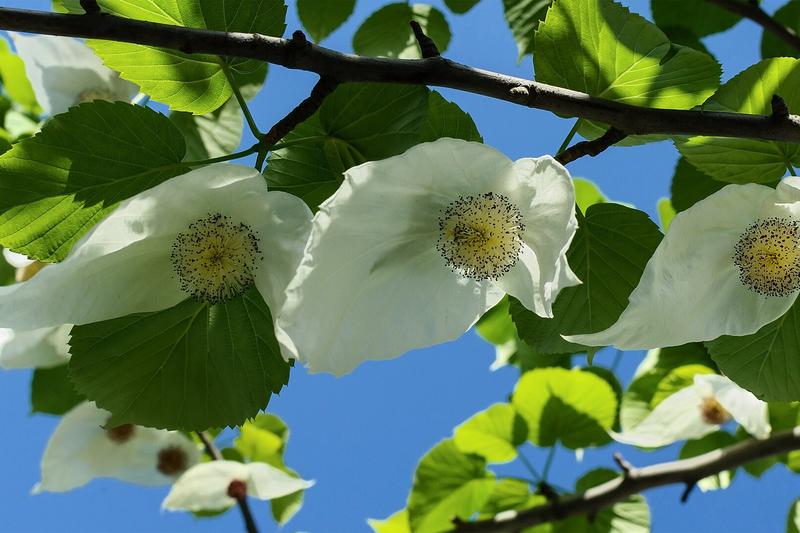
Quick facts
- Watering
- Weekly when young, fortnightly established
- Sunlight
- Full sun to partial shade
- Soil
- Deep, moist, well-drained loam
- Humans
- Safe
- Cats
- Safe
- Dogs
- Safe
- Height
- 1000–2000 cm
- Spread
- 800–1200 cm
- Spacing
- 1000–1500 cm apart
- RHS recognition
- Award of Garden Merit
About Handkerchief Tree
The Handkerchief Tree is a stunning deciduous tree native to China, renowned for its extraordinary white bracts that hang like handkerchiefs from the branches in late spring. Growing to a substantial size, it makes a magnificent specimen tree for larger UK gardens with its heart-shaped leaves and distinctive fluttering display. British gardeners prize it as one of the most spectacular flowering trees, creating a breathtaking focal point when mature. Though slow to flower (often taking 10-15 years), the wait is rewarded with an unforgettable annual show.
UK fact: The Handkerchief Tree was introduced to Britain by plant hunter Ernest Wilson in 1901 and has since been awarded the RHS Award of Garden Merit, with particularly fine specimens growing at Kew Gardens and the Royal Botanic Garden Edinburgh.
Watering Handkerchief Tree
Young Handkerchief Trees require regular watering during their first 2-3 years, particularly during dry spells from April to September. Water deeply once or twice weekly during establishment, ensuring the root zone remains moist but not waterlogged. Established trees are reasonably drought-tolerant but benefit from watering during prolonged dry periods in summer. Mulching around the base helps retain moisture and keeps roots cool during hot weather.
Sunlight requirements
Handkerchief Trees perform best in full sun or light dappled shade, particularly in southern UK gardens where some afternoon shade prevents leaf scorch. In northern regions, a sunny south or west-facing position encourages the best flowering and growth. Avoid deep shade which will reduce the spectacular bract display and lead to sparse growth.
Soil and feeding
Handkerchief Trees thrive in deep, fertile, moisture-retentive soil that drains well, ideally a rich loam with plenty of organic matter. They prefer slightly acidic to neutral pH (5.5-7.0) and will struggle in shallow, chalky, or waterlogged soils. Before planting, incorporate generous amounts of well-rotted compost or manure to improve soil structure. The tree develops a deep root system, so ensure the planting site has at least 60cm of good topsoil.
Apply a balanced slow-release fertiliser such as blood, fish and bone in early spring around the root zone of young trees. Established Handkerchief Trees rarely need feeding if growing in good soil, though a mulch of well-rotted compost or manure in autumn provides beneficial nutrients and improves soil structure.
Pruning Handkerchief Tree
Handkerchief Trees require minimal pruning and are best left to develop their natural pyramidal shape. Remove any dead, damaged, or crossing branches in late winter or early spring while the tree is dormant. Avoid heavy pruning as this can spoil the tree's elegant form and reduce flowering. Young trees may need formative pruning to establish a clear central leader and well-spaced framework of branches.
Propagating Handkerchief Tree
Handkerchief Trees are challenging to propagate and require patience. Seed is the most common method, though seeds have a double dormancy requiring two winters of cold stratification before germination. Sow fresh seed in autumn in pots outdoors, and germination may take 18 months or more. Semi-ripe cuttings can be taken in late summer with bottom heat and rooting hormone, though success rates are variable. Layering is possible but slow, taking 2-3 years to produce a rooted plant suitable for separation.
Common problems
Handkerchief Trees are generally trouble-free with few serious pests or diseases in the UK. Young trees may occasionally suffer from aphid infestations on new growth in spring, which can be controlled with organic sprays or left for natural predators. Coral spot fungus can affect dead wood, so remove any dead branches promptly. The main cultural problem is impatience, as trees can take 10-15 years to flower from planting, and some gardeners give up before witnessing the spectacular display. Late spring frosts can occasionally damage emerging bracts.
Spot a problem with your plant? Photograph the affected area using the Loam app and it will suggest the most likely cause and treatment.
Safety
- Humans
- Safe
- Cats
- Safe
- Dogs
- Safe
Toxicity information is for general guidance only.
Seasonal care calendar
Monthly care guide for Handkerchief Tree in the UK, based on average conditions.
| Month | Care tasks |
|---|---|
| January | No action needed, tree fully dormant. |
| February | Check tree stakes and ties, adjusting if necessary to prevent damage. |
| March | Apply slow-release fertiliser around young trees and prune any dead or damaged wood. |
| April | Watch for emerging leaves and buds. Begin regular watering of young trees. |
| May | Enjoy the spectacular white bracts appearing. Water regularly during dry spells. |
| June | Continue watering young trees. Bracts fade and drop naturally. |
| July | Water deeply during dry periods. Monitor for aphids on new growth. |
| August | Maintain watering schedule for young trees during hot, dry weather. |
| September | Reduce watering frequency as temperatures cool and rainfall increases. |
| October | Apply mulch of well-rotted compost around the base. Collect fallen leaves for composting. |
| November | Leaves turn golden and fall. Good time to assess tree structure before winter. |
| December | No action needed, tree entering dormancy. |
Frequently asked questions
- How long does it take for a Handkerchief Tree to flower?
- Handkerchief Trees typically take 10-15 years from planting to produce their first flowers, though some specimens may bloom earlier at 7-8 years if conditions are ideal. Patience is essential, but the spectacular white bracts are well worth the wait. Buying a larger, more mature specimen can reduce the waiting time.
- Why isn't my Handkerchief Tree flowering yet?
- Young age is the most common reason, as these trees need maturity to flower. Other factors include insufficient sunlight, poor soil, or stress from drought. The Loam app can help you track your tree's age and growing conditions, sending reminders when flowering might be expected based on your specific plant's timeline.
- Can I grow a Handkerchief Tree in a small garden?
- Handkerchief Trees are best suited to medium to large gardens as they reach 10-20 metres tall with a spread of 8-12 metres at maturity. They need space to develop their full pyramidal shape and display the hanging bracts effectively. Consider alternative smaller ornamental trees if space is limited.
Got a question about growing Handkerchief Tree that isn't covered here? Ask the Garden Advisor in the Loam app. It knows your saved plants and local conditions.
Related plants
This page was compiled with AI assistance and reviewed by our team. .