Katsura Tree
Cercidiphyllum japonicum
Trees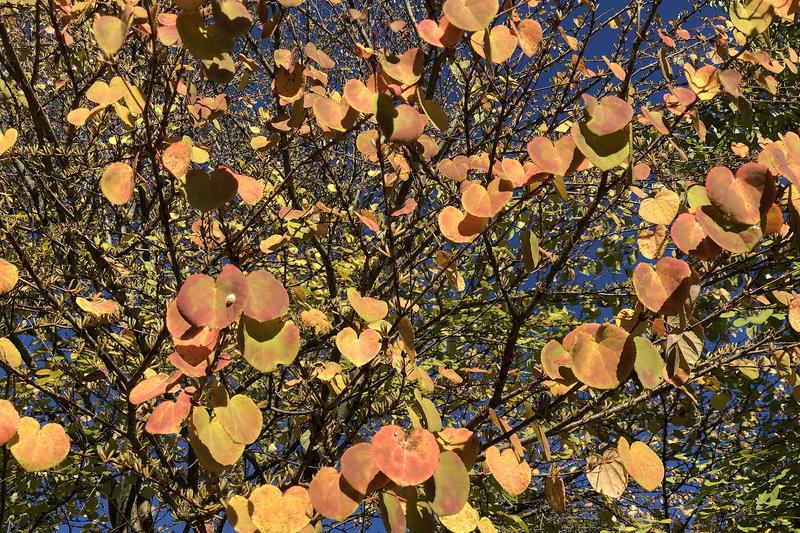
Quick facts
- Watering
- Weekly when young, fortnightly established
- Sunlight
- Full sun to partial shade
- Soil
- Moist, well-drained, slightly acidic
- Humans
- Safe
- Cats
- Safe
- Dogs
- Safe
- Height
- 1000–2000 cm
- Spread
- 600–1200 cm
- Spacing
- 800–1500 cm apart
- RHS recognition
- Award of Garden Merit
About Katsura Tree
The Katsura Tree is a graceful deciduous tree native to Japan and China, prized for its elegant heart-shaped leaves and spectacular autumn colour. In spring, the foliage emerges bronze-pink before turning blue-green in summer, then transforming to vibrant yellows, oranges, and reds in autumn, accompanied by a distinctive caramel or burnt sugar scent. UK gardeners value it as a specimen tree for medium to large gardens, where its pyramidal form and multi-seasonal interest create a stunning focal point. It thrives in the British climate, particularly in sheltered positions with adequate moisture.
UK fact: The Katsura Tree holds an RHS Award of Garden Merit and performs exceptionally well in the cooler, moister regions of Scotland and northern England, where the autumn scent is most pronounced on damp mornings.
Watering Katsura Tree
Young Katsura Trees require consistent moisture and should be watered weekly during their first two to three growing seasons, particularly during dry spells from May to September. Established trees are more drought-tolerant but perform best with fortnightly deep watering during prolonged dry periods, as they naturally grow near streams in their native habitat. Apply a 7-10 cm layer of organic mulch around the base to retain soil moisture and keep roots cool. During hot, dry summers, inadequate water can cause premature leaf drop and reduced autumn colour.
Sunlight requirements
Katsura Trees perform best in full sun to partial shade, with at least four to six hours of direct sunlight daily for optimal autumn colour. In the UK, a position sheltered from strong winds is essential, as the delicate foliage can scorch in exposed sites. East or west-facing aspects work well, providing morning or afternoon sun whilst offering some protection from the hottest midday rays in southern regions.
Soil and feeding
Katsura Trees thrive in fertile, moisture-retentive soil that drains well, with a slightly acidic to neutral pH of 5.5-7.0. They perform exceptionally well in humus-rich loam that mimics their natural woodland habitat, and benefit from generous incorporation of well-rotted compost or leaf mould at planting time. Avoid shallow chalky soils and heavy clay that becomes waterlogged in winter, as poor drainage can lead to root rot. In drier gardens, improve moisture retention by adding organic matter annually and maintaining a thick mulch layer.
Apply a balanced slow-release fertiliser such as blood, fish and bone in early spring at 70g per square metre around the root zone. Supplement with a 5-7 cm layer of well-rotted compost or leaf mould as a mulch in autumn to maintain soil fertility and structure. Established trees in fertile soil require minimal feeding beyond annual mulching.
Pruning Katsura Tree
Katsura Trees require minimal pruning and are best left to develop their natural pyramidal shape. Remove any dead, diseased, or crossing branches in late winter or early spring whilst the tree is dormant, making clean cuts just above a bud or branch junction. Avoid heavy pruning, as this can spoil the tree's elegant form and cause excessive sap bleeding. Young trees may benefit from light formative pruning to establish a clear central leader and well-spaced framework of branches.
Propagating Katsura Tree
Katsura Trees can be propagated from semi-ripe cuttings taken in late summer, though success rates are variable and patience is required. Take 10-15 cm cuttings from the current season's growth, remove lower leaves, dip in hormone rooting powder, and insert into a mix of equal parts peat-free compost and sharp sand. Alternatively, collect fresh seed in autumn and sow immediately in pots outdoors, as germination requires a period of cold stratification over winter. Layering low branches in spring is another option, though trees grown from seed or cuttings may take 10-15 years to reach a substantial size.
Common problems
Katsura Trees are generally pest and disease-free in the UK, making them low-maintenance specimens. The main cultural problem is leaf scorch caused by exposure to strong winds, late spring frosts, or drought stress, which causes browning of leaf margins and premature leaf drop. Young trees can occasionally suffer from coral spot fungus on dead wood, so remove any affected branches promptly and maintain good hygiene. In very dry conditions, aphids may appear on new growth but rarely cause significant damage and can be controlled with a strong jet of water or organic insecticidal soap if necessary.
Spot a problem with your plant? Photograph the affected area using the Loam app and it will suggest the most likely cause and treatment.
Safety
- Humans
- Safe
- Cats
- Safe
- Dogs
- Safe
Toxicity information is for general guidance only.
Seasonal care calendar
Monthly care guide for Katsura Tree in the UK, based on average conditions.
| Month | Care tasks |
|---|---|
| January | No action needed; tree fully dormant. |
| February | Check stakes and ties on young trees after winter storms. |
| March | Apply slow-release fertiliser and prune any dead or damaged wood before budburst. |
| April | Watch for emerging bronze-pink foliage and protect young trees from late frosts. |
| May | Begin regular watering of young trees as growth accelerates. |
| June | Maintain consistent soil moisture and apply mulch if not already done. |
| July | Water deeply during dry spells to prevent leaf scorch. |
| August | Continue watering young trees; take semi-ripe cuttings if propagating. |
| September | Enjoy early autumn colour and characteristic caramel scent on damp mornings. |
| October | Collect fallen leaves for composting and apply autumn mulch of leaf mould. |
| November | Collect and sow fresh seed if propagating; protect young trees from strong winds. |
| December | No action needed; admire the tree's elegant winter silhouette. |
Frequently asked questions
- Why do Katsura Tree leaves smell like caramel in autumn?
- The distinctive caramel or burnt sugar scent comes from maltol, a chemical compound released as the leaves break down chlorophyll during autumn senescence. The fragrance is most noticeable on damp, cool mornings in October when humidity is high, and is strongest in trees growing in moist, slightly acidic soil with good autumn colour development.
- Why are my Katsura Tree leaves turning brown at the edges?
- Leaf scorch with brown edges typically indicates drought stress, wind exposure, or root disturbance. The Loam app can help you set watering reminders based on local weather conditions and diagnose whether your tree needs repositioning, additional shelter, or improved soil moisture retention through mulching.
- How long does a Katsura Tree take to reach full size in the UK?
- Katsura Trees are moderately fast-growing in favourable conditions, typically adding 30-60 cm per year when young. Most will reach 8-10 metres in 15-20 years, though ultimate height of 15-20 metres may take 40-60 years. Growth rate depends on soil moisture, shelter, and regional climate, with faster growth in Scotland and northern England where conditions suit them best.
Got a question about growing Katsura Tree that isn't covered here? Ask the Garden Advisor in the Loam app. It knows your saved plants and local conditions.
Related plants
This page was compiled with AI assistance and reviewed by our team. .