Trumpet Vine
Campsis radicans
Climbers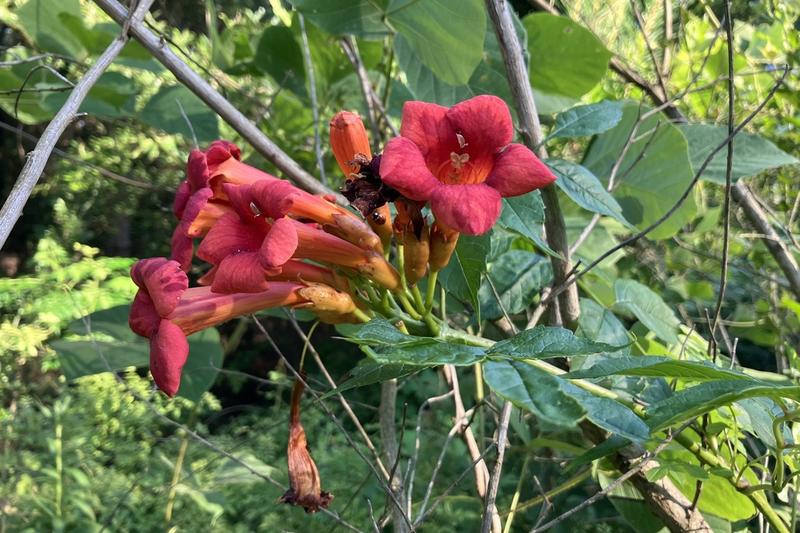
Quick facts
- Watering
- Weekly during growing season
- Sunlight
- Full sun
- Soil
- Well-drained, moderately fertile
- Humans
- Toxic
- Cats
- Toxic
- Dogs
- Toxic
- Height
- 900–1200 cm
- Spread
- 150–300 cm
- Spacing
- 200–300 cm apart
- RHS recognition
- Award of Garden Merit
About Trumpet Vine
Trumpet Vine is a vigorous deciduous climber native to the southeastern United States, prized for its spectacular clusters of orange-red, trumpet-shaped flowers that appear from July to September. This fast-growing plant can reach impressive heights, clinging to supports with aerial rootlets and creating a dramatic display against walls, fences, and pergolas. UK gardeners value it for its exotic appearance and ability to attract hummingbird hawk-moths and other pollinators, though it requires careful siting due to its vigorous growth habit. In warmer parts of the UK, particularly southern and coastal regions, it performs exceptionally well when given a sunny, sheltered position.
UK fact: Trumpet Vine holds the RHS Award of Garden Merit and thrives particularly well in London and southern England, where warm microclimates and sheltered city gardens provide the extended growing season it needs to flower reliably each summer.
Watering Trumpet Vine
Water regularly during the first two growing seasons to establish a deep root system, providing approximately 25-40mm of water weekly during dry spells. Once established, Trumpet Vine is remarkably drought-tolerant and typically requires watering only during prolonged dry periods in summer. In containers, water more frequently as the potting medium dries out faster, checking soil moisture twice weekly during the growing season. Reduce watering significantly in autumn and winter when the plant is dormant.
Sunlight requirements
Trumpet Vine requires full sun to flower well, ideally receiving at least six hours of direct sunlight daily. In the UK, plant against a south or west-facing wall to maximise warmth and light exposure, which encourages prolific flowering. The reflected heat from walls and paving also helps to ripen the wood, improving winter hardiness and next season's bloom.
Soil and feeding
Trumpet Vine adapts to a wide range of soil types but performs best in well-drained, moderately fertile loam with a pH between 6.0 and 7.5. Avoid overly rich soils, which promote excessive leafy growth at the expense of flowers. Good drainage is essential, particularly in winter, as waterlogged conditions can damage roots during cold periods. On heavy clay soils, improve drainage by incorporating horticultural grit and organic matter before planting.
Apply a balanced slow-release fertiliser in early spring, such as blood, fish and bone at 70g per square metre. Avoid high-nitrogen feeds which encourage foliage at the expense of flowers; a tomato fertiliser applied monthly from June to August can promote better blooming. Established plants in the ground rarely need feeding if growing in reasonably fertile soil.
Pruning Trumpet Vine
Prune in late winter or early spring (February to March) before new growth begins, cutting back the previous year's growth to within 2-3 buds of the main framework. This encourages strong new shoots that will bear the current season's flowers. Remove any dead, damaged, or wayward stems, and thin congested growth to maintain good air circulation. Trumpet Vine flowers on current season's wood, so regular pruning is essential for abundant blooms and to control its vigorous growth habit.
Propagating Trumpet Vine
Trumpet Vine propagates readily from semi-ripe cuttings taken in July or August, using 10-15cm lengths of current season's growth with a heel. Root cuttings taken in winter are also highly successful: remove 5-8cm sections of pencil-thick roots, plant horizontally in pots of gritty compost, and keep frost-free. Layering is another reliable method, pegging down low-growing stems in spring and severing once rooted the following year. The plant also produces suckers which can be carefully dug up with roots attached and transplanted in spring.
Common problems
Trumpet Vine is generally pest and disease-free in the UK, though aphids may occasionally colonise soft new growth in spring and can be controlled with insecticidal soap or by encouraging natural predators. Powdery mildew can appear on leaves in dry summers with poor air circulation, remedied by ensuring adequate spacing and watering at the base rather than overhead. The main cultural problem is managing its vigorous growth and suckering habit, which can become invasive if not controlled through regular pruning and removal of unwanted shoots. In colder regions or exposed sites, late spring frosts may damage emerging growth, though plants usually recover.
Spot a problem with your plant? Photograph the affected area using the Loam app and it will suggest the most likely cause and treatment.
Safety
- Humans
-
Toxic
All parts of Trumpet Vine can cause skin irritation and allergic reactions in sensitive individuals. Ingestion may cause mild gastrointestinal upset.
- Cats
-
Toxic
Ingestion can cause vomiting, diarrhoea, and drooling. Keep cats away from the plant.
- Dogs
-
Toxic
Ingestion can cause vomiting, diarrhoea, and excessive drooling. Prevent dogs from chewing on stems or flowers.
Toxicity information is for general guidance only. If a person or pet has been exposed to this plant and you are concerned, seek advice from a medical professional or vet.
Seasonal care calendar
Monthly care guide for Trumpet Vine in the UK, based on average conditions.
| Month | Care tasks |
|---|---|
| January | No action needed; plant is fully dormant. |
| February | Prune back previous year's growth to within 2-3 buds of the main framework. |
| March | Complete pruning if not done in February. Apply slow-release fertiliser around the base. |
| April | New growth emerges; water if conditions are dry. Mulch around the base with organic matter. |
| May | Tie in new shoots to supports. Monitor for aphids on soft growth. |
| June | Begin monthly feeding with tomato fertiliser. Water during dry spells. |
| July | Flowers begin to appear. Continue feeding and watering. Take semi-ripe cuttings for propagation. |
| August | Peak flowering period. Deadhead spent blooms to encourage more flowers. Continue watering in dry weather. |
| September | Flowering continues into early autumn. Reduce feeding as growth slows. |
| October | Leaves begin to turn colour and drop. Stop feeding. Reduce watering. |
| November | Plant becomes dormant. Remove fallen leaves from around the base to prevent disease. |
| December | No action needed; plant is dormant. Check ties and supports are secure for winter. |
Frequently asked questions
- Why is my Trumpet Vine not flowering?
- Trumpet Vines typically fail to flower due to insufficient sunlight, overly rich soil promoting leafy growth, or lack of pruning. Ensure the plant receives full sun for at least six hours daily, avoid high-nitrogen fertilisers, and prune hard each spring to encourage flowering shoots. Young plants may also take 3-4 years to reach flowering maturity.
- How can I control my Trumpet Vine's aggressive growth?
- Regular pruning in late winter is essential to control vigour and prevent the plant from becoming invasive. The Loam app can send you timely pruning reminders and help you track which stems you've cut back, making it easier to maintain a manageable framework year after year.
- Can Trumpet Vine damage walls or brickwork?
- Trumpet Vine clings using aerial rootlets which can penetrate soft mortar and potentially cause damage to older walls with crumbling pointing. It's best grown on sound brickwork or against a sturdy trellis or wire framework attached to the wall with spacers, allowing air circulation behind and protecting the masonry.
Got a question about growing Trumpet Vine that isn't covered here? Ask the Garden Advisor in the Loam app. It knows your saved plants and local conditions.
Related plants
This page was compiled with AI assistance and reviewed by our team. .